
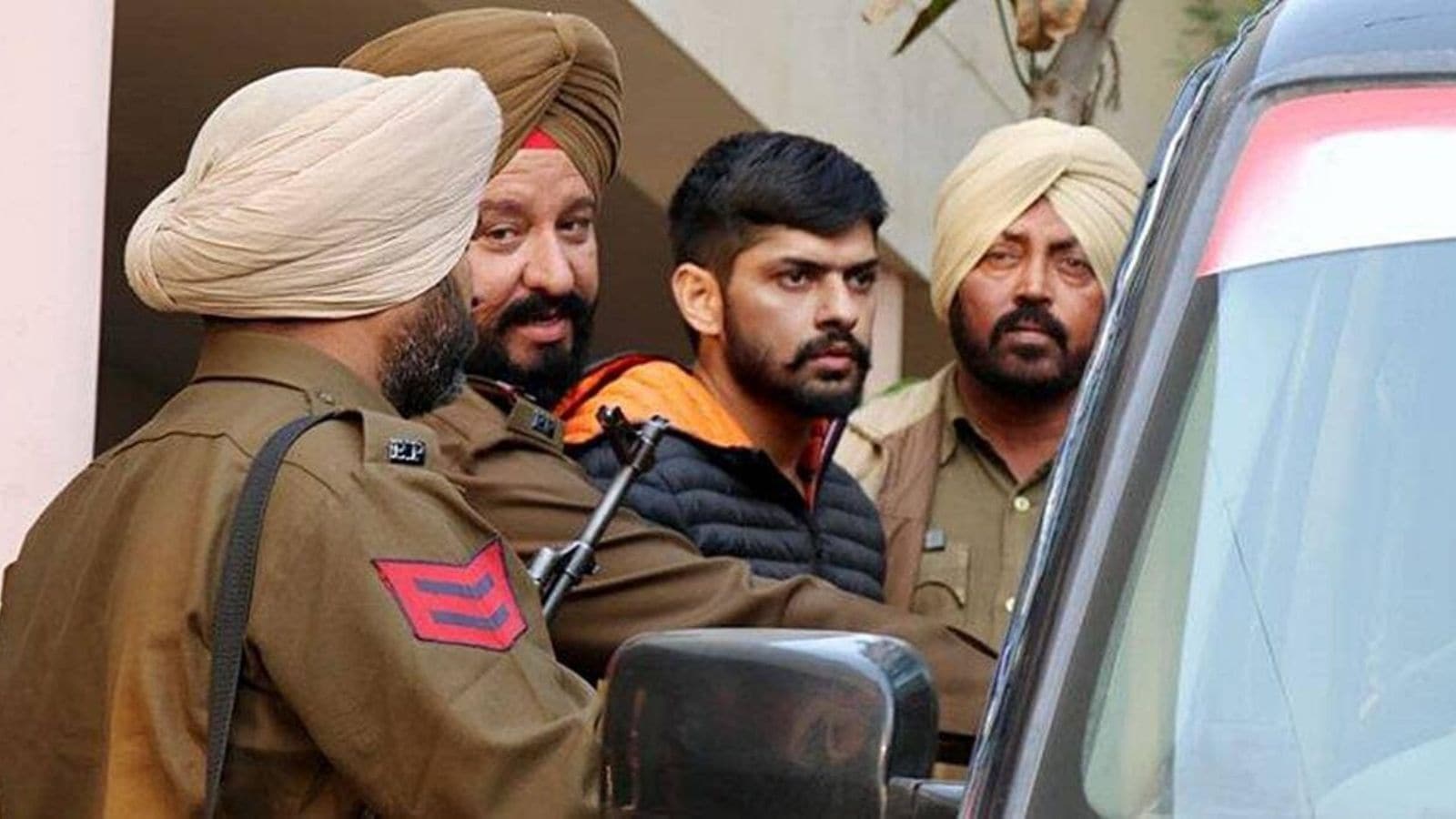
Amicus urges continued monitoring, says Punjab and Haryana High Court’s oversight still needed after two years.
The Punjab and Haryana High Court on Tuesday heard a Public Interest Litigation (PIL) concerning jail reforms and law and order in Punjab, with the state seeking its closure on the ground that its remit had expanded beyond its original scope.
However, amicus curiae Tanu Bedi urged the court to continue monitoring the matter as a “continuing mandamus”, submitting that the case had been under consideration for over two years and that earlier orders had remained undisturbed even before the Supreme Court.
The matter came up before a division bench of Chief Justice Sheel Nagu and Justice Sanjiv Berry.
Senior advocate Puneet Bali appeared for the Punjab government.
Bali submitted that the PIL, which was initially taken up suo motu by an earlier division bench headed by Justice Anupinder Singh Grewal, who superannuated on March 9 this year, had achieved its primary objectives.
He said the proceedings began with a focus on jail reforms but later expanded to cover issues such as a controversial interview of gangster Lawrence Bishnoi from custody, gang-related violence, and policing measures.
Detailing the state’s response, Bali said a Special Investigation Team (SIT) had conducted an inquiry into the Bishnoi interview and submitted multiple reports, leading to disciplinary action against erring officials.
A deputy superintendent of police was dismissed from service, while departmental proceedings were initiated against others.
On concerns relating to law and order, including targeted killings and alleged police encounters, the state informed the court that affidavits had been filed by the director general of police outlining steps taken.
These included registration of FIRs, constitution of SITs, and initiation of judicial or magisterial inquiries into encounter incidents, in line with Supreme Court guidelines.
The court was also apprised of measures such as the establishment of an anti-gangster police station with statewide jurisdiction, the introduction of helplines, the formulation of standard operating procedures to tackle extortion calls, and proposals for installing over 12,000 CCTV cameras across urban areas.
A manpower audit and augmentation of patrolling infrastructure were also underway, with a deadline of March 31.
Bali argued that the scope of the PIL had expanded excessively over time.
“This cannot be an open-ended proceeding monitoring every aspect of policing in the state,” he submitted, urging the bench to close the matter after perusing the reports placed on record, including those in sealed cover.
The hearing also saw submissions from counsel representing a dismissed police officer, DDP Gursher Singh, who contended that he had been made a scapegoat in the SIT probe and that his challenge to the dismissal was pending.
His counsel claimed that Bishnoi’s custody was being supervised by the anti-gangster task force and not the Crime Investigation Agency as alleged.
The bench, however, indicated that such issues would be taken up separately and should not prejudice pending proceedings.
Amicus curiae Tanu Bedi, however, opposed closure of the proceedings, submitting that the PIL had evolved in response to emerging concerns flagged by the court itself and could not be viewed as an unwarranted expansion.
Bedi said the matter had been monitored for over two years, during which multiple orders had addressed jail reforms, the conduct of police officials, and broader law and order issues, all of which had been tested before the Supreme Court without any interference.
Bedi further suggested that, given the continuity and complexity of the proceedings, the court may consider retaining institutional memory by associating a judge who had earlier dealt with the matter, noting that one of the judges from the earlier bench continued to be part of the high court.
Taking note of the submissions, the bench said it would consider whether continued monitoring was required.
The court deferred further hearing to March 24, when pending applications in the matter are also scheduled to be taken up.
Manraj Grewal Sharma is a senior journalist and the Resident Editor of The Indian Express in Chandigarh, where she leads the newspaper’s coverage of north India’s most politically and institutionally significant regions.
From Punjab and Haryana to Himachal Pradesh and the Union Territory of Chandigarh, she oversees reporting at the intersection of governance, law, politics and society.
She also reports on the diaspora, especially in Canada and the US.
With a career spanning journalism across several countries, academia and international development, Manraj brings a rare depth of perspective to regional reporting.
She is widely regarded as a leading chronicler of Punjab’s contemporary history and socio-political evolution, particularly its long shadow of militancy, federal tensions and identity politics.
Her book, Dreams after Darkness, remains a definitive account of the militancy years and their enduring aftermath.
Professional Background & Expertise
A gold medalist in mass communication and a post-graduate in English literature, Manraj has a multifaceted career spanning journalism, academia, and international development.
She was also awarded a fellowship by National Foundation of India and did several in-depth pieces on Manipur.
Internationally, she has reported from Israel, US, UK, Myanmar, and Mauritius
Her key focus areas include:
Regional Politics, History, Agriculture, Diaspora, and Security.
Of late, she has started focusing on Legal & Judicial Affairs: Much of her recent work involves reporting on high-stakes cases in the Punjab and Haryana High Court, ranging from environmental policy to civil rights.
International Consulting: She previously served as a consulting editor for the Asia Pacific Adaptation Network and a publishing consultant for the Asian Development Bank (ADB) in Manila.
Academia: For five years, she was the managing editor of Gender, Technology and Development, a peer-reviewed international journal at the Asian Institute of Technology, Bangkok.
Recent Notable Articles (Late 2025)
Her recent reportage focuses heavily on judicial interventions and regional governance:
1.
Environment & Governance
"‘NGT can’t test legality of policy’: HC hears challenge to Punjab’s ‘Green Habitat’ plan" (Dec 22, 2025): Covering a critical legal battle over whether the National Green Tribunal has the authority to strike down a state policy regularizing farmhouses on delisted forest land.
"High court pulls up Punjab poll panel over audio clip probe" (Dec 10, 2025): Reporting on judicial concerns regarding the transparency and fairness of local body elections.
"Victims can appeal acquittals in sessions court without seeking special leave" (Dec 19, 2025): Highlighting a significant procedural shift in criminal law following a Supreme Court ruling.
"HC upholds benefits for Punjab FCI officer acquitted in 20-year-old bribery case" (Dec 19, 2025): A report on the concept of "honourable acquittal" and its impact on employee benefits.
3.
Human Rights & Identity
"As Punjab denies parole to MP Amritpal Singh, HC asks it to submit ‘foundational material’" (Dec 1, 2025): Covering the legal proceedings regarding the radical preacher and sitting MP's request to attend Parliament.
"Protecting life paramount: HC backs Muslim woman in live-in after verbal divorce" (Nov 6, 2025): Analyzing judicial protections for personal liberty in the context of traditional practices.
Signature Beats
Manraj is recognized for her ability to decode complex judicial rulings and relate them to the everyday lives of citizens.
Whether it is a 30-year-old land battle in Fazilka or the political implications of Kangana Ranaut’s candidacy in Mandi, her writing provides deep historical and regional context.
@grewal_sharma on X
manrajgrewalsharma on Instagram ...
Read More
Stay updated with the latest - Click here to follow us on Instagram
Related Stories


Source: This article was originally published by The Indian Express
Read Full Original Article →
Comments (0)
No comments yet. Be the first to comment!
Leave a Comment