
The definition of an 'industry' determines which workplaces are covered by the law and, consequently, which employees are entitled to a higher degree of statutory protection regarding wages, working hours, strikes and protection against arbitrary dismissal
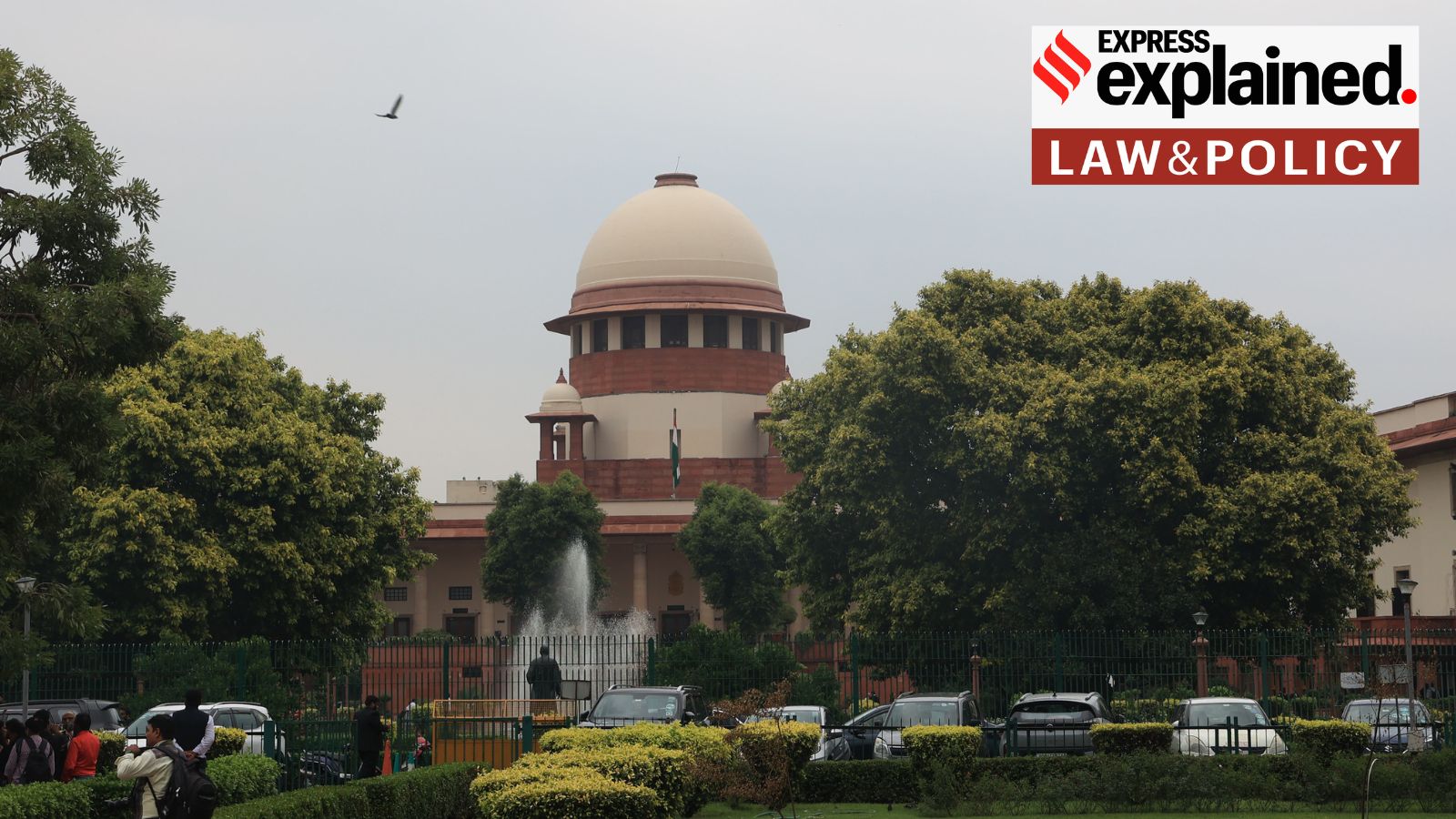
A nine-judge Constitution bench of the Supreme Court is hearing arguments this week to settle a decades-old legal debate: what exactly constitutes an “industry” under Indian law?
The answer to this seemingly simple question will have a significant impact on India’s labour jurisprudence.
The definition of an “industry” – earlier under the erstwhile Industrial Disputes Act, 1947 and now under the Industrial Relations Code, 2020, which is set to replace it – determines which workplaces are covered by the law and, consequently, which employees are entitled to a higher degree of statutory protection regarding wages, working hours, strikes and protection against arbitrary dismissal, among other things.
The bench is led by Chief Justice of India Surya Kant and comprises Justices B V Nagarathna, P S Narasimha, Dipankar Datta, Ujjal Bhuyan, S C Sharma, Joymalya Bagchi, Alok Aradhe and Vipul M Pancholi.
It will re-examine a landmark 1978 Supreme Court judgment that had interpreted the term broadly, as a result of which hospitals, educational institutions, philanthropic organisations and even government welfare departments ended up under the umbrella of the Industrial Disputes Act.
The root of the current legal exercise lies in a 1978 judgment delivered by a seven-judge Constitution bench of the apex court in the case of Bangalore Water Supply and Sewerage Board vs A Rajappa .
Prior to this ruling, there was uncertainty and conflicting judicial opinions on whether institutions that did not have a traditional profit motive could be classified as industries.
In a majority opinion authored by Justice V R Krishna Iyer, the court adopted a highly expansive, “worker-oriented” approach.
The court laid down what came to be known as the “triple test” for identifying an industry.
It held that an undertaking would qualify as an industry if there was “systematic activity”, “organised by cooperation between employer and employee”, “for the production and/or distribution of goods or services calculated to satisfy human wants and wishes.” The court explicitly clarified that the absence of a profit motive or capital investment was irrelevant.
Applying this test, the court ruled that charitable institutions, hospitals, universities, philanthropic bodies and even some state welfare activities were industries.
The court also came up with a “dominant nature” test, stating that if an establishment carried out multiple activities, its primary function would determine its status under the law.
However, the judgment was not unanimous.
Two judges dissented, arguing that the definition should be limited to activities systematically undertaken on commercial lines.
They reasoned that liberal professions, such as those of doctors, lawyers and teachers, depend primarily on individual intellectual skill and that the contribution of their employees is too marginal to treat these professions as industries.
Legislative inaction, judicial confusion
The 1978 ruling significantly expanded the scope of labour rights, but it also led to what subsequent benches described as a “docket explosion” in labour courts.
In response to the judgment, Parliament attempted to narrow the definition of an “industry” by passing the Industrial Disputes (Amendment) Act in 1982.
This amendment specifically excluded several categories of activities, including hospitals, educational institutions and sovereign functions of the government.
However, the government never notified this specific provision, so it did not come into effect.
The Union government explained to the court in 2005 that it did not enforce the amended definition because no alternative legal machinery had been created for the employees of the excluded sectors to resolve their workplace disputes.
As a result, the expansive 1978 definition remained the law of the land.
This led to a cleavage of opinion in subsequent Supreme Court rulings.
For instance, in 1996, a three-judge bench ruled that Maharashtra’s forest department was an industry.
Yet, in 2001, a two-judge bench took the exact opposite view, ruling that the same department in Gujarat was not an industry.
To resolve this conflict, the matter was referred to a five-judge Constitution bench in 2005 in the case of State of UP vs Jai Bir Singh .
The five-judge bench expressed reservations about the 1978 ruling, noting that an overly expansive interpretation of “industry” might act as a “deterrent to private enterprise”.
The bench observed that industrial law needs to be interpreted to ensure that neither employers nor employees “dominate the other”.
The bench also questioned whether the welfare activities of the state, undertaken to discharge constitutional obligations, should be brought into the fold of industrial law.
Noting that the 1978 decision was delivered by seven judges, the five-judge bench referred the matter to a larger bench.
In 2017, a seven-judge bench subsequently directed that the case be placed before a nine-judge bench for resolution.
On February 16, a three-judge bench led by Chief Justice Kant framed three broad issues for adjudication by the nine-judge bench.
First, the court will decide whether the “triple test” laid down by Justice Krishna Iyer in 1978 remains the correct law.
Along with this, the bench will assess the legal impact of the unnotified 1982 Amendment Act as well as the new Industrial Relations Code, which was passed by Parliament to consolidate multiple labour laws but is yet to be fully implemented.
Second, the bench will determine whether social welfare activities and schemes undertaken by government departments can be construed as industrial activities.
Third, the court will conclusively define what constitutes a “sovereign function” of the state.
Sovereign functions traditionally refer to the core, inalienable duties of a government, such as maintaining law and order, defence and legislative functions.
The court will decide whether these activities fall entirely outside the purview of “industry”.
Related Stories


Source: This article was originally published by The Indian Express
Read Full Original Article →
Comments (0)
No comments yet. Be the first to comment!
Leave a Comment