
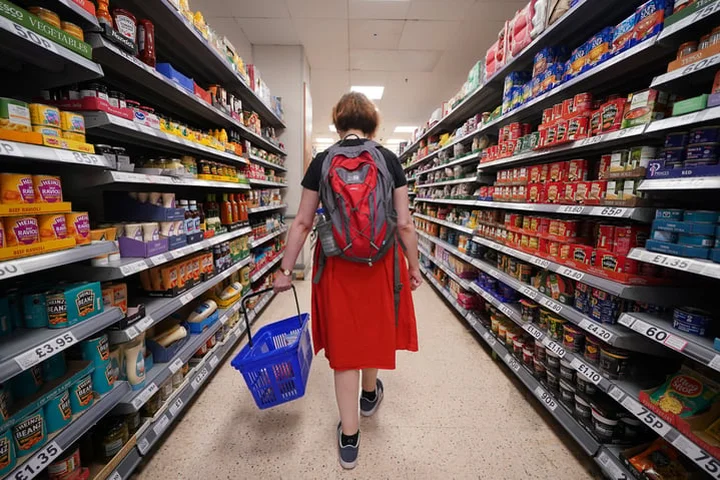
Shoppers in the UK face a surge of ‘dynamic-pricing’ as supermarkets look set to adopt technology that adjusts the price of goods based on demand.
Supermarkets have already started introducing electronic shelf labels which could pave the way for dynamic-pricing in the future, the Bank of England has warned.
Basic forms of dynamic-pricing are already used in some sectors, for example cinemas will charge higher prices during peak times like weekends.
But evidence suggests this simpler approach is becoming “outdated” and could soon be replaced by market-responsive pricing using algorithms.
The Bank of England estimates around 31% of UK businesses will adopt these algorithm market-responsive tools by early 2027.
This type of pricing uses artificial intelligence (AI) to automatically adjust prices in real time based on the current market conditions.
Unlike traditional pricing, where they can remain fixed for long periods, this approach continuously evaluates data to determine the optimal price to maximise profit.
There is no evidence to suggest that UK supermarkets are using this type of dynamic pricing at present, but they are testing digital price displays.
Morrisons have rolled out digital labels across all 497 of its supermarkets, while ASDA has equipped roughly 250 of its Express stores with the digital tags.
The Co-op has seen the biggest introduction of digital tags across more than 700 branches, with plans to extend this to more than 2,300 outlets this year.
Average fixed mortgage rates edge down but ‘too soon’ to signal a turning point
Mortgage availability expected by lenders to increase in coming months
UK visa fees to increase by up to £222 today
Discover a hidden island paradise in the Indian Ocean
Lidl has introduced electronic shelf labels in a number of its stores, saying it reduces paper waste and improves overall efficiency of its stores.
Tesco and Sainsbury’s are also looking to test and trial digital price labels.
The Times said it had asked each of the supermarkets how they were using the technology and whether they intended to use it to introduce dynamic or surge pricing.
Most did not respond but Morrisons said the technology was being introduced as an efficiency measure to eliminate paper labels and did not involve surge or demand-led pricing.
Waitrose insisted it had “no plans” to introduce dynamic prices.
Algorithmic pricing has already been met with controversy particularly after fans faced extortionate prices for the Oasis reunion tour in 2024 .
Prices for standard standing tickets, originally advertised for £135 to £148, rose to £355 on Ticketmaster due to dynamic-pricing, much to the outrage of fans.
The surge in prices prompted Prime Minister Sir Keir Starmer to launch a regulatory review of ticket practices in 2024.
“A world of more fluid and bespoke prices could make life harder for statisticians,” Clare Lombardelli, the Bank of England’s deputy governor for monetary policy said on Tuesday.
This is because it makes it more difficult for analysts to measure inflation as prices stop being stable and comparable.
Instead of prices changing slowly and in a predictable way, they would change all the time and vary between customers.
“Households already face different inflation rates because they buy different things, in different ways,” Lombardelli wrote.
“Inflation rates experienced by different income deciles vary because of their different consumption baskets.
“When prices differ for the same thing, inflation becomes even more personalised – and aggregate measures may no longer reflect households’ experience.”
Lombardelli said there was no evidence to suggest that algorithmic dynamic pricing had led to higher inflation.
But, she added, if dynamic pricing becomes more common for goods such as food and fuel, “more volatile prices may cause perceptions of inflation to drift upwards – even if average prices do not.”
Related Stories


Source: This article was originally published by Evening Standard
Read Full Original Article →
Comments (0)
No comments yet. Be the first to comment!
Leave a Comment