
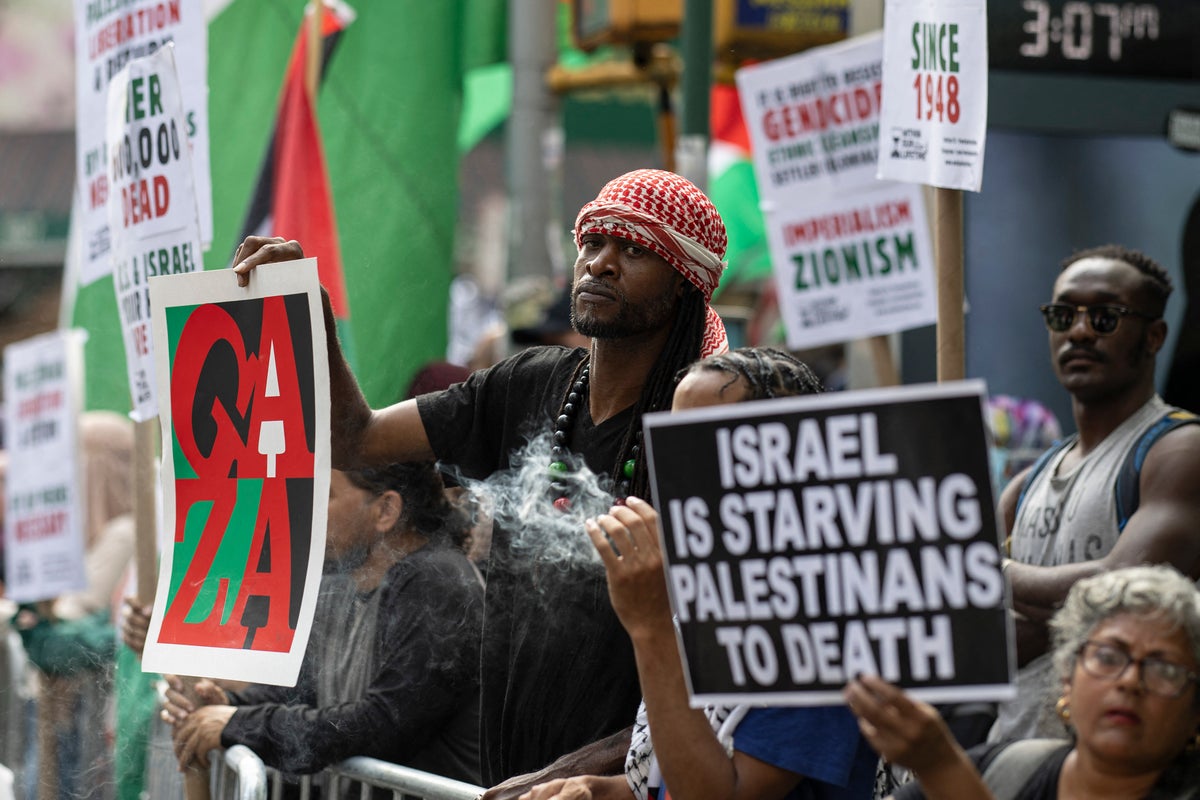
Most employees are ‘not looking to pick fights at work’ but hope to vent frustrating feelings, researchers say
Talking politics at work may actually be good for you, according to a surprising new study.
The research comes despite Americans feeling the country is more divided than at any time since the 1861-1865 Civil War , according to Pew Research Center data .
And we’re also more stressed out about politics than ever, with a stunning 62 percent reporting societal division as a significant source of mental anguish , a recent survey from the American Psychological Association found.
Talking about politics may stir up uncomfortable feelings and the University of Michigan says political discussions may even lead to higher blood pressure , weight fluctuations, anxiety and mood swings, trouble sleeping and substance abuse.
But a new analysis of previous surveys and questionnaires from Washington State University says talking politics at work may actually help employees to manage their stress better - as long as people feel supported.
“Our findings suggest that most employees are not looking to pick fights at work,” Kristine Kuhn , a professor of management at the school’s Carson College of Business, explained in a statement .
“In our samples, people were usually selective.
They tended to talk about emotionally charged politicized news with coworkers they expected would be sympathetic or who viewed the issue similarly.”
The assessment included survey and questionnaire answers from nearly 500 employees who were a part of three separate studies conducted in the early 2020s.
The survey responses included when employees discussed political news at work and how the conversations related to their well-being, burnout and interactions with their colleagues.
The information allowed the researchers to better understand how these dynamics shaped the impact and likelihood of these conversations.
The researchers found that political discussions in the workplace with aligned and sympathetic co-workers helped people to process emotions - such as frustration - and feel validated.
“Research shows that when people experience strong emotions at work, such as after dealing with a difficult customer, they often want to talk to someone about it,” Kuhn said.
“What is different here is the context.
The news events prompting those emotions happen outside the organization, but they still shape how people feel and interact at work.”
The researchers also say their analysis of the workers’ responses shows that social and political events can contribute to emotional strain and workplace burnout.
Burnout, a condition that leads to physical and mental exhaustion , affects nearly a quarter of American workers , according to a January survey of more than 3,000 U.S.
adults.
“In the broader societal context, a constant barrage of distressing news events can also deplete people,” Kuhn said.
But does that mean people should start heated debates over the upcoming midterm elections?
Not according to the researchers, who say most of the 500 workers were mindful of workplace etiquette and dynamics, deftly avoiding hot-button topics when they believed they wouldn’t feel supported.
Still, banning talking about politics isn’t the right way to go, either.
At the end of the day, bosses should recognize the impact of current events and political decisions on their workforce.
“Employees are humans interacting with other humans,” Kuhn said.
“You can’t assume that what is happening in the broader world is not going to affect how they feel at work.”
Join thought-provoking conversations, follow other Independent readers and see their replies
Related Stories


Source: This article was originally published by The Independent
Read Full Original Article →
Comments (0)
No comments yet. Be the first to comment!
Leave a Comment