
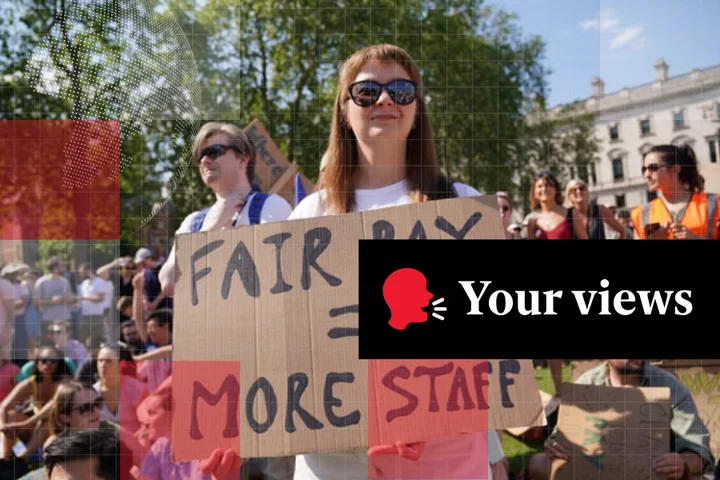
Our community is sharply divided as resident doctors begin their walkout, with readers clashing over pay, patient impact and the wider future of the NHS
Many readers pushed back firmly against the strikes , arguing doctors have already received substantial pay rises and should weigh their demands against a difficult economic backdrop where everyone is suffering.
Some warned that walkouts risk harming patients and placing further strain on colleagues.
Teachers have had the same problem, with no pay rises since 2008.
They aren’t striking.
Most of us are still struggling, as pay hasn’t risen in real terms.
I sympathise with doctors, but in this time of a global economic crisis I don’t think the strikes should go ahead.
Work-to-rule, no overtime etc may elicit more sympathy from workers who don’t get the option to strike and are struggling because of the never-ending crises – Brexit, Covid, Ukraine, Middle East etc.
Government must draw a line on pay demands
The doctors sense weakness on the part of the agency that pays them (the government) and they are prepared to exploit it.
A new improved offer will appear next week which may well be enough to settle the strike, but that will merely upset every other group in the NHS.
At some stage you have to say no and mean no, even if you are bound to be blamed.
Why would anyone want to be a doctor?
It seems very clear that the public have little sympathy.
As waiting lists finally start to fall in the right direction, this lot want to scupper it despite settling for a massive increase 15 months ago.
The majority of the public back Wes Streeting, a thoroughly decent and sincere health secretary.
Someone should tell them that the world is on the brink and this nation’s finances are about to take a massive hit through Trump, and they want to pick this time to force a strike when they have been offered over 1,000 new training places on top of a 3.7 per cent pay increase.
I will keep up my insurance.
You know, if you were an 18-year-old who had just got top grades at A level in Biology and Chemistry, it would be wiser to apply for a job in the pharmaceutical industry.
You will have your university fees paid for you and maybe even your research fees for a PhD.
You will be guaranteed a well-paid job.
To decide on medicine – a five-year course with a drop-out rate of 50 per cent after the first year, and then finally to have to do two years on the wards before trying to get on a training course – seems madness, so why would anyone want to do it?
Especially as they say the pay is no good.
They made the choice.
My son is a resident doctor.
He’s going to Australia as after two years there is no guaranteed job here.
Streeting is the one at fault.
Pay them what they are owed, problem solved.
Junior doctors , in my view, should not be striking – particularly after accepting last year’s offer.
Their salaries rise steeply after the first few years, yet where is this clearly documented?
We’re shown figures after tax and deductions; no other profession presents its wages this way.
The lower starting salary reflects the fact that they are still in training, and we know patient mortality spikes in the first weeks of each junior doctor rotation.
Working in the NHS myself as an Allied Health Professional, I see first-hand the additional strain junior doctors place on every department, yet you rarely hear us complain.
The NHS is already on its knees, and this disruption will not help.
We all face difficult situations – I break bad news too – but higher pay won’t make those moments easier.
Retention matters, of course, but I’m certain this is not the solution.
You have a choice whether to stand on a picket line, just as you have a choice whether to accept that last year’s 29 per cent pay rise, together with a further rise above that received by many other NHS staff, represents a reasonable settlement.
You also have a choice to recognise that doctors continue to benefit from stronger pay and pension arrangements than many colleagues across the NHS.
At the same time, more and more work that was once done by resident doctors is now being picked up by other professionals, especially nurses and others working in equally pressured environments for significantly lower pay.
In that context, it is hard to justify further disruption that will lead to thousands of patients having operations and appointments cancelled.
This strike is a choice, and it is patients and fellow NHS staff who will bear the consequences.
I wish my pay level in real terms was the same as 2008.
Economies shrink and grow all the time – it’s not an ever-ending upward curve!
The world is a volatile place at the moment and basically we’re all worse off.
Why do resident doctors expect big pay rises when just about everyone else is having to get on with it as best we can…
How come MPs are receiving a 5 per cent pay rise – and that is 5 per cent of a bigger starting number, so brings them to the staggering basic salary of £98,599?
On top of that they have subsidised restaurants and bars, expenses for basic living that the rest of us, including resident doctors, have to cover from our basic income, and then MPs can and do moonlight into any number of other jobs to help the poor dears manage to live.
To threaten to reduce the number of doctor training places is so short-sighted it beggars belief.
How exactly is the population going to have sufficient properly trained doctors in the future?
Looks like it will be an AI version for you and me and proper doctors reserved for those who can pay.
I note that the latest Streeting wheeze is to restrict one in four GP referrals to a consultant to cut the waiting lists – what a boon for the private sector – again.
We have TV presenters on more money than journalists who report from war zones, who are on more money than the camera crew following them around.
Doctors are condemned for striking because they should be saving lives, but we aren’t prepared to pay them more money for saving lives.
Train drivers are paid way more than doctors because, and this one makes me smile, they have to undertake extensive training, sometimes up to 18 months, work unsociable hours and, because of the responsibility they carry.
Some of you are going to talk about the private sector – my point is, it’s just weird.
Easy solution if money is short: the junior doctors should accept the current pay offer, and if they work for the NHS, then the student debt should be written off.
It’s unrealistic to go back to pre-financial crash and pre-Covid levels of pay without huge increases in exports (unlikely after Brexit), but it’s equally unrealistic to expect graduates to be financially penalised for life for the “crime” of having a brain.
It’s always been a basic salary
In the 1980s, juniors did not earn the equivalent today of £85k.
It was a very basic salary that was similar to other graduate salaries.
I know because I was one of those juniors.
You knew what you were taking on when you applied to medical school, just as I did.
The BMA should not strike.
In the current climate, the offer is a fair one.
They should take into account the current financial climate.
Worst of all worlds is to cause so much expensive disruption that even the current offer is no longer viable.
£1,700 is not enough for a young doctor.
Many clever young people will do the maths and decide to qualify for something else, or leave the country at the earliest.
The government 10-year NHS plan is just a fancy wish list – it talks of more doctors, but has no strategy or proper costing.
Some of the comments have been edited for this article for brevity and clarity.
Make sure you adhere to our community guidelines, which can be found here .
For a full guide on how to comment, click here.
Join thought-provoking conversations, follow other Independent readers and see their replies
Related Stories



Source: This article was originally published by The Independent
Read Full Original Article →
Comments (0)
No comments yet. Be the first to comment!
Leave a Comment