
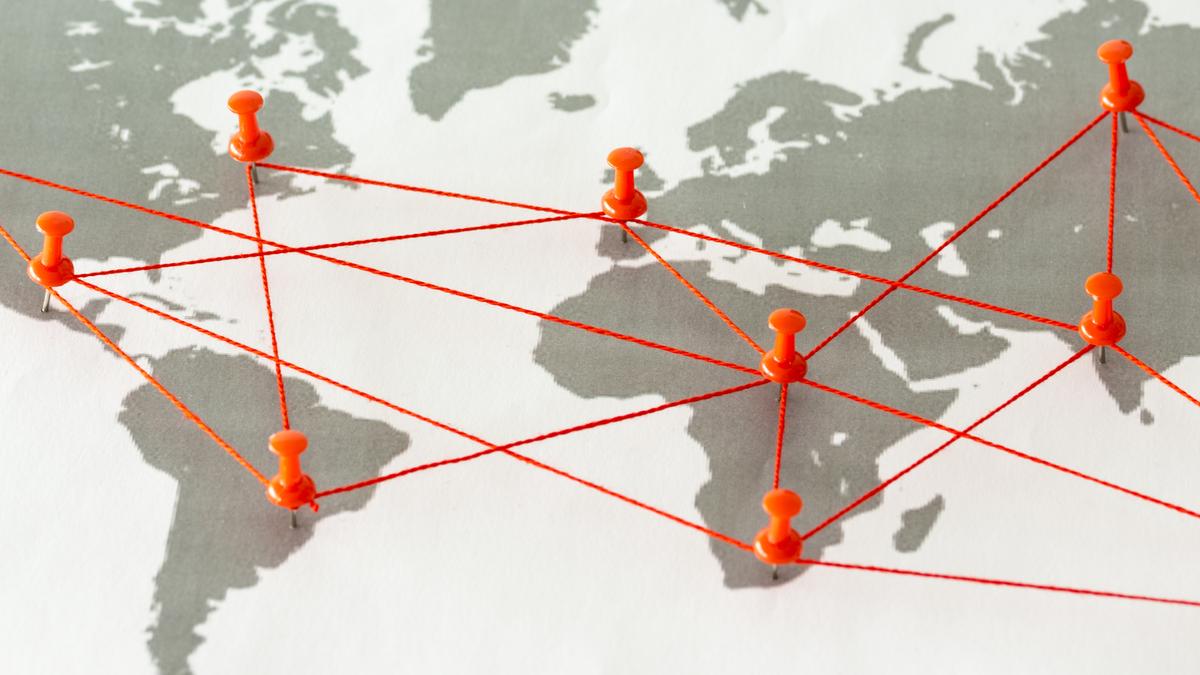
Today, trade is no longer just about economics.
It is increasingly used as a geopolitical tool.
Tariffs are imposed as pressure tactics, and economic dependence is sometimes used strategically.
In this context, the World Trade Organization (WTO)’s Ministerial Conference (MC14 ), to be held in Yaoundé, Cameroon, Africa (March 26-29, 2026), comes at an important moment.
The real issue is not whether the WTO needs reform, but whether it can adapt fast enough to stay relevant in a world moving toward more transactional and power-based trade relations.
The WTO is facing its biggest crisis since its founding in 1995.
Its dispute settlement system is still effectively paralysed because the Appellate Body appointments have been stalled for years.
This weakens trust in the system, since rules matter only when they can be enforced.
At the same time, WTO negotiations have struggled to keep pace with major shifts in global trade.
Digital commerce is growing rapidly and now forms a large part of cross-border economic activity.
Yet, WTO rules have not evolved at the same pace.
India's support measures in auto, renewable energy sectors fully compliant with WTO norms: Official
India warns WTO it may impose retaliatory tariffs on U.S.
over steel, aluminium duty hikes
Decision-making has also become slow and difficult.
With 166 members at very different levels of development, consensus is hard to reach and cumbersome.
As a result, many negotiations produce limited outcomes and long-pending issues remain unresolved.
Meanwhile, geopolitical tensions and the growing use of tariffs as political tools have distorted markets.
However, these problems should not be mistaken for irrelevance.
Most global trade still operates under WTO rules.
If enforceable multilateral rules weaken, global trade would become unpredictable and unstable.
Smaller and poorer countries would suffer the most, because they rely on common rules to protect themselves from pressure by stronger economies.
Against this backdrop, the MC14 offers a chance not just to fix technical problems but to also restore balance between predictability and fairness.
The original balance of rights and obligations in the WTO no longer reflects today’s reality.
Emerging economies now export advanced and technology-intensive products, climate-related trade measures are expanding, and digital networks are reshaping how global production works.
Rules designed for a late 20th century trading system cannot fully govern a 21st century one.
Reform must start with restoring credibility to enforcement.
Without a functioning dispute settlement system, commitments lose their value.
Members need to rebuild a binding, trusted mechanism rather than relying mainly on temporary alternatives that lack universal acceptance.
A robust dispute-resolution system helps remove politics from conflicts and keeps confidence in multilateral rules.
At the same time, predictability must go hand in hand with fairness.
Long-standing disputes over agricultural subsidies, market distortions and unequal openness need transparent solutions.
Many developing countries argue that while WTO rules ensure the rule of law, they do not always deliver the rule of justice.
In other words, rules may be legally correct but still produce outcomes that feel unequal or developmentally unfair.
Reform should, therefore, improve transparency on subsidies, create credible responses to distortive practices, and revisit special and differential treatment so that it remains meaningful in today’s economic conditions.
Institutional adaptability is also important.
The WTO’s structures were designed for a smaller and less complex membership, which contributes to today’s deadlock.
Some countries are moving ahead in smaller groups on issues such as e-commerce, investment facilitation, and services.
These efforts can help progress, but they must remain transparent, inclusive and connected to the wider WTO framework.
Flexibility should help the system move forward, not divide it.
If such initiatives remain open to all members and eventually become part of common WTO rules, they can support reform instead of fragmentation.
Ultimately, WTO reform is not only technical but also normative.
The Munich Security Report warns that a world shaped mainly by transactional deals would favour the powerful and leave weaker countries vulnerable.
The WTO’s value lies in preventing exactly this outcome by ensuring that trade is governed by rules rather than coercion.
In an era of strategic competition, rules do not weaken sovereignty; they protect countries from economic domination.
Rebalancing the WTO is ultimately about securing a workable framework for cooperation in a world where economic interdependence is still unavoidable.
If the MC14 seizes this opportunity, it can show that meaningful reform remains the most credible path to sustaining global trade governance.
Rajeev Ranjan Chaturvedy is an Associate Professor, heading the School of International Relations and Peace Studies, and founding coordinator of the Centre for Bay of Bengal Studies, Nalanda University, Rajgir, Bihar.
Anushka Padmanabh Antrolikar is a postgraduate scholar at Nalanda University, Rajgir, Bihar
Related Stories

Source: This article was originally published by The Hindu
Read Full Original Article →
Comments (0)
No comments yet. Be the first to comment!
Leave a Comment