
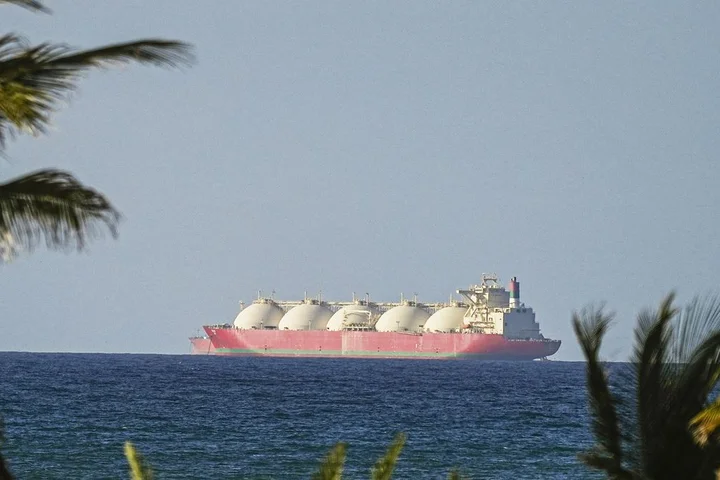
Tehran has agreed to temporarily reopen the Strait of Hormuz, through which much of the world's oil, gas and fertiliser passes, easing concerns for the battered global economy.
While the announcement was broadly welcomed internationally, much work remained to prevent a return to fighting, with UN chief Antonio Guterres calling for all parties to "pave the way towards a lasting and comprehensive peace".
Underlining the precarity of the deal, there were explosions this morning in Bahrain's Manama, with authorities blaming "Iranian aggression".
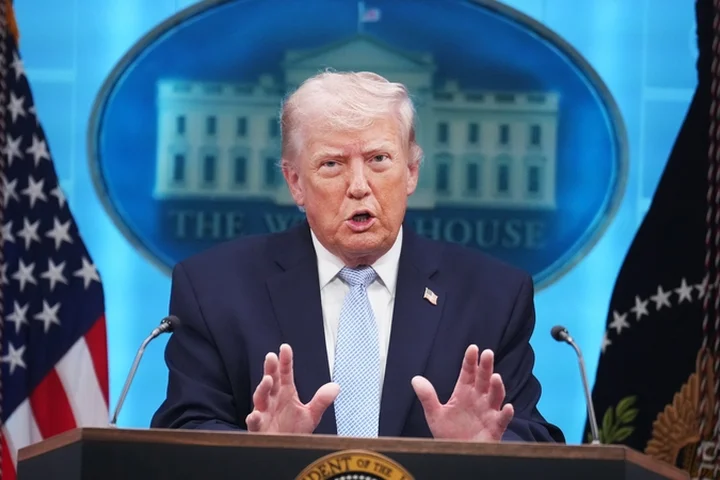
Both Tehran and Washington claimed to have won the more than month-long war, with Mr Trump saying the deal was a "total and complete victory" for the US.
Iran, too, cast the ceasefire as a win and said it had agreed to talks with the US - beginning on Friday - in Pakistan on a path to end the conflict.
"The enemy has suffered an undeniable, historic and crushing defeat in its cowardly, illegal and criminal war against the Iranian nation," said a statement from the Iranian Supreme National Security Council.
"Iran achieved a great victory."
The White House said Israel had also agreed to the ceasefire, but Prime Minister Benjamin Netanyahu said it does not include Lebanon, where Israel's response to rocket fire by Iranian-backed Hezbollah has killed more than 1,500 people, according to Lebanese authorities.
Today, the Israeli military pressed on with its occupation of south Lebanon, warning residents of one building near the city of Tyre to evacuate, with Lebanese state media reporting renewed strikes.
Lebanese President Joseph Aoun welcomed the ceasefire agreed by the United States and Iran but said he hoped his country would be included in the regional truce.
Mr Aoun said Beirut "continued efforts to ensure that the regional peace includes Lebanon in a stable and lasting manner".
Israel had encouraged Mr Trump to launch the war against Iran, its arch-foe, and in the first strikes killed Tehran's long-serving supreme leader, Ayatollah Ali Khamenei.
A peace agreement would leave in place the Islamic republic, despite US and Israeli hopes of toppling it.
The United States and Israel said that they attacked Iran to degrade its military capacity.
McEntee says ceasefire must include Lebanon
Minister for Foreign Affairs Helen McEntee has welcomed the agreement reached overnight but said that any ceasefire deal must include Lebanon.
"Any ceasefire must be comprehensive and include Lebanon, and I call on Hezbollah and Israel to cease attacks and military operations," Ms McEntee said.
"The Strait of Hormuz must open and remain safe to pass.
The protection of civilians must remain paramount, and all parties must uphold their obligations under international law.
"I urge all parties to de-escalate and engage in negotiations towards a durable ceasefire and a lasting, peaceful resolution."
The European Commission welcome the US-Iran ceasefire announcement, adding that the EU's priorities remained that Iran be prevented from acquiring a nuclear weapon, that Tehran "put an end to its destabilising activities", including its ballistic missiles programme, and that it must guarantee freedom of navigation on the Strait of Hormuz.
'Safe opening' of Strait of Hormuz
Mr Trump said he had spoken to Pakistan's leaders who "requested that I hold off the destructive force being sent tonight to Iran."
He later said he believed China had helped to get Tehran to negotiate.
"Subject to the Islamic Republic of Iran agreeing to the COMPLETE, IMMEDIATE, and SAFE OPENING of the Strait of Hormuz, I agree to suspend the bombing and attack of Iran for a period of two weeks," Mr Trump wrote on his Truth Social platform at 11.32pm (Irish time) last night.
Mr Trump had set a deadline for Iran to open the Strait of Hormuz by 1am Irish time.
Iranian Foreign Minister Abbas Araghchi confirmed safe passage for two weeks for ships through the strait, which Tehran sealed off in retaliation for the war.
"If attacks against Iran are halted, our Powerful Armed Forces will cease their defensive operations," Mr Araghchi said.
This morning, Mr Trump posted on social media that the US would "be helping with the traffic buildup in the Strait of Hormuz".
Uranium to be 'taken care of' - Trump
Oil prices plunged by more than 17% after the ceasefire announcement, while European natural gas dropped 20%.
Stock prices also soared in early trade in Asia.
Mr Trump said the United States was "very far along" in negotiating a long-term agreement with Iran, which had submitted a 10-point plan that he said was "workable."
But Iran publicly released points that took maximalist positions, including lifting long-standing US sanctions, guaranteeing its own "dominion" over the strait and removing US forces from the region.
Crucially, it also said its plan would require Washington to accept its uranium enrichment programme.
Mr Trump has alleged that Iran was near to building an atomic bomb, an assertion not backed by the UN nuclear watchdog and most observers.
He insisted the nuclear material would be covered by any peace deal.
"That will be perfectly taken care of, or I wouldn't have settled," Mr Trump said, without giving any specifics about what would happen to the uranium.
Mr Trump would not say whether he would go back to his original threats to lay waste to all power plants and bridges across the country of 90 million people if the deal fell apart.
"You're going to have to see," he said.
The US leader had made threats shocking even by his own standards when he warned that "a whole civilization will die tonight, never to be brought back again.
I don't want that to happen, but it probably will."
Pope Leo XIV said that "this threat against all the people of Iran" was "truly unacceptable".
The US and Israel struck key infrastructure before Mr Trump's deadline, with Netanyahu saying attacks hit railways and bridges allegedly used by the Revolutionary Guards.
Iran has retaliated with weeks of drone and missile attacks on Gulf Arab states, citing their role as hubs for US troops.
The attacks have shattered the monarchies' hard-fought reputation for safety and stability.
Today, the United Arab Emirates, which bore the brunt of Iran's Gulf attacks, also claimed victory.
"The UAE emerged victorious from a war we sincerely sought to avoid," presidential adviser Anwar Gargash said in a post on X.
Much global reaction, however, focused on the need to turn the ceasefire into a workable peace deal.
Oman, which mediated unsuccessful talks between Washington and Tehran that were halted by the war, spoke of "the importance of intensifying efforts...
to identify solutions capable of resolving the crisis at its roots".
British Prime Minister Keir Starmer announced an immediate visit to the Gulf and declared "we must do all we can to support and sustain this ceasefire, turn it into a lasting agreement and re-open the Strait of Hormuz".
Analysis: Relief as Trump pulls back at eleventh hour US-Iran truce: What we know Oil slides below $100 after Trump announces two-week ceasefire
Related Stories

Source: This article was originally published by RTÉ News
Read Full Original Article →
Comments (0)
No comments yet. Be the first to comment!
Leave a Comment