
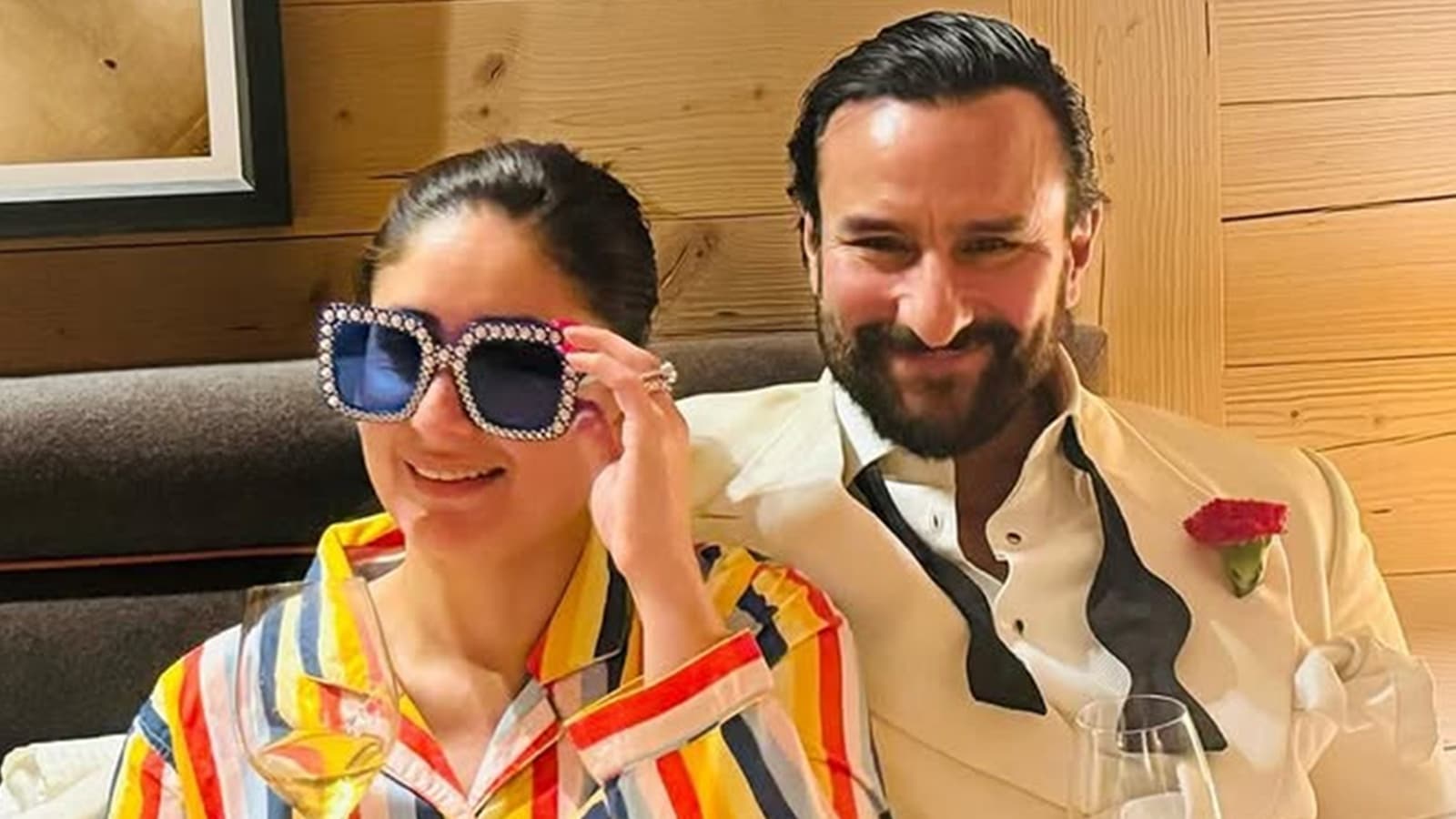
In a deeply personal conversation, Saif Ali Khan reflects on how maturity and his partnership with Kareena Kapoor Khan changed his outlook on love.
In a recent podcast episode hosted by his sister, Soha Ali Khan, actor Saif Ali Khan discussed what makes a relationship work over time.
Reflecting on his marriage with Kareena Kapoor Khan, he acknowledged feeling fortunate to be in a stable partnership today.
“I am very lucky that my wife and I have been on the same page,” he said, while also admitting that things had not always been this way for him.
“Relationship-wise, I have not always been lucky or settled or super happy, but I am today for various reasons, my maturity, as well as the kindness and understanding of my partner.”
Speaking about emotional needs in relationships, Saif reflected on how personal history and upbringing can shape expectations from a partner.
“I can be emotionally needy, but it depends… because of the conditioning and the relationship we had with our parents.
In a relationship, sometimes your partner helps deal with those issues,” he said.
Addressing insecurities that can arise in relationships, especially when partners work closely with others, Saif noted that trust often depends on how secure individuals feel within themselves.
“It’s not in every relationship that you’d say, ‘Today in my job I had to kiss somebody else.’ We once said, let’s do this deal of no kissing onscreen, but that’s not a way to do it.
Sara once said I think the deal should be no kissing off-screen.” He added that such insecurities can sometimes surface early on.
“There is a point initially when you test each other because you are in the company of the opposite sex, doing songs and intimate scenes.”
Ultimately, he believes that insecurity is often more about personal feelings than a partner’s actions.
“Insecurity sometimes has nothing to do with the other person but with how you are.
That needs to be negotiated.
If the person reassures you, then you get through it.
If it’s not real or doesn’t work, it falls apart.”
So, what shapes a person’s emotional needs and insecurities in adult romantic relationships?
Psychologist Rasshi Gurnani tells indianexpress .com , “Early childhood experiences play a significant role in shaping how individuals experience intimacy and security in adult relationships.
If affection, validation, or stability were unpredictable, individuals may develop anxious attachment patterns, where they seek reassurance and fear abandonment.
This can manifest as emotional neediness or heightened sensitivity to rejection in romantic relationships.”
Even people who appear confident or successful externally , she says, may carry internal relational wounds.
“When someone like Saif Ali Khan speaks about feeling emotionally needy, it often reflects a deeper desire for emotional safety and stability that may not have been consistently experienced earlier.”
Strategies to help partners preserve both individuality and emotional closeness after parenthood
The transition to parenthood significantly restructures a couple’s emotional ecosystem.
After children enter the picture, Gurnani notes that partners often shift from being primarily romantic companions to co-parents managing responsibilities, fatigue, and shifting priorities.
She suggests, “Small rituals such as regular check-ins, protected couple time, and open communication about emotional needs help maintain relational security.
Equally important is preserving individual identity beyond parenting roles.
When partners maintain personal interests, friendships, and autonomy, they return to the relationship with renewed emotional energy.”
Addressing insecurity or emotional dependence in a healthy way
Emotional dependence and insecurity are not inherently unhealthy; they often signal a need for reassurance, safety, or deeper emotional attunement.
“Healthy couples address insecurity through emotional transparency and co-regulation rather than blame or withdrawal.
The partner experiencing insecurity benefits from developing emotional awareness and self-regulation skills such as reflecting on triggers, practising self-soothing, and building self-worth outside the relationship,” asserts Gurnani.
Related Stories



Source: This article was originally published by The Indian Express
Read Full Original Article →
Comments (0)
No comments yet. Be the first to comment!
Leave a Comment