
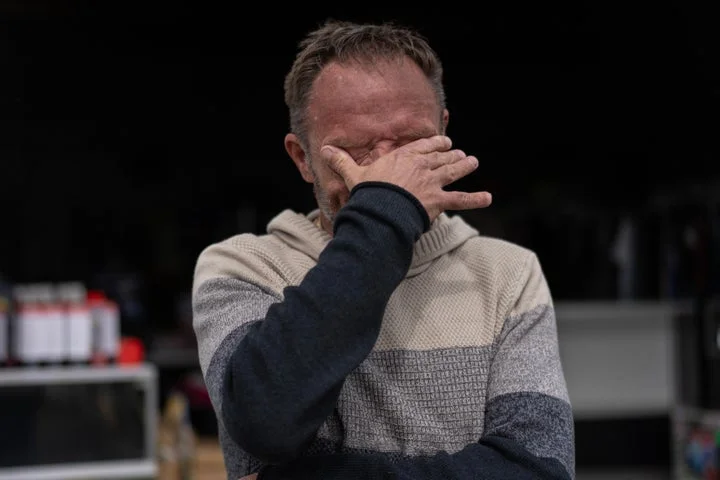
Anger is mounting over utility costs that are eclipsing rents and mortgages in one of America's most energy-rich, yet poorest, regions
Despite her meticulous efforts to conserve energy , including turning off lights during the day and using a single energy-efficient bulb at night, Michalski finds herself increasingly behind on payments.
A cut-off notice during an extended arctic blast, which saw temperatures regularly dip below zero and heaters working overtime, forced her to take out a loan in desperation.
"Every time you see that power bill, you’re just sick," Michalski said, sifting through a stack of statements totaling thousands of dollars.
"I already know before I open it.
I just dread seeing how much." Her plight is far from isolated.
President Donald Trump , as part of his campaign pitch to “make America affordable again,” promised to cut Americans’ electricity bills by half during his first year to 18 months in the White House .
“And if it doesn’t work out, you’ll say, ‘Oh well, I voted for him, I still got them down a lot,’” he said.
“You will never have had energy so low as you will under a certain gentleman known as Donald J.
Trump.”
Instead, electricity increased 4.8% in February nationwide and piped natural gas prices rose 10.9%, both compared with a year earlier, according to the Labor Department’s Consumer Price Index.
That surpassed inflation even before the attacks on Iran by the U.S.
and Israel sent energy costs ballooning.
It’s becoming an increasingly aggravating issue for some voters.
Rising electricity bills emerged as a campaign issue in recent elections, including during gubernatorial races won by Democrats in New Jersey and Virginia.
Cost concerns are expected to surface during midterms this fall, and an analysis by the nonprofit PowerLines found residents are not likely to get a break any time soon because new gas and electricity rate hike requests could affect more than 80 million Americans.
An AP-NORC poll conducted in March also found 35% of U.S.
adults were “extremely” or “very” concerned about being able to afford electricity in the next few months.
“It’s breaking me.
And there’s nothing that can be done for it, unless the president does something,” Michalski said about her skyrocketing power bills, adding she no longer supports Trump.
“And I don’t see him doing it.
He’s had plenty of time.”
Increased demand, extreme weather and events, upgrading and maintaining aging infrastructure and rising natural gas prices are pushing electricity bills higher.
Rising energy costs — including gas pump sticker shock now topping an average $4 per gallon nationally — could further be exacerbated by the war in Iran along with the Trump administration’s push to export higher volumes of liquefied natural gas — which, in turn, depletes domestic supply.
Ratepayers are also wary as more power-gobbling data centers for artificial intelligence and cloud computing are being built or warmly embraced by politicians in places like West Virginia — where residents deep in Trump country have gone from having the cheapest electricity rate nationwide in 2005, to experiencing one of the fastest increases in the country, far outpacing the national average, according to data from the U.S.
Energy Information Administration.
All in a place where people are living atop vast deposits of coal, oil and gas.
Coal remains king here, but it wears a pricey crown.
The state is an outlier nationwide because of its stubborn resistance to adopting cleaner, cheaper sources of energy, such as nuclear power, natural gas — even though it’s one of the nation’s top producers — and renewables like wind and solar.
Instead, West Virginia clings to aging coal-fired electric plants more than anywhere else in the country — about 87% of all production.
Its supermajority Republican-led government — there are only 11 Democrats in the House and Senate — has doubled down on this reliance, blaming past Democratic administrations for a war on coal fueled by increased federal regulations and restrictions, while Trump poses for photo ops with coal miners at the White House and regularly touts “beautiful, clean coal.”
“Lowering electricity prices is a top priority for President Trump,” said White House spokeswoman Taylor Rogers, blaming former President Joe Biden for the problem.
“He is aggressively unleashing reliable energy sources like coal and natural gas.”
Trump has forced unprofitable coal-powered plants to remain open, rolled back pollution standards for them and provided hundreds of millions of dollars in funding to improve them.
He’s also streamlined permitting and regulations to push for mining expansion when coal mines have been shutting down in the state, including several operations this year that eliminated more than 700 jobs.
“If you’re not 100% in on coal, then you’re a traitor.
… It’s like a measure of patriotism,” said Jamie Van Nostrand, policy director at the nonprofit Future of Heat Initiative and a former West Virginia University professor who wrote a book about the state’s reliance on coal energy.
“I think if you went to the average West Virginian and said, ‘Yeah, we understand you want to support the coal industry, but do you want to support it to the extent that you’re OK paying twice as much as you should be for electricity?’”
The state’s average household electricity rate per kilowatt-hour has surged 73%, natural gas has increased 51% per 1,000 cubic feet and water has risen 45% per 1,000 gallons from 2015 to 2025, according to West Virginia’s Public Service Commission, a three-member panel.
It includes a former power company lobbyist and the former head of the state coal association — appointed by the governor and charged with approving rate hikes.
Even though monthly bills remain higher in other states, salaries in West Virginia have simply not kept pace — it’s the only place in the country where the median inflation-adjusted household income was lower in 2023 than it was in 1970, according to the Urban Institute.
That means residents are seeing larger chunks of their paychecks going to utilities compared to people in other places.
Michalski, who’s disabled and uses a walker to get around, said she tries not to run anything in her house that can suck electricity, including her air conditioning in summer.
But she simply can’t turn off the heater.
During the past year, her statements totaled over $5,000.
She asked family for help paying the bill this winter, but said she’s now out of options.
“They come and cut off your power.
Then you’re sitting in the dark.
And I see that happening,” she said.
“And I think for a lot of other people, it’s gonna happen too.”
“It only makes the rich richer”
Isolated by its beautiful, rugged mountains, West Virginia sits entirely within Appalachia and has long been listed at the bottom of a laundry list of failings, including poor health and a lack of education.
Many residents from rural areas have lived on the same land for generations, watching a cycle of outside companies profit from extracting the state’s resources — from timber to coal and oil and gas — only to pollute and abandon communities afterward.
Some, including those living in scenic areas where tourism is a major revenue driver, are protesting Big Tech companies rushing to build enormous data centers, fearing they could lead to the next cycle of outsiders taking advantage of the state’s resources.
They have been loud over a lack of public input and transparency around plans to build the complexes, questioning noise pollution, huge water consumption and the effect on ratepayers’ electricity prices.
“We just roll back regulations and we keep being promised that deregulating and privatizing our systems is gonna fix everything, and it never does,” said Caitlin Ware, a pastor who advocates for clean water in southern West Virginia — her thoughts briefly interrupted as the electricity abruptly went off in her Sandyville United Methodist Church.
“It only makes the rich richer, and it only puts us in a worse situation.”
In February, Gov.
Patrick Morrisey proudly announced plans to build a data center on nearly 550 acres in Berkeley County.
“This $4 billion investment is a historic win that proves West Virginia can compete at the highest level for the global tech economy,” he said in a statement.
It did not explain where the water or electricity would come from to run the 600 megawatt, 1.9 million square foot facility.
Morrisey’s office did not respond to a request for comment.
The reasons behind nationwide utility price hikes are complex and vary among regions.
They include adding new transmission, distribution lines and power poles; increased brutal high and low temperatures; extreme weather events such as hurricanes and wildfires; and volatility in fuel costs such as surging gas prices during the war in Ukraine.
These all play a huge role in rising bills that have left some 80 million Americans struggling to pay their monthly gas and electric bills, said Charles Hua, founder of consumer advocacy organization PowerLines that found investor-owned gas and electric utility companies asked for nearly $31 billion in increases last year nationwide, double the amount requested a year earlier.
He said utility costs have become the new affordability issue akin to soaring egg prices that previously enraged consumers, making it a possible player in this fall’s elections to control Congress.
“Electric bills have gone up 40% over the last five years,” he said.
“This is likely to continue to rise.
This is definitely something that the Trump administration and President Trump are very concerned about.”
In West Virginia, all 55 counties voted for Trump in 2024.
But it was a Democratic stronghold for decades prior to the switch when coal mines were the lifeblood, and unions were virtually unbreakable.
The state has struggled immensely under both parties: It has experienced a major brain drain, a devastating opioid epidemic, a growing elderly population and its coveted coal industry jobs have dried up with nothing to replace them.
That leaves people who work minimum wage jobs, those on fixed incomes and even college-educated middle-class families with two paychecks being pushed to the breaking point with affordability issues, including rising car insurance, grocery bills, health care and housing.
“I love West Virginia because it’s beautiful.
But anymore, it’s just a sham from the local government all the way up to Charleston,” she said, adding she believes the state’s Public Service Commission should be elected, and Trump should send her a check since he promised to cut electricity bills in half.
“I have no choice.
It has to be paid,” she said.
“And that’s what makes me sick because now I’m going to have to go … take more money out of my savings account just to keep the lights on.”
The coldest winter months were the hardest.
Some people confined themselves to one room with small space heaters or used generators when they got behind on their electricity bills and were disconnected.
Others were forced to choose between food, medicine and warmth, with some turning their thermostats down to 60 degrees and bundling up or coming out of retirement to take part-time jobs.
For some, the spiral began in November when their Supplemental Nutrition Assistance Program, or SNAP, benefits were put on hold due to the federal government shutdown.
United Way’s Central West Virginia helpline saw more than a 1,300% increase during that time, and calls for help paying utilities were second only to housing last year.
More than one in three West Virginia households is considered energy burdened, spending more than 6% of their income on electricity and other fuel costs.
Of those, about 20% are low-income residents who shoulder some of the highest energy costs in the state.
Last year, Trump fired the staff of a federal program that assists millions of low-income Americans with heating bills in the winter and proposed eliminating all of its funding in his budget — a move repeated this year.
Congress allocated money for it, but billions of dollars were delayed due to the shutdown.
However, many West Virginians falling behind on bills are not eligible to apply because they make just a little too much money.
“Every month we get our utility bills, I’m so angry.
I’m like, ‘Why is this so high?’” she said, adding it’s not unusual to pay $200 to $300 for electricity and the same for water, sewage and garbage combined every month.
“And we can’t figure it out.
Nothing seems to be wrong … and we’re not wasteful.”
Bills introduced that would have temporarily frozen electricity rates in West Virginia or helped those who are most vulnerable went nowhere this year in the state legislature even though increased energy costs are often passed on to ratepayers.
The Public Service Commission has approved a flurry of rate hikes in recent years as private utilities grapple with maintaining profits while improving infrastructure in a mountainous, sparsely populated state.
It’s been a particularly tough burden for some small businesses to carry.
In the western town of Ravenswood, just across the river from Ohio, some shop owners were forced to shut down this winter because they couldn’t pay their electric bills.
Heather Santee said the power at her bakery was abruptly terminated just ahead of Valentine’s Day.
She was behind on her bill, but said she would have been able to pay the necessary chunk of the $4,000 she owed if she could have stayed open long enough to fulfill the holiday orders.
Instead, the shut-off forced her out, leaving the tenants living in apartments upstairs without heat too.
“Once I started getting those high electric bills in the winter, I was like, ‘This will be what closes me down,’” she said, adding the bakery was her dream and the loss has her thinking maybe it would be better to just leave the state altogether.
“West Virginia is holding back a lot of people because they are allowing these bills to be so high.”
Even though he still supports Trump, after leaving the Democrats to vote Republican, he’s becoming increasingly concerned that neither party cares about struggling people in America.
“All I heard was … ‘Drill, baby, drill,’” he said, repeating Trump’s popular catch phrase to encourage domestic energy production.
“OK.
Well, they’re drillin’.
Why’s my bill the same?”
Join thought-provoking conversations, follow other Independent readers and see their replies
Related Stories


Source: This article was originally published by The Independent
Read Full Original Article →
Comments (0)
No comments yet. Be the first to comment!
Leave a Comment