
Updated on: March 13, 2026 / 12:40 PM EDT/ CBS News
The Trump administration is prepared to waive theJones Actto loosen shipping rules as theIran warcontinues, the White House said Thursday.
The 100-year-old statute requires goods shipped between U.S.
ports to be carried on ships that are U.S.-built, U.S.-flagged and U.S.-crewed, and it limits the number of tankers domestic shippers can use.
"In the interest of national defense, the White House is considering waiving the Jones Act for a limited period of time to ensure vital energy products and agricultural necessities are flowing freely to U.S.
ports," White House spokeswoman Karoline Leavitt said in a statement to CBS News.
"This action has not been finalized."
Waiving the rule would allow foreign ships to move fuel between U.S.
ports, helping to ease supply disruptions andpotentially lower energy prices, according to experts.
The Trump administration can temporarily lift the Jones Act if it determines a waiver is necessary for national defense.
But the measure could have only modest cost-saving benefits, according to the Center for American Progress.
The nonpartisan think tankestimatesthat waiving the law would reduce gas prices by only three cents per gallon.
In a blogpost, trade policy expert Colin Grabow of the Cato Institute argued in favor of rescinding the Jones Act, noting how the law curtails transportation options.
"The Jones Act's restrictions are particularly stark in the context of energy transportation.
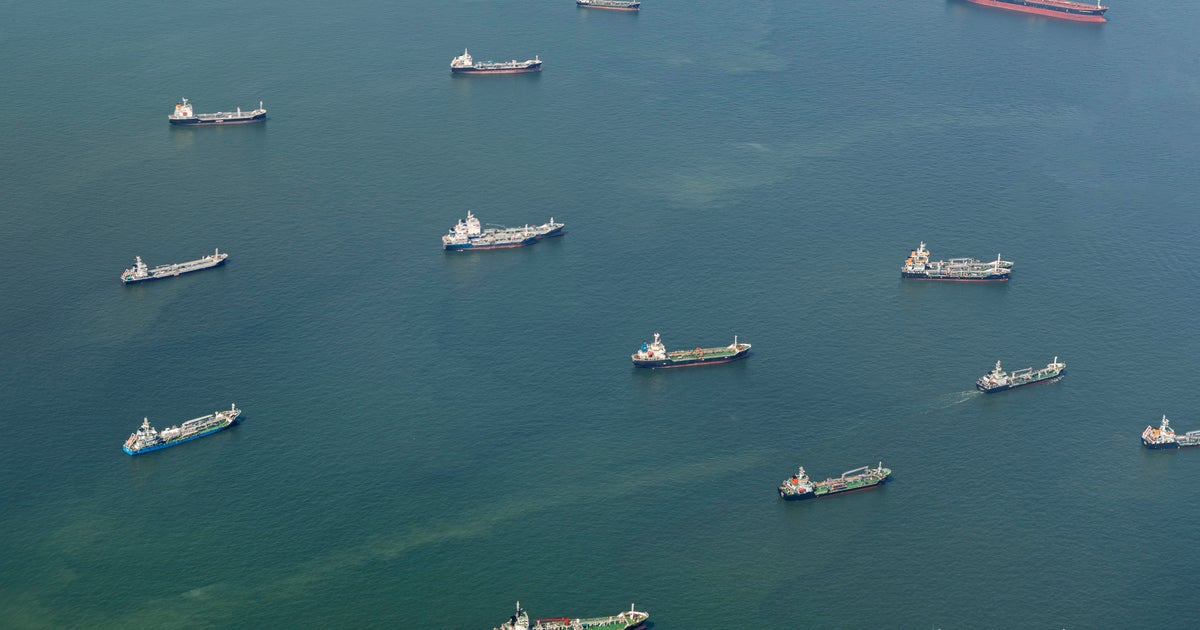
Of the world's nearly 7,500 tankers for moving crude oil and refined products, just 54 comply with the law.
And those that do are dramatically more expensive than their international counterparts," he wrote.
Oil and gas prices have surged since theU.S.
and Israel attacked Iranon February 28, raising costs for motorists and creating inflationary pressures.
Brent crude, which hovered around $60 in early January, rose 8% on Thursday and briefly topped $100, according to FactSet.
West Texas Intermediate, the U.S.
benchmark, jumped nearly 9% to $95.02 a barrel.
Energy costs are flaring even after theTrump administrationand the International Energy Agency said on Wednesday that member countries in the organization would inject a total of400 million barrelsinto global energy markets to shore up oil supply.
Gas prices, which are influenced by the cost of oil, taxes and other seasonal factors, also swung higher on Thursday, hitting $3.60 a gallon, according toAAA.
That's up about 60 cents since before the war started.
Edited byAlain SherterandAimee Picchi
© 2026 CBS Interactive Inc.
All Rights Reserved.
Related Stories



Source: This article was originally published by CBS News
Read Full Original Article →
Comments (0)
No comments yet. Be the first to comment!
Leave a Comment