
Updated on: April 9, 2026 / 11:53 AM EDT / CBS News
What to know about the Iran war today:
Netanyahu says he instructed Cabinet to negotiate directly with Lebanon
Israeli Prime Minister Benjamin Netanyahu said Thursday he has instructed Israel's Cabinet to open direct negotiations with Lebanon.
"In light of Lebanon's repeated calls to open direct negotiations with Israel, I instructed the Cabinet yesterday to open direct negotiations with Lebanon as soon as possible," he said.
The negotiations will focus on disarming Hezbollah and establishing a peaceful relationship between Lebanon and Israel, Netanyahu said.
His statement comes as Israel is continuing strikes in Lebanon amid its ongoing war with Hezbollah.
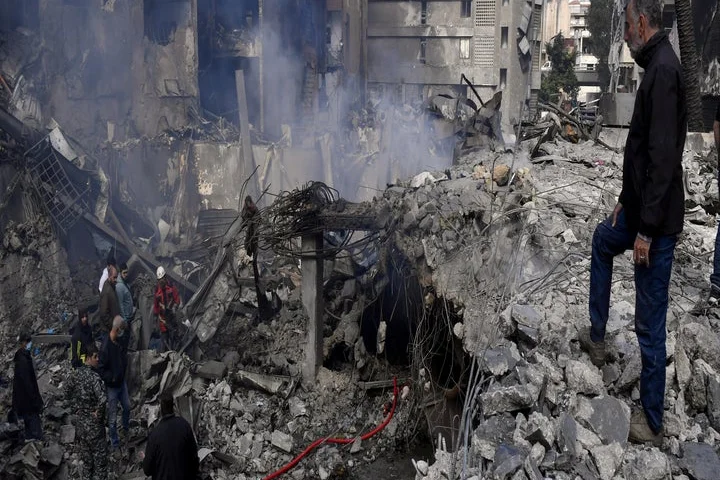
Israel's military said Wednesday it hit 100 purported Hezbollah targets across the country in just 10 minutes – attacks that Lebanon said killed more than 200 people.
Lebanon has emerged as a flashpoint in President Trump's effort to end the Iran war.
The U.S.
and Israel have publicly disagreed with Iran and Pakistan over whether the country to Israel's north is included in the Iran war ceasefire.
Iran's parliament speaker warns of "strong responses" if strikes on Lebanon continue
Iran's parliament speaker warned Thursday on X that continued Israeli attacks on Hezbollah in Lebanon would bring "explicit costs and STRONG responses."
Like other Iranian officials, Mohammad Bagher Qalibaf insisted that the two-week ceasefire extended to Lebanon, something denied by both Israel and the U.S.
"Ceasefire violations carry explicit and STRONG responses," he wrote.
"Extinguish the fire immediately."
Qalibaf has been discussed as a possible negotiator who could meet U.S.
Vice President JD Vance this weekend for talks in Islamabad, the capital of Pakistan.
Lebanon says 203 people killed in Israeli strikes Wednesday.
Israel says it killed 200 terrorists.
Israel's defense chief said Thursday that the country's massive wave of airstrikes the previous day in neighboring Lebanon had killed "200 terrorists," dealing what he called "a very strong blow to" Iran's proxy force in the country, Hezbollah.
The number offered by Defense Minister Israel Katz in his televised remarks was almost identical to the death toll reported from the strikes by Lebanon's Health Ministry, and while the ministry does not give a breakdown of civilians and militants in its casualty figures, reports from Lebanese media and posts online showed vast destruction in residential neighborhoods, with civilians among those impacted.
Lebanon's Prime Minister Nawaf Salam said that the Israeli strikes "led to a large number of civilian casualties."
In his remarks, Katz also reinforced the Israeli and U.S.
government's position that the war in Lebanon was not included in the two-week ceasefire agreement reached Tuesday night between the Trump administration and Iran.
The Iranian regime — and Pakistan, which brokered the deal — disagree, and have accused Israel and the U.S.
of violating the ceasefire by continuing strikes in Lebanon.
"The agreement on the separation of the arenas is an important achievement led by the Prime Minister, and allows us to act forcefully against Hezbollah according to an orderly plan," Katz said.
Katz said weeks ago that Israeli forces would occupy a large section of southern Lebanon, from which all residents have been ordered to evacuate, indefinitely, until the threat posed by Hezbollah to northern Israel is removed.
He reiterated that plan on Thursday, saying the Israel Defense Forces would "prevent the infiltration of additional terrorists and the return of residents to the south."
U.S.
has struck more than 13,000 targets since Iran war began
Data compiled by CBS News shows more than 13,000 targets struck by the U.S.
and Israel during the military operation in Iran, as well as strikes by Iran in 12 countries across the region since the war began.
A two-week ceasefire deal was announced on Tuesday but Israel continues striking targets in Lebanon it says are linked to Iran-backed Hezbollah.
Germany calls Iran war "stress test" for NATO, says Israeli actions could cause "failure of the peace process"
German Chancellor Friedrich Merz acknowledged that the Iran war has become a "stress test" for NATO and said he doesn't want it to burden trans-Atlantic relations further.
Merz said he and Trump discussed the alliance's future in a phone call Wednesday and that he offered to discuss it again before a NATO summit in Ankara, Turkey, in July.
Merz said that "it is my firm intention to do everything to preserve the protection of NATO, including the United States of America, for Europe."
He added that "this alliance, at least at present, cannot be replaced by anything, so I have a great interest in preserving it and developing it further with the American president."
Chancellor Friedrich Merz said that "the severity with which Israel is waging war there could cause the failure of the peace process as a whole, and that must not happen."
He said that he and others had asked Israel on Wednesday to "end its further intensified attacks" and that his foreign minister had spoken twice to his Israeli counterpart.
Merz also spoke to Trump on Wednesday.
The chancellor said on Thursday that the German government would start talking to Iran again, in consultation with the U.S.
and its European partners, in the interest of making "our own contribution" to the success of peace negotiations.
Merz didn't specify with whom Germany intends to speak or when.
U.S.
Army survivors of deadly Iranian attack in Kuwait dispute Pentagon's account
Survivors of the deadliest Iranian attack on U.S.
forces since the war began have disputed the Pentagon's description of events and said their unit in Kuwait was left dangerously exposed.
Six service members were killed and more than 20 wounded in the attack.
Speaking publicly for the first time, members of the targeted unit offered CBS News a detailed account of the attack and its harrowing aftermath.
They disputed the description of events from Defense Secretary Pete Hegseth, who called the drone a "squirter" — suggesting it squirted through the defenses of a fortified unit inside Kuwait.
"Painting a picture that 'one squeaked through' is a falsehood," one of the injured soldiers told CBS News.
"I want people to know the unit … was unprepared to provide any defense for itself.
It was not a fortified position ."
"I don't think that the security environment or any leadership decision diminishes in any way their sacrifice or their service," the member of the Army's 103rd Sustainment Command said in an interview.
"Those soldiers put themselves in harm's way and … I'm immensely proud of them, and their family should be proud of them."
Trump wants to see concrete plans for securing Strait of Hormuz, NATO chief tells U.S.
allies
NATO Secretary General Mark Rutte has told several of America's allies that President Trump wants to see ironclad commitments in the coming days for help to secure the Strait of Hormuz, the Reuters news agency quoted two European diplomats as saying on Thursday.
After meeting Wednesday with Mr.
Trump at the White House, Rutte told CNN the president was " clearly disappointed with many NATO allies" for refusing to join the U.S.-Israeli war against Iran, adding: "I can see his point."
Since the war began, Mr.
Trump has derided NATO allies as "cowards" and the alliance itself as a "paper tiger." He's suggested he could move to unilaterally withdraw the U.S.
from the alliance he helped to found more than 70 years ago.
After his meeting with Rutte, Mr.
Trump posted on Truth Social: "NATO WASN'T THERE WHEN WE NEEDED THEM, AND THEY WON'T BE THERE IF WE NEED THEM AGAIN."
Weighing in again with a new post on Thursday morning, he said "none of these people, including our own, very disappointing, NATO, understood anything unless they have pressure placed upon them!!!"
Estonian Foreign Minister Margus Tsahkna told CNBC on Wednesday: "If the U.S.
or any other NATO ally is asking (for) our support, we are always ready to discuss it … But for that, we need of course the official ask to discuss then, what is the mission, what is the goal?"
If allies "need our support," he added, "then we need to plan together."
President Trump did not consult with America's NATO allies before launching the joint war with Israel against Iran, only demanding that they join the effort after the fact.
Lebanon to take complaint to U.N., says Israel "blatantly violates the principles of international law"
Lebanon's Prime Minister Nawaf Sallam said Thursday that his government would "urgently file a complaint with the United Nations Security Council regarding the escalation of Israeli attacks on Lebanon and their expansion yesterday."
Israel's military said it carried out its most intense day of strikes in Lebanon Wednesday, which it says targeted an expanding Hezbollah presence in the neighboring nation.
Hezbollah, long designated as a terrorist group by Israel, the U.S.
and the European Union, is a deeply entrenched political force in Lebanon, but it is also a well-armed Iranian proxy group that routinely attacks Israel with rocket fire.
"This escalation runs counter to all international and regional efforts to stop the war in the region, blatantly violates the principles of international law and international humanitarian law, and goes even further in breaching them," Sallam said Thursday .
He also said the cabinet was ordering Lebanon's security forces "to preserve the safety, security, and property of citizens," including by reinforcing "the full control of the state over Beirut" and ensuring that weapons were around the capital were held exclusively by "legitimate forces."
Israel regularly accuses Lebanon's government of failing to remove the threat to its security posed by Hezbollah.
Lebanon to take complaint to U.N.
as Israel "blatantly violates the principles of international law"
Lebanon says at least 203 people killed in Israel's attacks on Wednesday alone
Lebanon's Minister of Health Rakan Nasser al-Din said Thursday that the death toll from Israel's strikes on the country on Wednesday had risen to 203, with over 1,000 people wounded, according to Lebanese media.
Pakistan's government said the country's top diplomat spoke Thursday in a phone call with his European Union counterpart and that both voiced their "concern over serious violations of the ceasefire in Lebanon."
Both Iran and Pakistan, which brokered the ceasefire President Trump said his administration had agreed to on Tuesday night, say the deal included a cessation of all U.S.
and Israeli military action against Iran and its allies, including Hezbollah in Lebanon.
The White House and Israel's government say Israel's ongoing war in Lebanon was never part of the agreement.
According to the readout of the call from the Pakistani Foreign Ministry, Minister and Senator Mohammad Ishaq Dar and EU High Representative for Foreign Affairs Kaja Kallas stressed the importance of the conditional U.S.-Iran ceasefire's "full implementation."
In a social media post, Kallas said separately that "Hezbollah dragged Lebanon into the war, but Israel's right to defend itself does not justify inflicting such massive destruction.
Israeli strikes killed hundreds last night, making it hard to argue that such heavy-handed actions fall within self-defense."
The EU diplomat said Israel's actions were putting the ceasefire "under severe strain" and that the agreement "should extend to Lebanon."
Spain accuses Israel of "flouting the ceasefire," says ambassador will return to Iran
Spain's Foreign Minister Jose Manuel Albares on Thursday accused Israel of "flouting" the U.S.-Iran ceasefire and violating international law with a massive round of airstrikes on Lebanon.
Spain has been among the most vocal critics in Europe of the joint U.S.-Israeli war on Iran, and Israel's parallel war against Iranian-backed Hezbollah in Lebanon.
Madrid closed its airspace to aircraft involved in the war.
"Yesterday we saw how Israel, flouting the ceasefire and in violation of international law, dropped hundreds of bombs on Lebanon," Albares told said in Spain's parliament on Thursday, hours after announcing that the country's ambassador would return to Tehran "to take up his post again and reopen our embassy, and for us to join in this effort for peace from every possible quarter, including from the Iranian capital itself."
Israeli foreign minister Gideon Saar slammed Spain for the move, saying in a post on social media: "The Iranian terror regime is renewing the executions of its citizens, protesters, and political opponents.
Spain is reopening its embassy in Tehran.
Hand in hand.
Without shame.
To the disgrace of the world."
Oil prices back up and stock markets cool down as Iran ceasefire optimism dissipates
Oil prices rebounded Thursday and stock markets were flat or slightly lower in Asia as the dispute over the Iran war ceasefire revived concerns that the conflict could reignite, and as investors assessed the likely lingering effects of damage already done to the global economy.
Despite President Trump's insistence, there was little indication that oil and other commodities would start moving freely again through the Strait of Hormuz, as Iran kept its grip on the vital waterway.
"You have a fifth of the world's oil supply moving through a corridor that is still effectively under the influence of one of the parties to the conflict," Nigel Green, CEO at the deVere Group financial firm told the Reuters news agency.
"That's not stability."
That lack of certainty pushed U.S.
crude futures back up 3.1% to $97.33 a barrel early Thursday, as global benchmark Brent Crude inched back up more than 2% to trade around the $98 mark.
Wednesday's surge also looked definitively over on Wall Street, with S&P 500 futures and Nasdaq futures both down about 0.2% early Thursday.
Oil prices have been up and down in recent weeks, but overall, since the U.S.
and Israel launched their war on Iran, they are up about 40%, and analysts say that will drive up prices for a wide range of consumer goods and services for months to come.
Iran's deputy foreign minister says U.S.
must choose "between war and ceasefire"
Iran's deputy foreign minister Saeed Khatibzadeh told CBS News partner network BBC that Israel's attacks on Lebanon Wednesday were "a grave violation" of the ceasefire agreement, adding that the U.S.
must choose "between war and ceasefire - you cannot have it both at the same time."
"You cannot ask for a ceasefire and then accept terms and conditions, accept areas the ceasefire is applied to, and name Lebanon, exactly Lebanon in that, and then your ally just start a massacre," Khatibzadeh said.
When asked if Iran would tell Hezbollah, its proxy group in Lebanon, to stop firing rockets into Israel, Khatibzadeh said "it is quite clear that Hezbollah is [a] pure Lebanese freedom movement."
He did not deny that Iranian Revolutionary Guard officers help train and arm Hezbollah fighters, but said "it is not true that they are acting on behalf of us." He said the agreement between the U.S.
and Iran applied to each country and its allies.
Despite Israel's attacks in Lebanon, Khatibzadeh said Iran remained "very much focused on getting [an agreement] done."
On the Strait of Hormuz, Khatibzadeh said: "Definitely, we are going to provide security for safe passage and it is going to happen after the United States actually withdraws this aggression."
He said Iran would determine a "protocol which is going to run from now on on safe passage in the Strait of Hormuz" with Oman "and, of course, with [the] international community."
"I think that we have shown to everybody that energy security is important for Iran, it's important for this body of water in the Persian Gulf, and we are going to abide by the international norms and international law … If safe passage mean[s] that a new protocol that ensure[s] forever that this body of water will be peaceful, then that's okay" but that safety should be two-sided, Khatibzadeh said.
The diplomat said Iran had "many doubts" about the prospects for a final peace agreement with the U.S., suggesting Tehran believed Washington could just be exhausting diplomatic channels but planning to revert to military force, or "dictating and not compromising."
Netanyahu says Israel will continue to strike Hezbollah "wherever required"
Israeli Prime Minister Benjamin Netanyahu said Thursday that Israel was continuing "to strike Hezbollah with force, precision, and determination," despite allegations from Iran and the international community that it was violating the ceasefire agreement between the U.S.
and Iran and jeopardizing a chance at a deal to end the war.
"In Beirut, we eliminated Ali Youssef Kharshi, the personal secretary of Hezbollah terror organization Secretary-General Naim Qassem and one of the people closest to him.
At the same time, overnight, the IDF struck a series of terror infrastructures in southern Lebanon: crossings used to transfer thousands of weapons, rockets, and launchers, as well as weapons depots, launchers, and Hezbollah headquarters," Netanyahu said.
"Our message is clear: Whoever acts against Israeli civilians will be struck.
We will continue to strike Hezbollah wherever required, until we restore full security to the residents of the north."
Hezbollah says it has fired more rockets at Israel
Sirens blared early Thursday morning in a few Israeli communities along the northern border with Lebanon, near the city of Kiryat Shmona, which has been targeted repeatedly during the war by rockets fired by the Iranian-backed militia Hezbollah.
In a statement, Hezbollah, long designated a terrorist group by the U.S.
and Israel, said it had attacked Manara in northern Israel Thursday morning with rocket fire.
"This response will continue until the Israeli-American aggression against our country and our people ceases," the group said.
Following the announcement of the U.S.-Iran ceasefire on Tuesday, Israeli Prime Minister Benjamin Netanyahu said that the deal did not extend to the conflict in Lebanon.
Iran, and Pakistan, which brokered the ceasefire, disagree on that point.
Lebanon's health ministry said at least 180 people were killed in Israeli strikes on Wednesday alone - a wave of attacks that Israel's military called its largest in a month, hitting 100 purported Hezbollah targets in just 10 minutes.
The health ministry said commercial and residential areas in central Beirut were hit without warning.
Vance says "a lot of points of agreement" between U.S.
and Iran as he prepares to lead U.S.
peace talks delegation
President Trump has said Vice President JD Vance and senior envoys Steve Witkoff and Jared Kushner will all attend peace talks with Iran this weekend in Islamabad, Pakistan.
Vance sounded optimistic as he left Hungary on Wednesday, telling reporters there were actually "a lot of points of agreement" between the U.S.
and Iran and that "ceasefires are always messy."
Iran has said it will participate in the talks but has yet to confirm who will lead its delegation or when they will arrive.
Israeli strikes on Lebanon pose "grave risk" to U.S.-Iran ceasefire deal, U.N.
chief says
The United Nations secretary-general on Wednesday warned that ongoing Israeli military activity in Lebanon "poses a grave risk" to the fragile US-Iran truce, his spokesperson said in a statement.
"The ongoing military activity in Lebanon poses a grave risk to the ceasefire and the efforts toward a lasting and comprehensive peace in the region.
The Secretary-General reiterates his call to all parties to immediately cease hostilities," a spokesperson for U.N.
Secretary-General Antonio Guterres said in a statement.
The Lebanese health ministry reported that at least 182 people were killed and 890 wounded by Israeli strikes on Wednesday.
Trump indicates all current U.S.
military assets will remain in place in Middle East
President Trump said late Wednesday that all U.S.
military personnel and hardware would remain in the Middle East amid the ongoing ceasefire and negotiations with Iran.
"All U.S.
Ships, Aircraft, and Military Personnel, with additional Ammunition, Weaponry, and anything else that is appropriate and necessary for the lethal prosecution and destruction of an already substantially degraded Enemy, will remain in place in, and around, Iran, until such time as the REAL AGREEMENT reached is fully complied with," the president wrote on Truth Social.
Mr.
Trump went on to say that if the terms of the deal were not met, "then the 'Shootin' Starts,' bigger, and better, and stronger than anyone has ever seen before."
He reiterated that the deal requires that Iran not develop or obtain a nuclear weapon and that the Strait of Hormuz be "OPEN & SAFE."
"In the meantime our great Military is Loading Up and Resting, looking forward, actually, to its next Conquest," Mr.
Trump added.
Iran announces alternative routes through Strait of Hormuz for ships to avoid mines
Iran announced alternative routes on Thursday local time for ships traveling through the Strait of Hormuz, citing the risk of sea mines in the main zone of the vital waterway.
"All ships intending to transit the Strait of Hormuz are hereby notified that in order to comply with the principles of maritime safety and to be protected from possible collisions with sea mines...they should take alternative routes for traffic in the Strait of Hormuz," Iran's Revolutionary Guards said in a statement quoted by Iranian state media.
Last month, U.S.
officials told CBS News that there were at least a dozen underwater mines planted by Iran in the strait according to American intelligence assessments.
CBS/AFP
Related Stories

Source: This article was originally published by CBS News
Read Full Original Article →
Comments (0)
No comments yet. Be the first to comment!
Leave a Comment