
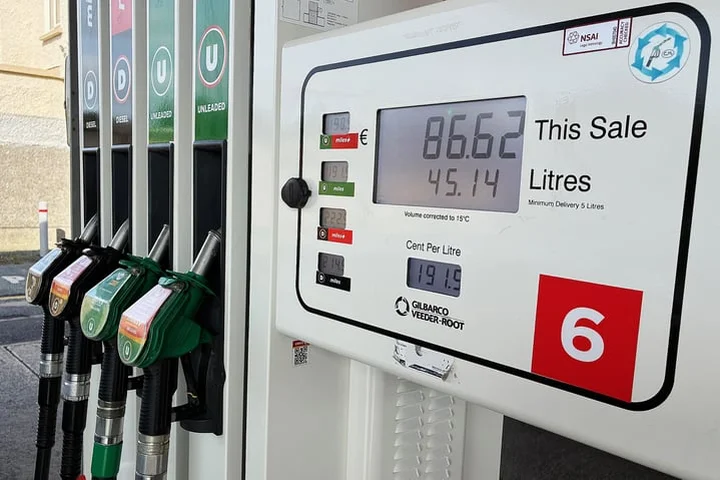
Inflation has risen to 3.3% as the war in Iran causes a sharp spike in fuel prices, it was revealed on Wednesday.
The Consumer Prices Index (CPI) jumped from 3% in February to 3.3% in March, according to the Office for National Statistics (ONS).
The increase, which is line with expectations, pushes inflation to its highest level since December.
Reacting to the news, Chancellor Rachel Reeves said the Iran crisis was “not our war, but it is pushing up bills for families and businesses”.
“Our economic plan is the right one and has put us in a stronger position to support families in the face of this new crisis.”
Pointing to measures announced before the conflict she said: “We’ve taken £117 off energy bills, frozen rail fares and protected motorists with the fuel duty freeze.
“We’re acting to protect people from unfair price rises if they occur to bring down food prices at the till, and are boosting long-term energy security — building a stronger, more secure economy.”
But Shadow Chancellor Sir Mel Stride accused Labour of making the economy vulnerable to global market shocks.
He said: “The conflict in the Middle East is increasing inflation – but Labour’s choices have made everything worse and made our economy vulnerable.
“Tax hikes, reckless spending and disastrous energy policies have left Britain exposed.
We already had the highest inflation in the G7 when this crisis began.
We need a different approach: cutting the benefits bill, lowering taxes and drilling in the North Sea.
Get Britain Working Again.”
Donald Trump extends Iran ceasefire with Tehran regime ‘seriously fractured’
Iran IRGC hardliners 'heading' to UK, says Farage's Reform amid London arson attacks
McDonald’s UK boss says ‘it's hard to do business’ but will keep investing in workers
Rediscover your adventurous side on an exotic getaway
Ruth Gregory, deputy chief UK economist at Capital Economics, said interest rates were likely to be held steady amid the economic uncertainty.
She said: “The rise in CPI inflation from 3.0% in February to 3.3% in March (consensus and CE 3.3%) was almost entirely due to higher fuel prices and tells us little about whether the leap in energy prices will trigger “second-round” effects on inflation.
“With the labour market weak, we still think a prolonged pause, rather than a series of interest rate hikes is the most likely outcome.”
The Bank of England and most economists have indicated that price increases are set to accelerate in the coming months as the impact of the Middle East conflict feeds into the cost of products and services.
Last month, the Bank of England indicated that inflation is likely to rise to as high as 3.5% by the third quarter.
Earlier this month, the International Monetary Fund (IMF) suggested spiking energy prices could help push UK inflation towards 4% , double the Bank of England’s 2% inflation target.
At the start of the year, the central bank had predicted that inflation would dip below the 2% target in April.
However, the conflict between US-Israeli and Iranian forces since late February has led to a sharp increase in oil and gas prices, while disruption to the Strait of Hormuz shipping corridor could hit other areas.
The latest data for March is the first set of ONS figures to include elevated petrol and diesel costs since the start of the conflict.
RAC data from Thursday, April 16, showed that the average price of a litre of petrol at UK forecourts was 158.1p, 25p more expensive than when the war began on February 28.
The average price of a litre of diesel sits at 191.2p, up 49p compared with the start of the war.
Economists at Oxford Economics said they expect the rise in pump prices to add between 0.2 and 0.3 percentage points to the rate of inflation in March.
Related Stories

Source: This article was originally published by Evening Standard
Read Full Original Article →
Comments (0)
No comments yet. Be the first to comment!
Leave a Comment