
The UK has welcomed the extension of a ceasefire between the US and Iran after at least two ships were attacked in the Strait of Hormuz .
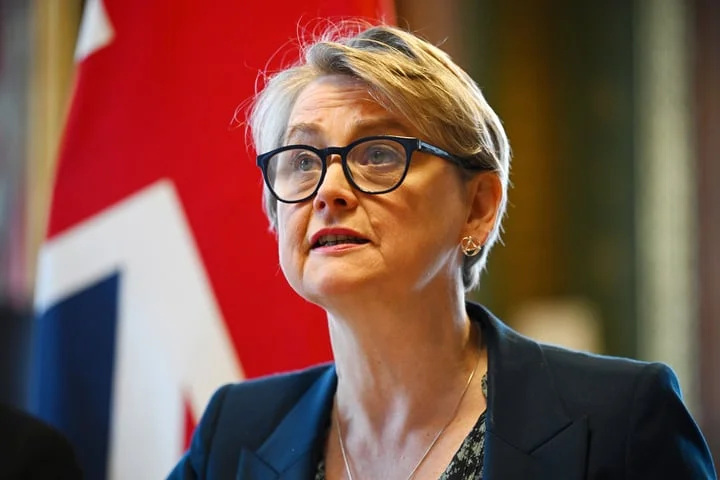
Foreign Secretary Yvette Cooper said Britain wanted to see a “comprehensive settlement” and a “full reopening” of the key shipping passage without restrictions or tolls after Donald Trump announced he would prolong the truce.
The US president said the last-minute move followed a request from Pakistan , which has been mediating in the conflict, and was to allow for the regime in Tehran to come up with a “unified proposal” to end the war.
Ms Cooper said in a statement on Wednesday: “The UK welcomes the ceasefire extension.
“We want to see negotiations restart, a comprehensive settlement and full reopening of the strait without restrictions or tolls.
“Any return to hostilities would be a major setback for the region, the global economy and cost-of-living.”
In a post on Truth Social, the president said the blockade of Iran’s ports would remain in force.
The extension came as the deadline loomed on a fragile truce and proposed talks in Islamabad were put on hold amid tensions over the ongoing stand-off in the Strait of Hormuz.
The effective closure of the vital supply route during the conflict has inflicted a global economic shock and sent energy prices soaring.
On Wednesday morning, tensions rose again after the UK Maritime Trade Operations (UKMTO) centre reported an Iranian Revolutionary Guard gun boat had fired on a container ship in the strait around 15 miles north-east of the coast of Oman.
The authority said the attack caused heavy damage to the bridge of the ship but all crew were reported safe and there were no fires or environmental impact.
A second ship came under fire later, with suspicion immediately falling on Iran, although the UKMTO did not immediately identify who shot at the vessel.
In the second attack, the cargo ship said it had been fired upon and was stopped in the water.
Meanwhile, military planners from countries seeking to join a UK and France-led defensive mission to keep the waterway open once the Iran war ends will meet in London on Wednesday.
Reckitt cautions over impact of Iran war on costs and consumer demand
Shoe Zone set to slump to loss as it warns over Iran war hit to trading
‘Substantial shift’ among EU states on Israel, says Irish Foreign Affairs Minister
Make 2026 the year of working smarter
Fresh analysis published by the Resolution Foundation think tank also suggested an escalation in the Middle East conflict could lead to a sharp rise in UK Government borrowing, and slash most of the financial safety buffer built up by Chancellor Rachel Reeves at last year’s budget.
Pakistan’s leaders, including Prime Minister Shehbaz Sharif, had made frantic efforts on Tuesday to get both Washington and Tehran to agree to further talks.
But hopes faded as US vice president JD Vance, expected to again lead US negotiators, called off a trip to Pakistan as Iran refused to commit to attending.
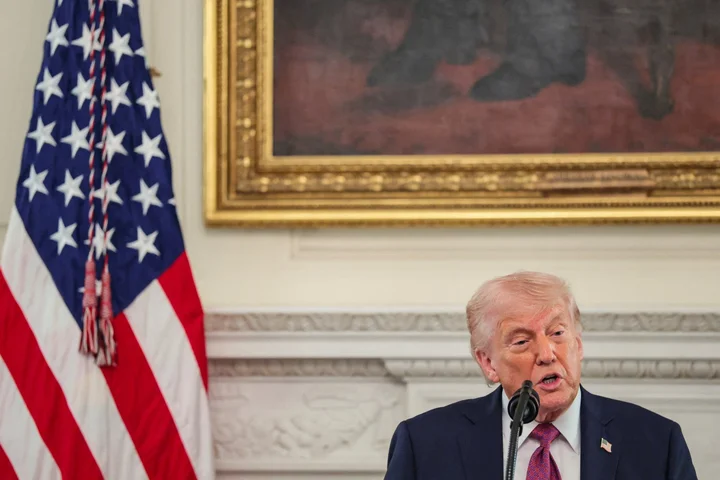
Writing in a post on his Truth Social platform, Mr Trump said: “Based on the fact that the government of Iran is seriously fractured, not unexpectedly so and, upon the request of Field Marshal Asim Munir, and Prime Minister Shehbaz Sharif, of Pakistan, we have been asked to hold our attack on the country of Iran until such time as their leaders and representatives can come up with a unified proposal.
“I have therefore directed our military to continue the blockade and, in all other respects, remain ready and able, and will therefore extend the ceasefire until such time as their proposal is submitted, and discussions are concluded, one way or the other.”
Only earlier, Mr Trump said he was ready to renew attacks against Iran if progress was not made.
The president also told CNBC he did not want to extend the ceasefire.
In the event of a deal not being made soon, Mr Trump said: “Well, I expect to be bombing because I think that’s a better attitude to go in with.
“But, you know, we’re ready to go.
I mean, the military is raring to go.”
He argued that Iran had no choice but to negotiate.
Mr Trump said: “We’ve taken out their navy, we’ve taken out their air force, we’ve taken out their leaders.”
He again claimed “regime change” and said those now in charge were “much more rational”.
Mr Trump later returned to Truth Social to issue a direct threat to Iran’s leaders should a deal not be reached.
“Iran doesn’t want the Strait of Hormuz closed, they want it open so they can make 500 million dollars a day (which is, therefore, what they are losing if it is closed!),” he wrote.
“People approached me four days ago, saying, ‘Sir, Iran wants to open up the strait, immediately’.
But if we do that, there can never be a deal with Iran, unless we blow up the rest of their country, their leaders included!”
But Iran’s parliamentary speaker, Mohammad Bagher Qalibaf, who had been tipped as Tehran’s chief negotiator, accused the US president of seeking to turn the negotiating table into a “table of surrender”.
“We do not accept negotiations under the shadow of threats,” he wrote in a post on X, and said Iran was preparing “to reveal new cards on the battlefield”.
In the UK, Prime Minister Sir Keir Starmer held talks with ministers and officials on the Government’s work to ease pressures on the public caused by the conflict.
The Middle East Response Committee discussed ongoing contingency planning such as work with fuel suppliers, airlines and international counterparts, a Government spokesperson said.
They also talked about diplomacy to support negotiations between the US and Iran, military planning as part of the post-war mission to keep the Strait of Hormuz open co-led with France, and wider measures such as efforts to weaken the link between gas and electricity prices.
US treasury secretary Scott Bessent said in a post on X that the blockade of Iranian ports “targets the regime’s primary revenue lifelines” and warned that those helping channel funds to Iran could face US sanctions.
Related Stories

Source: This article was originally published by Evening Standard
Read Full Original Article →
Comments (0)
No comments yet. Be the first to comment!
Leave a Comment