
Often many people ask me if carbohydrate-heavy fasting foods can throw them off their weight management cycles.
Some fasting foods provide nutritional benefits while others exist as instant energy boosters.
But the way you select, combine and cook your food determines if you are piling on empty calories or maintaining calorie balance.
The nutritional balance of a meal improves when people select roasted and lightly sautéed foods instead of deep-fried options, when they eat carbohydrates together with protein-rich items like yogurt or peanuts, and when they consume fibre-dense foods such as fruits.
Fasting requires people to stay hydrated because coconut water, buttermilk and lemon water serve as effective methods to maintain electrolyte levels.
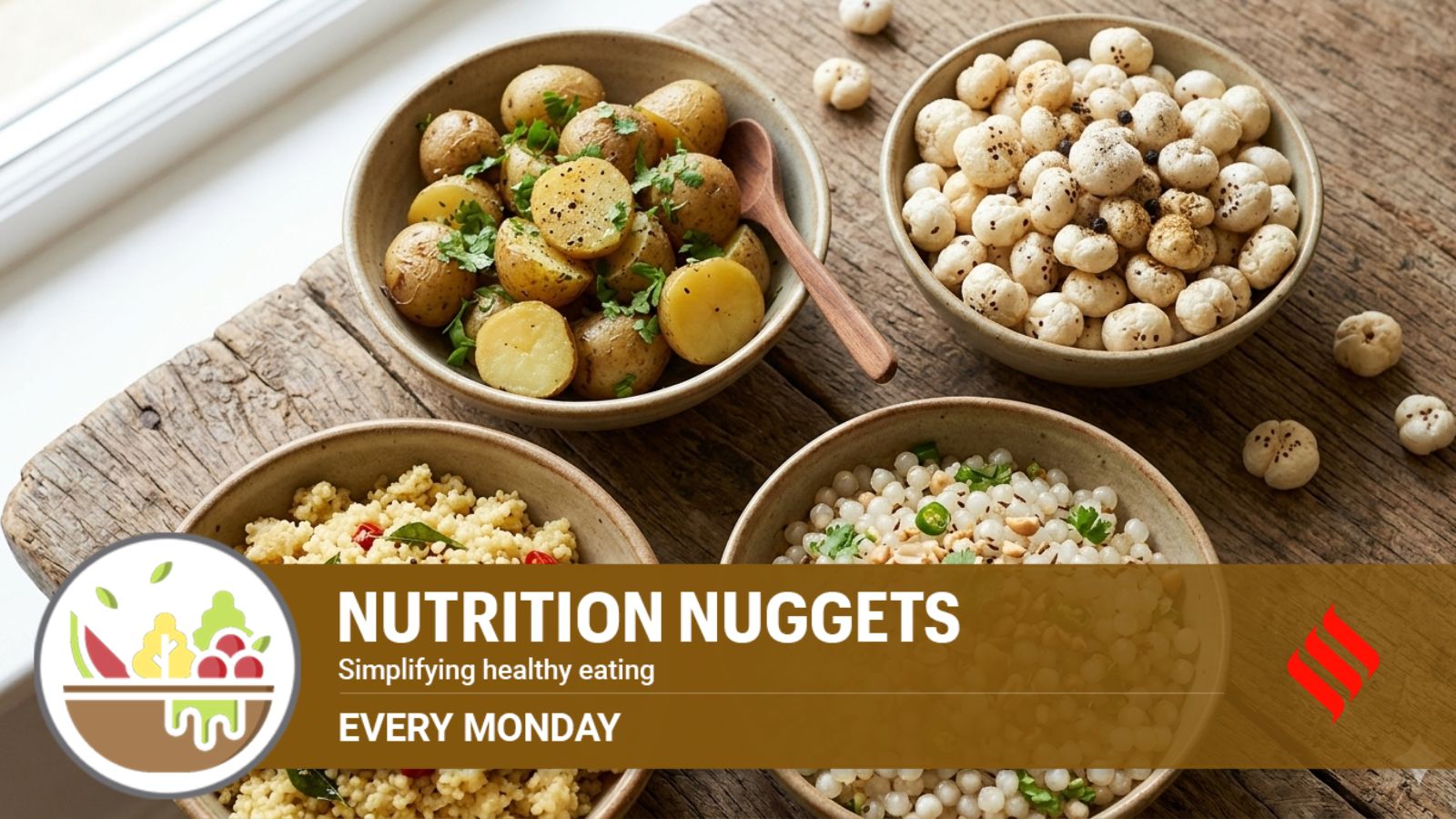
Sabu dana: Tapioca pearls, which people call Sabu dana, serve as the main ingredient for preparing both Sabu dana khichdi and vadas.
Sabu dana offers high carbohydrate content which delivers fast energy during fasting periods when people eat less food.
The product contains minimal amounts of dietary fibre, protein and essential micronutrients.
When people eat the product in excessive amounts or consume it as deep-fried food, it leads to weight gain because it has excessive calories.
Yet it does not provide complete nutritional value.
But add more peanuts, paneer and curd to neutralise the carb overload.
Flour combinations: The water chestnut flour and buckwheat flour show higher nutritional value when compared to other ingredients.
The flours provide dietary fibre together with magnesium, potassium, minerals and they contain protein in moderate quantities.
Buckwheat, despite its name, is naturally gluten-free and has a relatively lower glycemic index compared to refined flours.
The product delivers enhanced energy support together with improved digestive performance during periods of fasting.
Use fermented buckwheat batter, make a dosa and serve with walnut-coconut chutney for fibre and nutrients.
Cook amaranth flour with milk and nuts for a fibre and protein-packed breakfast.
Cook barnyard millet (samak) with vegetables like chopped pumpkin or bottle gourd and serve with thick yogurt.
Snacks: Known as makhana, fox nuts make for a light snack.
They provide high protein content while delivering antioxidants, calcium and magnesium minerals.
The roasted makhana snack provides a more nutritious option than traditional fried snacks which people consume during fasting.
Dry roast makhana with peanuts and walnuts.
The easiest filler bowl to make is to take chopped fruits like apples, bananas or pomegranate, throw them in a low-fat yogurt, sprinkle with a few soaked almonds or walnuts and top with cinnamon for flavour.
Guilt-free with high satiety value.
Potatoes: Potatoes are a basic carbohydrate food, yet they also provide potassium and vitamin C.
Have them boiled instead of fried.
When cooked with excessive oil and salt, potatoes become more calorie-dense.
The fasting plate’s overall nutritional balance holds more importance than its separate components.
So, remember three factors: How much food is consumed, how it is prepared and how it fits into the rest of a person’s diet.
(Kathuria is a clinical dietician)
Related Stories



Source: This article was originally published by The Indian Express
Read Full Original Article →
Comments (0)
No comments yet. Be the first to comment!
Leave a Comment