
Who was a Hindu in 1921?
That year, the Census commissioner ruefully noted that “no Indian is familiar with the term Hindu as applied to his religion.
If asked what his religion is, he usually replies with the name of the sect (e.g.
Saivite) to which he belongs.” If the label was yet to find universal acceptance, so was the identity itself.
The 19th and early 20th centuries were a time of growing resistance to the caste order, of the emergence of alternative religious possibilities.
For many “upper-caste” leaders, the paramount threat was the conversion of the “lower castes” seeking to escape the Brahminical order.
Facing pressure from below and above — Western ideas, Western contempt — the “upper castes” responded with both political moves, such as the Poona Pact of 1932, and social reform to consolidate the “lower castes” within the Hindu fold.
Hindu identity was forged in this crucible.
Need it have been so?
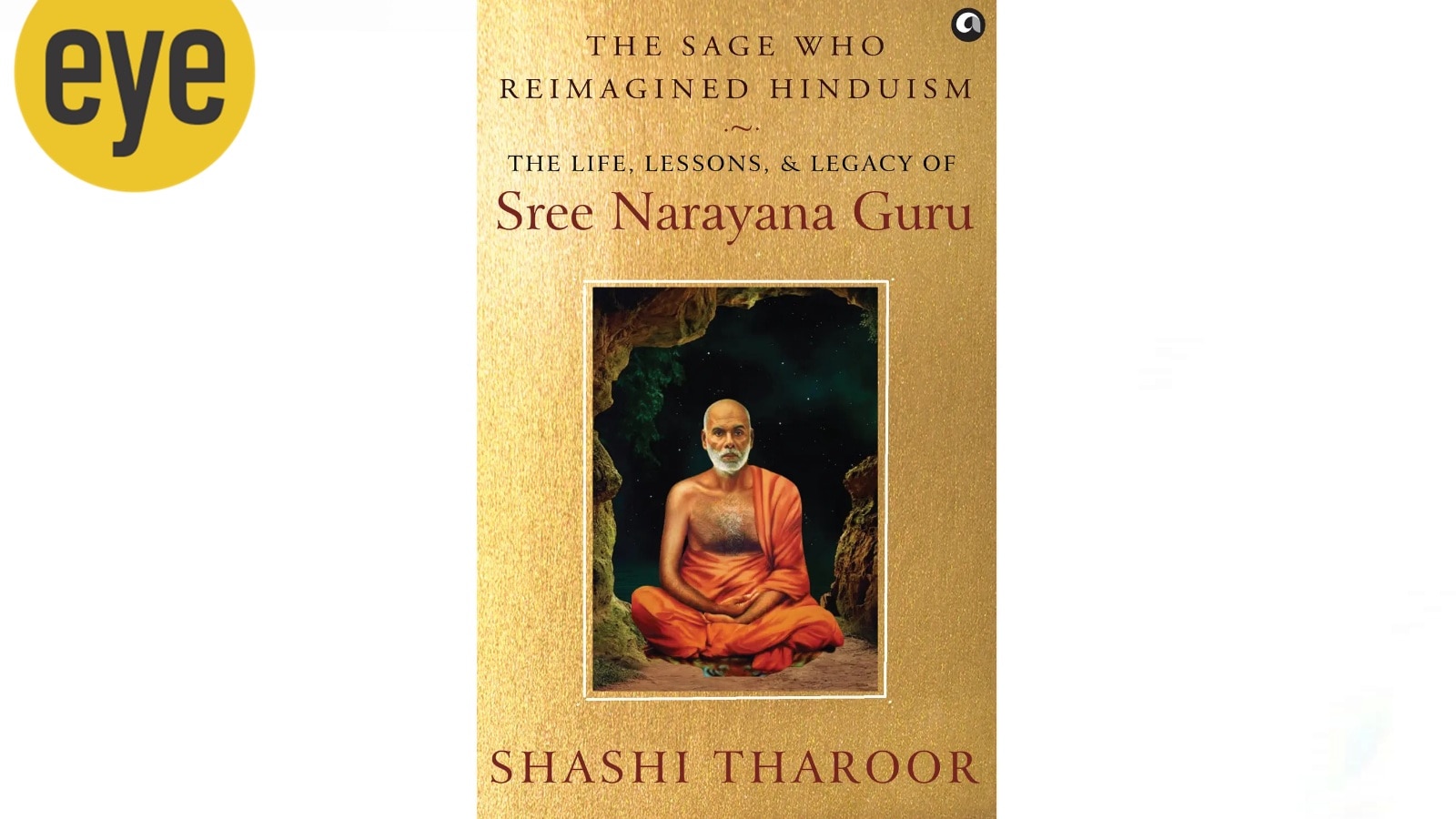
It is in this era of caste-Hindu anxiety that Shashi Tharoor situates his new book, The Sage Who Reimagined Hinduism: The Life, Lessons, & Legacy of Sree Narayana Guru.
The most interesting framing of this is in the chapter on the Vaikom Satyagraha: “Mahatma Gandhi’s intervention in the anti-untouchability movement effectively transformed a caste-based demand for justice into a broader religious effort, framed as the purification of Hinduism, spearheaded by upper-caste reformers… This movement, rather than advocating universal civil rights, began integrating lower-caste communities into a singular Hindu identity, separate from other religious groups.
In this manner, the Indian National Congress’s secular nationalism increasingly aligned itself with the construction of a ‘Hindu secular’ identity, shaping the political imagination of caste reform in the twentieth century.”
Where doesSree Narayana Guruhimself fit into all this?
He was no savarna reformer but an avarna organic intellectual.
He maintained a focus on upward mobility through modern education and did not champion Sanskritisation to the extent of other reformers.
But his great significance for Tharoor lies on a more philosophical level: Reimagining Hinduism.
Tharoor’s core interest is in the Guru qua guru — his reinterpretation of Vedantic thought to provide an intellectual foundation for change on the ground.
Social reform is located within religious transformation.
Thus, for Tharoor, the Guru saved Hinduism in Kerala from itself by creating a version that was inclusive of and palatable to all, stemming the tide of conversion.
Therefore the book, aiming to introduce the Guru to a readership beyond Kerala, devotes considerable space to his teachings and legacy as well as his life.
However, a rejection of caste (“don’t ask, don’t tell, don’t think caste”) grounded in an objective, Advaitic notion of oneness, inevitably stumbles against the messiness of human subjectivity.
Although the book is laudatory, even hagiographical, about the Guru — as a newborn, he is described thus: “his skin radiant, his eyes deep with stillness, as if he had arrived already knowing” — it does grapple with some of the complexities of his legacy.
For instance, the attempt by some Ezhavas to reduce him to a community leader when he himself abjured his caste identity, and the evolution of theSNDP Yogam, founded to propagate his teachings, into a community organisation.
It mentions the criticism of the Guru and his movement by some Dalit groups, and also goes into the identity politics of modern Kerala and Hindutva attempts to appropriate his legacy.
Amid such contestation, it is vital to be rigorous about what the Guru said and did.
When his right to consecrate a Shivalingam at Aruvippuram as a non-Brahmin was questioned, did he say that he had installed an “Ezhava Shiva” or “our Shiva”?
It’s disputed.
Tharoor writes “our Shiva” but the book he cites, Sree Narayana Guru: The Perfect Union of Buddha and Sankara by Asokan Vengassery Krishnan, has “Ezhava Shiva”.
So does the Malayalam biography, Sreenarayanaguru Jeevithacharithram, by Kottukoyikkal Velayudhan, one of the Guru’s disciples.
For such a famous and loaded phrase, a correct citation — for either version — is the minimum.
This is especially so as a dogmatic interpretation of the Guru’s rejection of caste identity can be used not only to combat caste pride but also to delegitimise marginalised voices.
In the context of the 19th century and resistance to Brahminical assertion, Ezhavas very much were marginalised.
Towards the end, Tharoor writes that Sree Narayana Guru’s moral clarity is sorely needed in today’s India, “where debates around capitalism and socialism, tradition and modernity, nationalism and pluralism dominate public discourse”.
He adds that the Guru “saw India not as a museum of customs, but as a living civilisation capable of renewal”.
This is relevant at a time when the discontents of Kerala modernity are bubbling to the surface.
Next month, the Supreme Court will hear review petitions in connection with its 2018 judgment permitting women aged between 10 and 50 to enter Sabarimala temple.
The backlash at the time revealed the nature of mass sentiment, and thus, mobilisation around “Hindu” issues in Kerala today: There is no strong movement critical of aachaaram (traditional law), only for it.
Politicians speak of defending it and controversies arise around the caste of temple officials.
Can going back to the Guru and his moral clarity offer answers in a historical moment when Hindu assertion has eclipsed Hindu reformism?
Recall that the head of Sivagiri Mutt, the monastic institution founded by Sree Narayana Guru,has spoken in favour of women’s entry.
The mutt has faced boycott calls over this and similar stances.
Tharoor writes, “while the Guru’s message continues to inspire, its full potential arguably remains unrealised”.
An addendum could be: Can it be safeguarded against regression?
Rohan Manoj has been with the opinion team of The Indian Express since January 2025.
He writes on history, culture and language.
He has previously worked with ThePrint, The Hindu and Outlook....
Read More
Related Stories


Source: This article was originally published by The Indian Express
Read Full Original Article →
Comments (0)
No comments yet. Be the first to comment!
Leave a Comment