
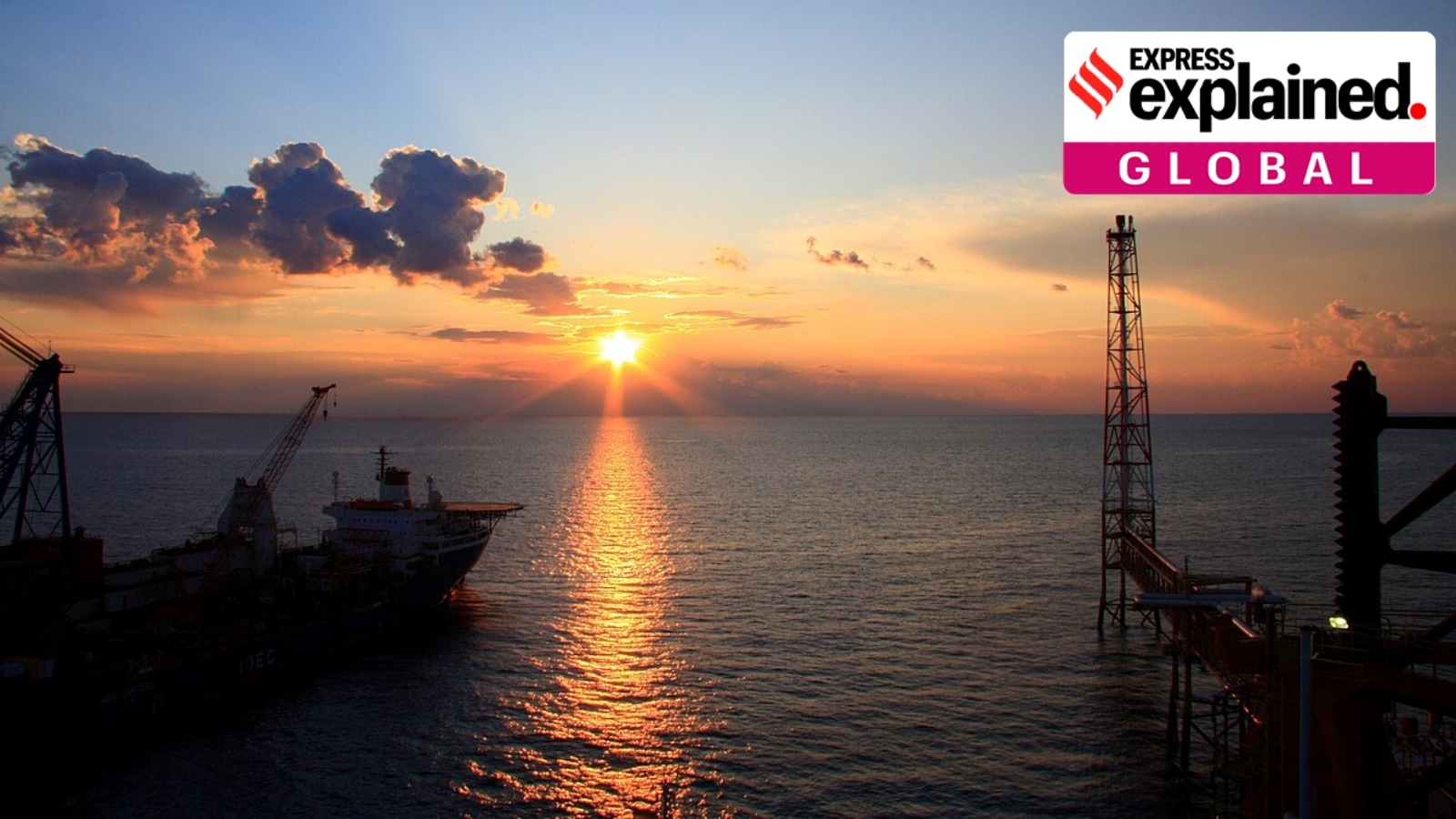
South Pars is the world's largest gas field.
The attack marks only the second one by Israel and the US on Iranian downstream facilities since the war started.
Israel on Wednesday struck Iran’s key offshore natural gas field of South Pars in the largest attack on its energy production facilities since the war began on February 28.
The attack marks the latest escalation in an already spiralling war that has seen all sides target not only energy facilities but other crucial infrastructure such as desalination plants.
Here’s a look at why the South Pars gas field is so crucial and how the war is increasingly threatening the region’s economic lifeblood, energy, as well as its key civilian infrastructure.
The significance of the attack on South Pars
The attack on South Pars is significant for two reasons: This is the world’s largest gas field, and this marks only the second attack by Israel and the US on Iranian downstream facilities since the war started.
The entire South Pars reservoir contains an estimated 1,800 trillion cubic feet of usable gas — enough to supply the entire world’s needs for 13 years — according to a Reuters report.
Iran’s oil and gas production facilities are concentrated in southwestern provinces: Khuzestan for oil and Bushehr for gas and condensate from South Pars.
Sanctions and technical constraints have meant most gas Tehran produces from South Pars is for domestic use, the Reuters report said.
No wonder this is not the first time it has come under attack.
Israel previously struck the South Pars field during its war with Iran in June last year.
At that time, it struck four units of Phase 14 of South Pars, around 200 km from Qatar’s gas installations, many of which are joint ventures with energy giants ExxonMobil and ConocoPhillips of the US.
The Qatari section of the field is known as the North Field.
The Qatar Foreign Ministry blamed Israel for the strikes and warned that targeting joint energy infrastructure was a “dangerous and irresponsible step” that could put global energy security at risk.
Qatar has made hundreds of billions of dollars exporting liquefied natural gas for nearly three decades.
US and Israeli drones also targeted gas treatment plants in the southern city of Asaluyeh that process sour gas from four phases of the South Pars field, Iranian state media said.
The governor of Assaluyeh, Eskandar Pasalar, said the facilities have “been taken offline” to control and prevent the spread of fire.
Prior attacks on Iranian downstream facilities have targeted oil storage depots in Karaj, Shahran, Aghdasieh and Shahr-e Rey — all areas in or around the capital Tehran.
Oil prices have surged following the reports of the latest strikes.
How the war has put pressure on critical infrastructure
The attack, beyond its immediate impact, also shows how energy has repeatedly become a weapon of war.
Iran has been taking aim at its Gulf Arab neighbours’ energy facilities since the war started on February 28.
It has effectively choked the Strait of Hormuz through which one-fifth of the world’s oil travels.
On Wednesday, Iran struck a province of Saudi Arabia where many oil fields are located, and it threatened to ratchet up strikes against oil and gas infrastructure in Qatar and the United Arab Emirates, too.
The US, meanwhile, attacked military installations on Iran’s key export terminal — Kharg Island.
However, it spared the oil facilities located on the island.
Bombing the island’s oil infrastructure would have neutralised 90% of Iran’s daily crude exports — and triggered a massive spike in the already surging oil prices.
The US has also attacked some of Iran’s energy infrastructure in Tehran.
The arguably more alarming development in the war has been an apparent willingness to target crucial civilian infrastructure — particularly water desalination plants.
These plants have come under attack in Iran and on the Persian Gulf island of Bahrain over the weekend, threatening a resource vital to life in the harsh desert climates of the region, The New York Times reported.
Iran has faced severe water shortages in recent years, and Gulf countries like Bahrain depend heavily on desalination technology — which turns seawater into drinking water — to sustain tens of millions of people.
Desalination infrastructure is one of the most vulnerable military targets in the region because without it, the Gulf’s sprawling metropolises would effectively collapse, the NYT reported.
Anil Sasi is the National Business Editor at The Indian Express, where he steers the newspaper’s coverage of the Indian economy, corporate affairs, and financial policy.
As a senior editor, he plays a pivotal role in shaping the narrative around India's business landscape.
Professional Experience Sasi brings extensive experience from some of India’s most respected financial dailies.
Prior to his leadership role at The Indian Express, he worked with:
The Hindu Business Line
Business Standard
His career trajectory across these premier publications demonstrates a consistent track record of rigorous financial reporting and editorial oversight.
Expertise & Focus With a deep understanding of market dynamics and policy interventions, Sasi writes authoritatively on:
Macroeconomics: Analysis of fiscal policy, budgets, and economic trends.
Corporate Affairs: In-depth coverage of India's major industries and corporate governance.
Business Policy: The intersection of government regulation and private enterprise.
Education Anil Sasi is an alumnus of the prestigious Delhi University, providing a strong academic foundation to his journalistic work.
Find all stories by Anil Sasi here ...
Read More
Related Stories
Source: This article was originally published by The Indian Express
Read Full Original Article →
Comments (0)
No comments yet. Be the first to comment!
Leave a Comment