
Linni Jian is a professor of electrical engineering in the Department of Energy & Power Engineering and director of the Development & Strategic Planning Office, City University of Hong Kong (Dongguan), Dongguan, China.
Search author on: PubMed Google Scholar
Yunwang Chen is a PhD student in systems engineering at Boston University, Division of Systems Engineering, Boston, Massachusetts, USA.
Ching-chuen Chan is founding chairman of the World Electric Vehicle Association in Washington DC and distinguished chair professor of electric vehicles and smart energy at Hong Kong Polytechnic University, Hong Kong, China.
When it comes to decarbonizing transport, the world is fixated on electric cars and buses.
But such large, sophisticated vehicles are expensive and resource-hungry.
Most people globally cannot afford an electric car, which typically costs tens of thousands of dollars.
And surging demand for the ‘critical minerals’ needed to make these machines is raising geopolitical tensions and triggering trade wars even before electric vehicles (EVs) fill our streets.
Yet, beneath this narrative, a quieter revolution has been unfolding — the proliferation of low-speed EVs.
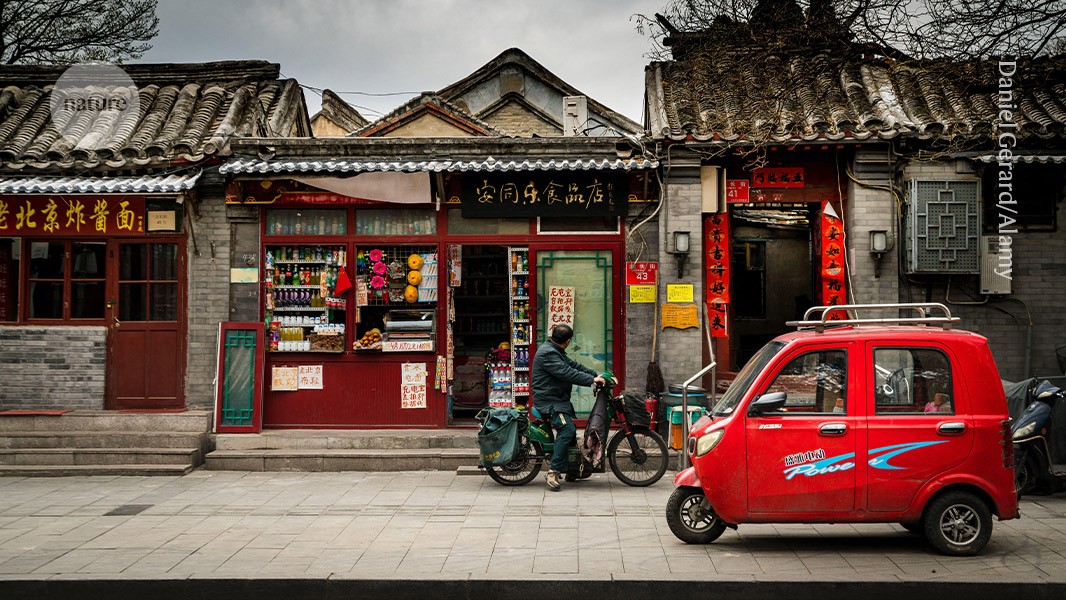
Such vehicles, which are more versatile than an electric bike but simpler than a conventional electric car, include small, battery-powered four-wheeled cars, golf buggies and tricycles.
Battery prices are falling, so why are electric cars still so expensive?
These provide an affordable, clean alternative for short distance travel, saving emissions and serving a diverse demographic that includes marginalized groups such as older people, rural populations and individuals who receive low incomes.
Yet they remain sidelined in sustainability discussions, which show a persistent bias towards technocentric solutions that tend to prioritize innovation over practicality 1 .
Low-speed EVs are also subject to trade disputes.
For example, in August 2025, the US Department of Commerce imposed taxes known as antidumping duties of up to 478% and countervailing duties of up to 679% on certain low-speed personal transportation vehicles imported from China, after an inquiry concluded that they were subsidized and being sold in the United States at less than fair market value 2 , 3 .
This dispute is symbolic of a wider problem: sustainability is too often constrained by nationalist agendas, trade competition and special interests, rather than being elevated as a collective imperative that transcends borders and serves humanity.
Affordability is one prerequisite for sustainability.
By recognizing that all parts of society can drive meaningful change, the world can adopt a more inclusive and practical approach to sustainability — one that values widespread participation as much as technological innovation.
Here we outline three advantages and two challenges for rolling out low-speed EVs.
Although we focus on China, similar conditions prevail in parts of sub-Saharan Africa, southeast Asia, Latin America and rural US regions, where infrastructure gaps and mobility challenges persist.
In such settings, low-speed EVs can offer a practical, low-cost pathway to more-inclusive decarbonization.
Affordability.
Low-speed EVs are an extension of the e-bike boom.
In China, many manufacturers are repurposing supply chains for existing components and assembling them differently.
With lower top speeds and shorter travel ranges than larger passenger EVs (see ‘What are low-speed EVs?’), these vehicles have relatively small, simple battery packs that don’t need high-voltage components or complex cooling systems.
These versatile small vehicles are slower and have a shorter range than do large electric cars or vans.
Under China’s national standards, fully electric passenger cars must achieve a minimum top speed of 80 kilometres per hour (km h –1 ) and have a range of at least 80 km (the ‘double eighty standard’).
Low-speed electric vehicles (EVs) operate below these benchmarks, with top speeds of less than 40 km h –1 and ranges that are typically capped at 60 km.
Essentially, they are a hybrid of e-bikes and conventional EVs — optimized for short commutes, urban corridors and rural pathways where affordability and agility are prioritized over highway performance.
Low-speed EVs in China consist mainly of four-wheeled compact vehicles that carry 2–4 passengers.
They mimic conventional EVs in functionality but prioritize affordability.
Typically, they provide better weather protection than do e-bikes and offer modest cargo capacity for daily errands.
Electric tricycles are used for carrying freight, delivering packages and street cleaning.
Regional manufacturing clusters have emerged to speed up production of these vehicles in China.
Market competition is helping to keep prices low — a low-speed EV can cost as little as 8,000 renminbi (roughly US$1,100; see Supplementary information (SI)).
This affordability is achieved with little or no state support: most models are excluded from China’s subsidies for new energy vehicles because they fail to meet the technical standards set for faster, longer-range EVs (see go.nature.com/4gtjbhm ).
Low-speed EVs are mostly sought by older adults who want a safer and more stable alternative to a two-wheeled e-bike for everyday travel and cannot afford a full-scale EV, even with government incentives.
The smaller vehicles are satisfactory for covering commutes of less than 20 kilometres or so, at a fraction of the cost of conventional EVs.
For many people, these vehicles have become an essential part of daily life, enabling errands from grocery runs to school pick-ups 4 .
We need to prepare our transport systems for heatwaves — here’s how
By providing both electric mobility and access to clean energy, these compact vehicles can empower populations who might otherwise be excluded from the mainstream EV revolution to adopt zero-emission transportation.
They can also play a part in the electricity grid itself, storing renewable energy during peak generation periods for later use.
Regulatory hurdles.
Demand for affordable, low-speed mobility is growing.
In China, more than 200,000 electric tricycles have been sold each year since 2018, with 320,000 sold in 2023 alone 6 .
More than one million four-wheeled low-speed EVs were sold annually for three consecutive years from 2016 to 2018, and sales seem to be rising again after a dip owing to increased regulatory scrutiny of standards as well as disruptions during the COVID-19 pandemic (see ‘Small vehicles, big opportunity’).
Source: Analysis by L.
Jian et al .
The new car batteries that could power the electric vehicle revolution
But regulation is not keeping up — at least not evenly.
The United States has an official standard for low-speed vehicles, requiring them to have basic equipment such as lights, glazing and safety belts; many states restrict their operation to roads with posted speed limits of less than 56 kilometres per hour.
Japan regulates a comparable class through its ‘minicar’ category, with defined traffic rules and administrative requirements.
By contrast, China lacks a national standard for four-wheeled low-speed EVs, leaving such vehicles prone to criticism over substandard manufacturing and safety concerns.
China has excluded low-speed EVs from its EV licensing process because the machines don’t meet the speed and distance criteria for larger cars.
Chinese regulators have made several attempts to establish national standards for low-speed EVs, but these are yet to be adopted.
In 2016, specifications were drafted outlining speed limits, collision tests and dimensional constraints.
In 2021, the government looked at incorporating these into existing standards for larger EVs, but is yet to do so.
Critics argue that the lack of proper driver licensing can lead to misuse by untrained or underage drivers in dense traffic, and that the vehicles’ limited structural protection makes occupants vulnerable in collisions.
Demand for electric tricycles is on the rise, with 320,000 sold in 2023 in China.
Credit: Jeffrey Isaac Greenberg/Alamy
Sustainability challenges.
EV batteries face sustainability challenges.
Batteries degrade, requiring replacements, disposal and recycling, all of which pose potential environmental harm.
Many low-speed EVs rely on lead-acid batteries or small lithium-ion units, which carry environmental risks if they are disposed of improperly.
Enjoying our latest content?
Log in or create an account to continue
doi: https://doi.org/10.1038/d41586-026-00779-3
Earley, R., Kang, L., An, F.
& Green-Weiskel, L.
Electric Vehicles in the Context of Sustainable Development in China (United Nations Department of Economic and Social Affairs, 2011).
US Department of Commerce International Trade Administration.
Fed.
Regist.
90 , 38759–38764 (2025).
US International Trade Commission.
Low Speed Personal Transportation Vehicles from China: Investigation Nos.
701-TA-731 and 731-TA-1700 (Preliminary) .
Publication No.
5533 (US ITC, 2024).
Ling, Z., Cherry, C.
R.
& Yang, H.
Transp.
Res.
D Transp.
Environ .
69 , 293–304 (2019).
Chen, W.
et al.
One Earth 5 , 875–891 (2022).
International Energy Agency.
Global EV Outlook 2024 (IEA, 2024).
Yu, H.
et al.
Renew.
Sustain.
Energy Rev.
168 , 112812 (2022).
Ma, R.
et al.
Nature Commun.
15 , 7641 (2024).
The authors declare no competing interests.
How car and battery companies can work around US trade tariffs and rules
Air taxis will soon be in our skies — if batteries can be made safer
Marine conservation cities: a model for ocean governance
Prevent pandemics through One Health commitments
Climate change and geopolitics threaten water supplies — but disaster is not inevitable
Hair-raising: how carbon contamination can drive static charging
Magnetic resonance control of spin-correlated radical pair dynamics in vivo
Triple-junction solar cells with improved carrier and photon management
China could be the world’s biggest public funder of science within two years
AI is programmed to hijack human empathy — we must resist that
China intensifies push to become world leader in tech and AI
Join HZAU's global faculty team to advance research with competitive benefits.
Huazhong Agricultural University (HZAU)
The Stomatology Hospital, School of Stomatology, Zhejiang University School of Medicine(ZJUSS)
IRB Barcelona invites applications for Group Leader positions in Chemical Biology (one) and Structural Biology (one).
Barcelona (Provincia), Cataluña (ES)
Fundació Institut de Recerca Biomèdica (IRB Barcelona)
The Paris Brain Institute invites expressions of interest from internationally recognized senior and mid-career researchers.
Full Professorship (W3) for ‚Clinical Epidemiology of Early Cancer Detection’ (f/m/d) We are looking for a highly distinguished physician scientist...
Heidelberg, Baden-Württemberg (DE)
Medizinische Fakultät Mannheim der Universität Heidelberg
Related Stories



Source: This article was originally published by Nature News
Read Full Original Article →
Comments (0)
No comments yet. Be the first to comment!
Leave a Comment