
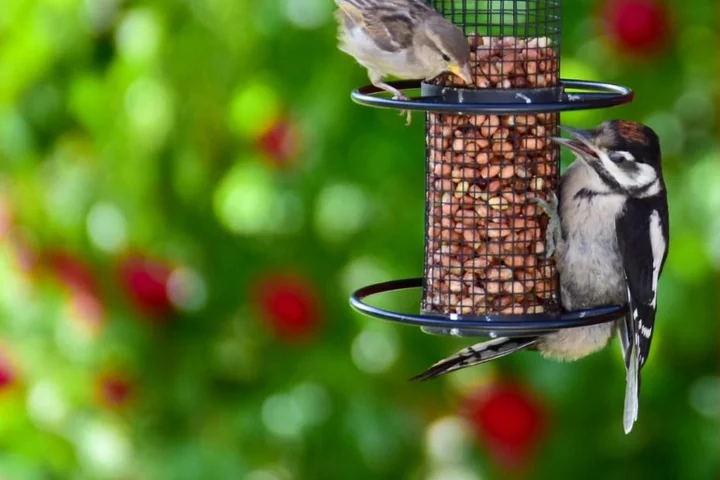
Now that the sun seems to have made an appearance, it might feel all too tempting to channel your inner Snow White and give back to nature.
In London especially, outdoor space can be limited.
And if you can’t afford to shell out extra rent to birdwatch from a private garden, your next best bet might end up being a bird feeder outside your kitchen window.
It’s nice to give back to the little birdies, right?
Apparently, not always.
As the UK warms up, the RSPB has warned nature enthusiasts against leaving food out for birds, whether in bird boxes or small feeders.
It’s all to do with preventing disease.
Over the last 30 years, Greenfinch numbers have plummeted by more than 65%.
In 1979, these chirpy little things ranked number seven in the top 10 birds spotted across the UK, but now, they’re at number 18.
They’re particularly susceptible to an illness called trichomonosis, which can spread like wildfire when birds gather in groups at hotspots where food is readily available.
And that includes the innocent feeder you might’ve optimistically placed outside in the hopes of helping out your local bird population.
So, with all this in mind, the experts at RSPB have one message: ‘Feed seasonally.
Feed safely.’
When is it safe to feed birds?
The website’s guidance explains: ‘During summer and autumn, there’s a higher risk of disease spreading.
But it’s also when there are more natural foods available to birds, such as seeds and insects.’
Between May 1 and October 31, it suggests swapping out seeds and peanuts for mealworms, fatballs, and suet, but only in small doses.
Between November 1 and April 30, you can go wild and feed your garden birds a ‘full range’ of foods – and that includes the aforementioned seeds.
How do I feed my garden birds safely?
It’s not just about what you’re placing inside the feeder; there are a few extra steps to maintain a disease-free zone.
Firstly, it’s time to clean, clean, clean.
Bird feeders and water baths need to be rinsed out at least once a week.
The guidance adds: ‘Good hygiene is essential.
Be sure to also clean away any old food or droppings.’
Next, you’ll want to switch up the placement on a weekly basis.
This, as the RSPB notes, will help to ‘prevent any build-up of potentially contaminated debris underneath.’
‘If you have more than one feeder, put them in different areas to reduce the number of birds in one place and the mixing of different species,’ it says.
It’s also important to avoid placing feeders beneath the hotspots where birds tend to roost, like trees; contamination can spread through poop, after all.
Similarly, flat surfaces are a no-no, as this heightens the risk of disease, while feeding in moderation is always advisable.
The experts add: ‘Make sure all the food you put out is eaten within one to two days.
Adjust the amount you offer based on demand to avoid overfeeding.
‘Only offer water if you’re able to change it every day and make sure it’s tap water.
A pond is the best way to provide birds and other wildlife with water.’
Most importantly?
Help your avian friends sniff out their own food.
You might do this by introducing bird-friendly plants, like sunflowers, teasels, and ivy, which all generate natural food sources.
Get in touch by emailing MetroLifestyleTeam@Metro.co.uk.
Related Stories


Source: This article was originally published by Metro UK
Read Full Original Article →
Comments (0)
No comments yet. Be the first to comment!
Leave a Comment