
Hopeless.
Horrifying.
Shocking.
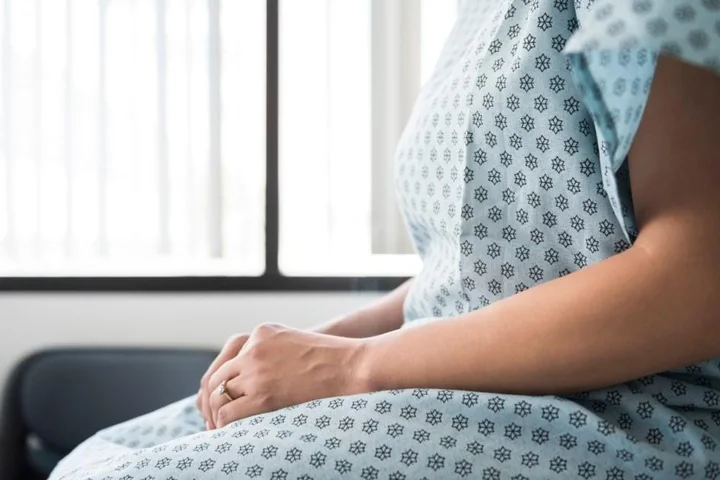
This is how women have described their experience of seeking NHS treatment for their endometriosis to Metro.
But now, this could be about to change as the government has announced new developments in its Women’s Health Strategy.
Under these reforms, there are promises to streamline gynaecological care, restructure treatment pathways, and reduce waiting times for conditions such as endometriosis and fibroids.
There are also promises to give women ‘appropriate and effective’ pain relief for invasive gynaecological procedures, such as having a contraceptive coil fitted, and a plan for new health care centres to deliver treatments in more communities.
Of course, all of this depends on whether the ‘strategy’ is delivered.
To enforce it, the government has pledged to empower women to have a say in their care by trialling a system where their feedback will be ‘directly linked to provider funding and targeted improvements’.
Saying no to medical gaslighting
Health and social care secretary, Wes Streeting, says women have been ‘let down by a healthcare system that too often gaslights women’ and treats their pain as ‘an inconvenience and their symptoms as an overreaction’.
‘Whether it’s being passed from one appointment to another for conditions like endometriosis and fibroids, or a lack of proper pain relief during invasive procedures, through to having to navigate symptoms for years before receiving a diagnosis, it’s clear the system is failing women,’ he admits.
‘We need to hit medical misogyny where it hurts – the wallet.’
Why are these changes so important?
Last year Metro‘s explosive investigation revealed girls as young as 14 were being told to ‘get pregnant’ to ease their endometriosis symptoms.
Emma Prach was 17 when she received this advice, telling Metro the suggestion ‘took her breath away’.
In fact, she was just one of the three quarters of women with endometriosis who have been told to get pregnant by doctors, according to our findings.
This is despite there being no clinical evidence to support pregnancy as a long-term solution.
Angie Newland, 53, felt dismissed when she went to the doctor with severe endometriosis symptoms after already having her first baby at 24.
‘I tried the Mirena coil, HRT patches, tablets – nothing worked.
So a consultant said to me “well, just have another baby”,’ Angie told Metro.
‘I was absolutely horrified, having a baby didn’t improve my endometriosis, it actually made it 10 times worse.’
Read the full investigation here.
Dr Alison Wright, president of the Royal College of Obstetricians and Gynaecologists, adds that she welcomes the inclusion of these priorities that the RCOG has been calling for.
‘These include tackling the gynaecology waiting list crisis, raising menstrual health awareness, and supporting sustainable abortion services,’ she says.
The potential pitfall
It’s a move that sounds almost too good to be true, but experts have already pointed out the possible issue with rolling these changes out.
Professor and chair of global women’s health at Imperial College London, Jane Hirst labelled this as an ‘important development’.
‘If managed well, this could cut waiting times, as many gynaecological and other women’s health conditions can be diagnosed and effectively managed in the community, without requiring hospital admission,’ professor Hirst tells Metro.
But there are questions regarding whether the NHS is equipped to implement these changes effectively.
‘This will require an increase in staffing and access to diagnostics, such as specialist pelvic ultrasound and MRI to be operationalised, as well as system redesign to orientate services to the community,’ Hirst adds.
‘Current services are extremely stretched, so without appropriate resourcing, it may be seen as another restructure that doesn’t actually change the realities on the group.’
‘These commitments must be matched with a clear roadmap for delivery including ensuring the necessary resources and capacity, and we now look forward to working with the Government to ensure these commitments become reality,’ Emma tells Metro.
It’s been said these changes will be made possible by £26 billion in funding for the NHS, announced by Rachel Reeves.
All new developments in the Women's Health Strategy
- Women to be empowered with a stronger say in their care in new trial, where they will be asked if, based on their experience, money should be withheld from providers and used for targeted improvements
- Gynae care streamlined to cut waiting lists
- Reforms to tackle outdated and misogynistic practices around pain relief
- Redesigning clinical pathways for heavy periods, urogynaecology and menopause to speed up diagnosis and treatment
- Funding a specialist centre in each region to introduce group-based approaches to care, helping women understand and manage their conditions better
- Launching a £1 million programme to improve menstrual education so girls can recognise the signs and symptoms of unhealthy periods
- Launching a £1.5 million Femtech challenge fund to accelerate adoption of innovations that could transform women’s healthcare
- Establishing the women’s voices partnership to bring organisations representing women together to inform future policy-making
- Providing better access to contraceptive and abortion care with continued support for protected spaces
- Reviewing how different levels of support should work for families who experience repeated baby loss
In spite of these concerns, professor Hirst hopes this is ‘a step in the right direction’ when tackling medical misogyny.
It’s positive that there’s a trial evaluating women’s perceptions and experiences of care,’ she adds.
‘Information is a form of power, and by giving women access to high-quality and timely information could be an important change.
‘It will be important to make sure that women with limited access to care, because of language barriers, social, geographic or digital literacy are not left out.’
Get in touch by emailing MetroLifestyleTeam@Metro.co.uk.
Related Stories


Source: This article was originally published by Metro UK
Read Full Original Article →
Comments (0)
No comments yet. Be the first to comment!
Leave a Comment