
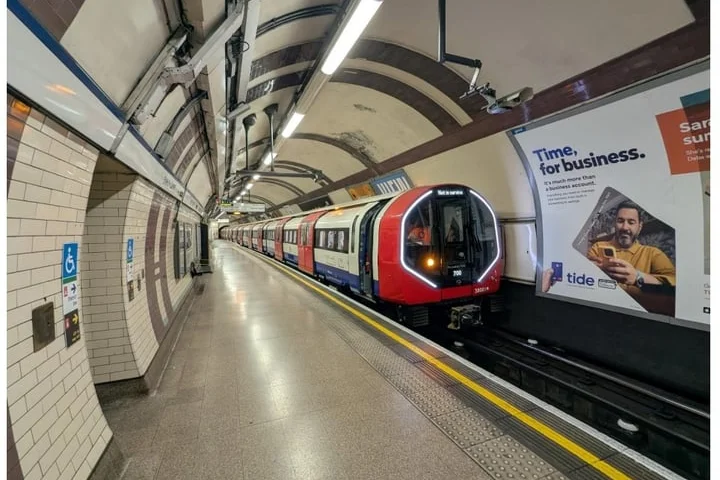
Driverless trains on the London Underground have been comprehensively ruled out by the capital’s transport commissioner.
Andy Lord said there was “no business case” to make the Tube driverless – despite the likelihood that a drivers ’ strike next week will spark renewed demands from some politicians for the Underground to become fully automated as a way of reducing the power of the Tube unions.
Drivers belonging to the RMT union are due to walk out from midday next Tuesday (April 21) for 24 hours, and again from midday on Thursday (April 23), also for 24 hours – meaning that services on four days of the working week will be affected.
Transport for London has warned that if the walkouts go ahead – this remained the expectation on Tuesday despite the RMT having backed down from the first set of strikes last month – then passengers should expect “significant disruption”.
TfL sources said that no formal “peace talks” were planned to avert the strikes but it remained open to discussions, and a further meeting was likely to happen with union representatives on Friday or Monday.
The RMT confirmed that, as of Tuesday, next week’s strike – which has been called due to concerns about the impact of a four-day week on drivers - remained on, despite TfL insisting the proposed new working conditions are only voluntary.
Speaking on the Green Signals railway podcast , Mr Lord dismissed suggestions that driverless trains should be introduced on the London Underground.
“We already have driverless trains – we have the DLR,” he said.
“But to introduce driverless trains on the Tube, there isn’t a business case for it.
“We did a lot of work at the request of the previous [Tory] government and we demonstrated that the investment required would be far greater than any benefits.
When are the RMT Tube strikes due to happen?
“We also have a clear policy… that we will always have a member of staff on board a Tube train, for customer service and for emergency situations.
“And we already have more than 60 per cent of the Tube network automatic anyway, so the benefits from going from fully automatic to driverless is very, very small for the return on investment.
“I would rather we invested in other things that would make a difference.
We need to put driverless trains to one side.
We have no plans to introduce them on the Tube.
What we need to do is invest in renewing infrastructure and rolling stock.
“You need new signalling, you need new infrastructure and you need a raft of other changes to go to driverless, and we don’t think that the business benefits are there.”
During the pandemic, the then transport secretary Grant Shapps made it a condition of one of TfL’s Government bail-outs for it to gather evidence on “how best to progress with driverless trains”.
Mr Shapps, in a letter to mayor Sir Sadiq Khan in February 2022, said: “TfL’s record of modernisation and innovation should not leave it behind other European networks, which are achieving significant operational efficiencies through driverless trains.”
Then in January this year Laila Cunningham, the London 2028 mayoral candidate for Nigel Farage’s Reform UK party, said she would “love to automate” the London Underground network by getting rid of drivers.
In his interview with Green Signals, which can be viewed on its YouTube channel, Mr Lord warned that public transport use in London had settled into a “new normal” post-pandemic equivalent to about 92 per cent of pre-Covid journeys.
He said the growth in London’s cycle network since 2016 now meant that, at 400km and still growing, it was larger than the London Underground.
“Our cycle network in London now has more kilometres than on the Tube network – over 400km,” he said.
He said any increase in the size of Heathrow airport – whether a new terminal or a new runway – would have to be accompanied with funding, either from the airport or the Government, for a new signalling system on the Piccadilly line, to enable the forthcoming new trains to operate at greater frequencies of 20 trains an hour to the airport.
Tube staff get above-inflation pay rise that keeps drivers in line for £80,000 salary by end of decade
Tube strike called off: Walkout by drivers avoided following talks between TfL and RMT
Transport for London boss 'horrified' at investigation into London bus driver conditions
Londoners have no tears left to shed for Tube workers
Cardboard steering wheels will allow children to pretend to 'drive' DLR trains
Transport chiefs rule out driverless Tube trains in London ‘in short and medium term’
He said TfL was “pushing really hard” for the first of the new trains on the Piccadilly line to enter service in December, but admitted this was proving challenging.
“We need a lot of things to go right,” he said.
He warned passengers on the Piccadilly line to expect disruption during the switchover from the existing fleet of trains, which date from 1973, to the new trains.
“Temporary transitional arrangements” will be required for “two to three years”, during which time TfL will try to maintain step-free access wherever possible.
He said TfL would press ahead with a reduction in buses in central London, in a bid to cut costs and speed up the remaining services.
“We believe we have got more capacity in inner central London than we need,” he said.
“That in itself is contributing to [longer] journey times.”
Related Stories


Source: This article was originally published by Evening Standard
Read Full Original Article →
Comments (0)
No comments yet. Be the first to comment!
Leave a Comment