
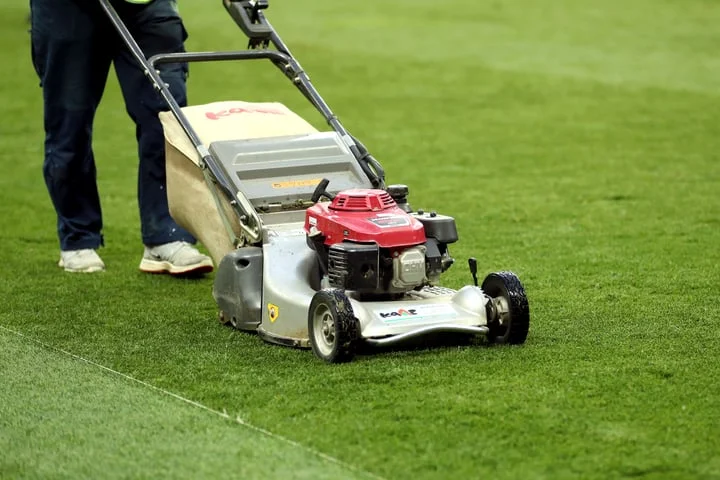
Gardeners are joining a movement to let their lawns grow in May, a poll has found, as an annual campaign to boost nature in gardens kicks off.
The “No Mow May” campaign, led by wildlife charity Plantlife, urges people to leave their mowers in the shed for May to allow grasses and wildflowers to flourish.
Wilder lawns in the warmer months can help to support bees, pollinators, butterflies, small mammals and other wildife.
Plantlife said the movement is growing, with an analysis of participants who signed up for last year’s campaign, showing that a third (32%) were first timers.
The survey of 2,001 adults, carried out by Opinion Matters in March, found that two-thirds (66%) believe their garden can make a real difference for nature.
The research also suggests letting lawns grow can be a social choice, with six in ten people between the ages of 25 to 34 saying they would be more likely to join the movement if their neighbours do.
Nicola Hutchinson, chief executive at Plantlife, said: “Your garden is one of the easiest ways to help nature, providing a lifeline for wildlife – yet social pressure keeps lawns short.
“No Mow May is the moment to act: to come together as communities, let grass and wildflowers grow, and turn that belief into real change.”
This was followed by the Brighton region (BN postcodes).
Around 97% of wildflower meadows have been lost in less than a century, with once widespread plants such as ragged Robin and field scabious now on the near threatened list in England , the conservation organisation has previously warned.
May 7 elections in England, Scotland and Wales: What you need to know
May 7 elections: Hour-by-hour guide to results
Gordon Snell, author and Maeve Binchy’s husband, dies aged 93
Rediscover your adventurous side on an exotic getaway
After No Mow May, Plantlife recommends less frequent mowing through the summer.
According to the Royal Horticultural Society (RHS), there are more than 25 million gardens in the UK, meaning they make up a significant proportion of land.
If managed properly, even the smallest grassy patches can help to deliver benefits for nature, communities and the climate, Plantlife said.
The charity said even leaving a few areas unmown in gardens can also help to boost lawn biodiversity.
Gardeners can mow some patches for paths or recreation while leaving grass to grow longer in others so that flower diversity and nectar production thrive and lots of microhabitats are created for a range of species to live in, it added.
For those without gardens, Plantlife said a balcony, patio or yard can be nurtured into a small haven for plants and pollinators.
And local authorities and communities can manage green spaces in churches, schools, parks and roadsides to encourage wildflower growth, the charity said.
It also encourages gardeners to avoid herbicides, fertilisers and moss killer as all can be detrimental to wild plants in the lawn.
They are also urged to allow plants time to set seed before mowing, and remove grass cuttings following mowing to prevent nutrient build-up on the grass.
Related Stories



Source: This article was originally published by Evening Standard
Read Full Original Article →
Comments (0)
No comments yet. Be the first to comment!
Leave a Comment