
This is an exclusive from Craig Munro and is featured in Metro’s politics newsletter Alright Gov? The newsletter delivers exclusive analysis and more to your inbox every week.
It’s very easy to say, ‘We’re going to increase defence spending to 3.5% of GDP by 2035’.
Honestly, try it – you’ll probably be able to do it in a single breath.
There’s something that makes it even easier to say, too.
Everyone agrees the world is becoming a more unstable place, with conflicts flaring up and old alliances breaking down, and many politicians – with the notable exception of the Greens – agree that funding for defence needs to be ramped up in response.
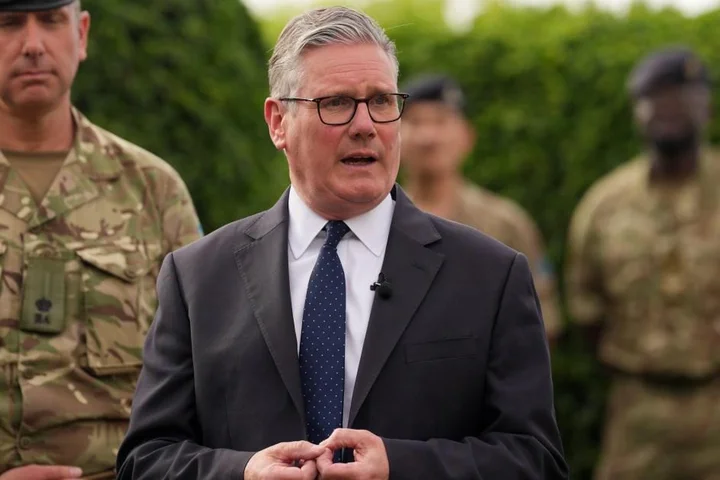
So, you can understand why Sir Keir Starmer got the ‘say it out loud’ bit out of the way nice and quickly last summer.
He made the commitment in a Nato summit speech, and even went out of his way to say it could happen without tax rises on working people.
But after that easy bit, of course, comes a very hard bit: actually increasing defence spending to 3.5% of GDP by 2035, without hiking up taxes.
It’s now clear Starmer didn’t have any clue how he was going to go ahead and do it when he gave that speech last June.
The path to reaching the target is to be set out in a Defence Investment Plan (DIP), which has been delayed for many, many months.
Enter Lord George Robertson, the man who wrote last year’s Strategic Defence Review.
In a speech on Tuesday evening, he fumed at the government’s apparent lack of urgency – while also suggesting where savings could be found.
He said: ‘Britain’s welfare budget is now five times the amount we spend on defence.
Are we certain that this is the right priority, jeopardising people’s future safety and security whilst maintaining an increasingly unsustainable welfare bill?’
Again, there’s widespread agreement among politicians that the welfare state needs reform.
But what should that look like?
When Kemi Badenoch talks about this issue, she likes to frame it around ‘Benefits Street’ with all the connotations for people who remember that 2014 documentary.
But in fact, 55% of welfare spending in the UK goes to pensioners.
The state pension alone is forecast this year to cost more than twice the defence budget last year.
There’s simply no way we could cut back benefits enough to pay for the boost in defence without touching support for pensioners.
And remember – with an ageing population, the cost of that support is only going in one direction.
Which brings us to the matter of the triple lock.
This Lib Dem policy from 2010 guarantees that the biggest item on the welfare bill – the state pension – also increases in cost every year more quickly than any other benefit.
Anyone might say this is unsustainable – except current government ministers and MPs who want to keep their seat at the next election.
After all, pensioners are renowned for their ability to get out and vote.
POLL
Should the government change the triple lock on pensions to help fund defence spending?
-
Yes
-
No
Ex-Labour deputy leader Harriet Harman came out yesterday to say the pensions triple lock should be means-tested to help pay for defence.
Perhaps that would work… but it will never happen.
There’s no doubt the DIP will include some very painful cuts when it finally arrives, but some types of political pain are more tolerable than others.
Just ask Rachel Reeves about the Winter Fuel Allowance.
Get in touch with our news team by emailing us at webnews@metro.co.uk.
For more stories like this, check our news page.
Related Stories



Source: This article was originally published by Metro UK
Read Full Original Article →
Comments (0)
No comments yet. Be the first to comment!
Leave a Comment