
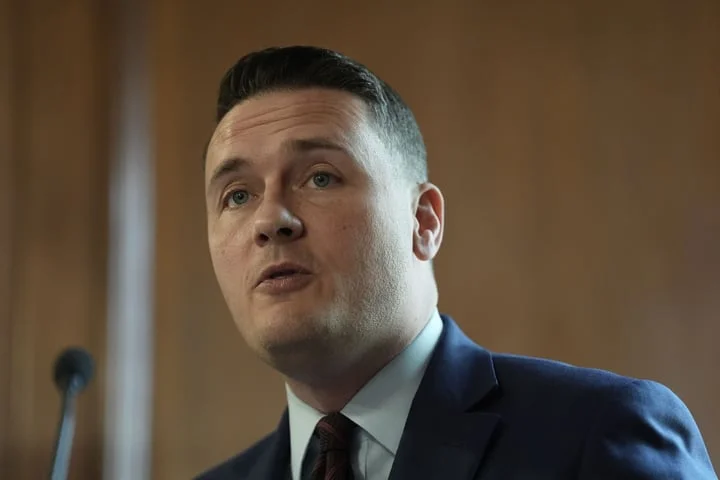
The waiting list for hospital treatment in England has fallen for the fourth consecutive month, although progress would be “faster” without resident doctor strikes, Wes Streeting has said.
Despite industrial action, the health service is now within “touching distance” of a key waiting time target of 18 weeks, according to officials.
New figures published on Thursday show an estimated 7.22 million treatments were waiting to be carried out at the end of February, relating to 6.11 million patients.
This is down from 7.25 million treatments and 6.13 million patients at the end of January.
The number of treatments waiting to be carried out is at its lowest level since February 2023, when it stood at 7.22 million.
The proportion of patients seen within 18 weeks was 62.6% in February, according to NHS England.
The target for March is 65%, with data set to be published next month.
The Health Secretary suggested the Government would have hit the target early if it was not for resident doctor strikes.
Medics staged their latest round of industrial action earlier this month, walking out for six days after the long Easter weekend.
Speaking to LBC, Mr Streeting said: “If we hadn’t had those strikes, I’d probably be sat here on the basis of the published numbers saying we’ve done it a bit early.
“I suspect that when I’m back, when the data comes out, I will either be saying, ‘We’ve just hit it, what a miracle, given the strikes’, or ‘I would have hit it, but for those strikes’.
“Which, I think, captures really my frustration about where we are with the resident doctor strikes, because we are making progress in spite of strikes, we could be making more progress more quickly.”
Mr Streeting said he does not know if he will be able to end the strikes by the end of the year, and urged members of the British Medical Association to “think really carefully about the consequences of your own actions”.
London university launches legal action after government clawback on loans
Risks to children on social media ‘can’t go on like this’, PM tells tech bosses
Public should be ‘reassured’ by Iran war food shortage preparation – Peter Kyle
Art After Dark is back with an exciting calendar of cultural events
He added: “Because the NHS is under real pressure.
We’re not out of the woods yet.
We’re making progress.
We could do that faster.”
Elsewhere, the number of patients facing the longest waits for treatment also fell.
At the end of February, some 122,668 people had been waiting more than a year to start routine hospital treatment, down from 135,657 in the previous month.
This is the lowest figure for waits of more than a year since August 2020.
The proportion made up 1.7% of people on the list for hospital treatment, down from 1.87% the previous month.
The Government and NHS England have set a target of March 2026 for this figure to be reduced to less than 1%.
The number of patients waiting 18 months also fell in February to 1,377 from 1,616 in January.
Mr Streeting added: “We inherited an NHS going through the worst crisis in its history after years of neglect.
Today’s figures show just how far we’ve come.
“Through the Government’s investment and modernisation – and thanks to the extraordinary effort of NHS staff across the country – waiting lists are down by over 400,000.”
Professor Meghana Pandit, deputy chief executive and medical director at NHS England, said: “I am incredibly proud of the work that NHS staff have put in over the past year to get us within touching distance of our elective recovery target.
“This progress has been achieved despite the busiest winter on record and disruption caused by industrial action.
“This shows the determination of staff to get back to delivering on their commitments no matter how challenging the circumstances have been.”
In cancer treatment, 80.5% of patients urgently referred were diagnosed or had cancer ruled out within 28 days in February, up from 72.8% in January and above the current target of 75%.
Elsewhere, ambulance response times for the most serious incidents, such as suspected heart attacks and strokes, averaged 26 minutes and 18 seconds, meeting the 30-minute target set for March.
Health commentators said further progress “will require system-wide action to tackle the bottlenecks causing long delays in patients being admitted to and discharged from hospital”.
Tim Gardner, deputy director of policy at the Health Foundation, said: “The Government’s first steps to address corridor care are a welcome start, but need to be backed by longer-term investment in improving services, expanding capacity and a stronger social care system.”
Sarah Scobie, deputy director of research at Nuffield Trust, welcome progress on waiting lists, but said: “The fact that these improvements have not quite been fast enough is a reminder that the ‘sprint’ to improve waiting times is only the start of a marathon to come.”
Related Stories



Source: This article was originally published by Evening Standard
Read Full Original Article →
Comments (0)
No comments yet. Be the first to comment!
Leave a Comment