
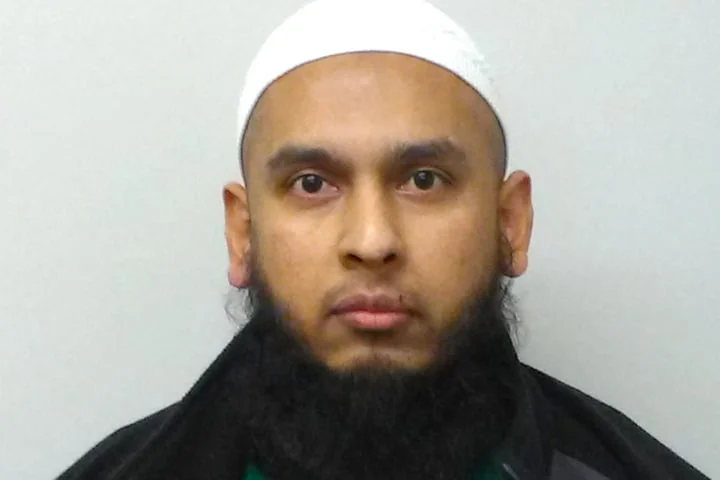
An Al-Qaeda-inspired terrorist convicted for a plot to bomb the London Stock Exchange was denied asylum but later allowed to remain in the UK , it has been reported.
Bangladeshi national Shah Rahman was one of four extremists found guilty in 2012 over a plan to bomb the stock exchange, the US embassy, two rabbis and Boris Johnson .
Now, a newly published immigration judgement, concerning his wife Parveen Purbhoo, details how Rahman was refused refugee status but was permitted to stay in the UK on human rights grounds.
Rahman applied for asylum in 2017 after being released from jail for the first time on license.
However, his claim was rejected under Article 51 of the Refugee Convention, which prevents individuals involved in terrorism from being granted refugee status.
'Get it done': How Foreign Office chief felt the heat to clear Mandelson
London ‘under attack’ from Iran says anti-terror chief as 7 more arrested over arsons
RAF fighter jets scrambled over fears 'Russian bomber' heading towards UK
Despite this, he was permitted to remain in Britain.
The judgement reads: “He was granted restricted leave to remain in the United Kingdom on the basis that he could not be removed to Bangladesh without breach of his rights under Article 3 of the Human Rights Convention.”
Article 3 of the Human Rights Convention provides an absolute right of protection from torture, or inhuman or degrading treatment or punishment.
Rahman later married Purbhoo, a Mauritian citizen, in an Islamic ceremony in east London in 2019.
She was denied entry clearance to the UK in 2020 after having returned to Mauritius at the beginning of the pandemic.
But she was able to return to the UK in August 2021 to marry Rahman in a civil ceremony.
She did not require a visa as Mauritians could travel to the UK using only electronic travel authorisation.
However, a search at Heathrow Airport revealed Purbhoo held Isis-related imagery on her phone, including Jihadist propaganda.
In a police report presented to the court, Purbhoo was said to be “blasé” about having the images on her phone.
She failed to remember where or how they got there, but claimed to want to learn more about “the atrocities”.
She was then allowed to enter the UK where she lived with Rahman until he was recalled to prison in 2022 after failing to notify the probation service of a mobile phone, bank account, and email address.
The judgement stated: “Mr Rahman accepted before the parole board that he would use the illicit mobile phone to contact the applicant.
In his witness statement in these proceedings, he accepts that he used the phone to have private video calls with her.”
Purbhoo was also found to be complicit in the breaches for which Rahman was convicted.
Mrs Justice Farbey, Mark Ockelton and Roger Golland found: “The applicant was complicit in Mr Rahman's unlawful breach of notification requirements; and she has not provided either the police or SIAC with an explanation of how Islamist material came to be on her phone.
“Her willingness to place her own interests over and above legal or administrative processes is troubling and risky.”
The four men were stopped by undercover anti-terror police.
At the time, it was said that they met because of various memberships to radical groups.
Related Stories

Source: This article was originally published by Evening Standard
Read Full Original Article →
Comments (0)
No comments yet. Be the first to comment!
Leave a Comment