
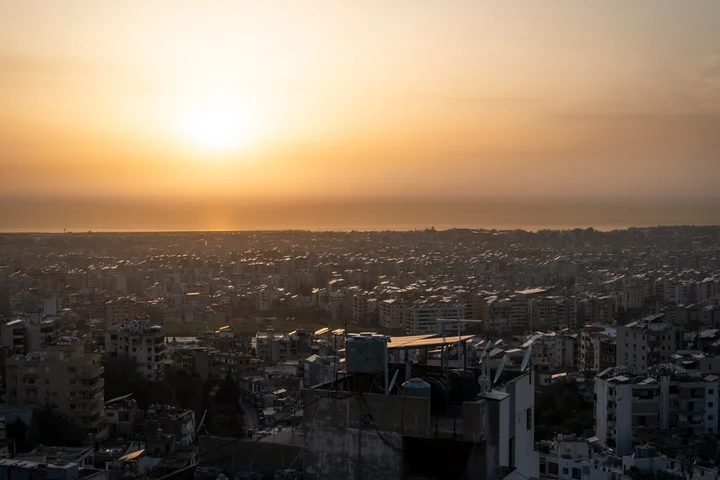
Tensions linger as evacuees await clarity on the ceasefire’s terms before risking a return to war-torn villages.
Beirut, Lebanon – Abu Haidar’s legs dangled out the passenger side of his car onto the pavement at Beirut’s waterfront.
He had folded up his mattress – the one he’s slept on for the last six weeks – and packed it on top of his car.
It was a few hours before the midnight start of a 10-day ceasefire between Hezbollah and Israel was set to take effect.
Abu Haidar’s car was packed, and he planned to head to his village, Kherbet Selem, about 25 kilometres (15 miles) from the border.
When a previous ceasefire came into effect in the early hours of November 27, 2024, after a year of war, the mood was joyous.
Families packed their belongings into their cars, and by the early hours of the morning, most centres hosting the displaced were empty as traffic jammed the roads to Beirut’s suburbs and the south.
Earlier on Thursday, United States President Donald Trump had announced a ceasefire would be implemented at 5pm Eastern Time (midnight Beirut time) after speaking to Lebanon’s President Joseph Aoun.
The announcement came after six weeks of fighting between Israel and Hezbollah, with battles raging in the south after the Israelis invaded in early March.
The city of Bint Jbeil, where then-Hezbollah leader Hassan Nasrallah made a historic speech following the end of Israel’s occupation of southern Lebanon in 2000, has been the site of an intense battle in recent days.
On Thursday, the Israeli military heavily bombed villages and towns all over southern Lebanon, following a pattern of intensifying attacks before the proposed ceasefire.
The Israeli military has also published videos of its forces detonating entire villages in southern Lebanon in recent days.
The ceasefire announcement also comes after the first direct diplomatic talks between Israel and Lebanon in decades on Tuesday, an event that has deeply divided Lebanon’s population.
Many in the areas most impacted by the war opposed the negotiations and have a dim view of the Lebanese government.
The terms of the agreement are still unclear, which may be contributing to people’s doubts about it.
Israel’s Prime Minister Benjamin Netanyahu said his military’s troops would not withdraw from southern Lebanon during this period.
Hezbollah responded by saying any ceasefire must “include a comprehensive halt to attacks across all Lebanese territory, with no freedom of movement for Israeli forces”.
Should Israel continue to occupy Lebanese territory, Hezbollah said it would maintain “the right to resist”.
“We ask everyone to refrain from returning to the towns and villages until matters and developments become clear in accordance with the ceasefire agreement,” Berri said.
In its statement, Hezbollah said Israel “has a history of violating pledges and agreements”.
“With the announcement of the ceasefire, and in the face of a treacherous enemy that has a history of violating pledges and agreements, we call on you to remain patient and not to head towards the targeted areas in the south, the Bekaa [Valley], and the southern suburbs of Beirut until the course of events becomes fully clear,” the group said.
In the meantime, Dandash said he and his wife will stay put in their tent, where they sleep on slim mattresses placed on a wooden pallet, which gives him back pain.
People here are getting more desperate, he said.
A woman talking to Alawi pulled out her phone and showed a video of people sprinting after a white jeep that had come to distribute money to people before driving away in panic.
“There was a lot of aid distribution at first, especially during Ramadan,” he said.
“But now, there’s no help.”
Not from the state, nor from any political party.
“We don’t get anything from them, nor do we want anything from them,” Ruwayda, Dandash’s wife, said.
“Any of them.”
Related Stories

Source: This article was originally published by Al Jazeera English
Read Full Original Article →
Comments (0)
No comments yet. Be the first to comment!
Leave a Comment