
It is likely that Noah Donohoe was alive when he entered a storm drain in north Belfast where he was later found dead, an expert witness has told an inquest.
The schoolboy was 14 when his naked body was found in the storm drain tunnel on June 27 2020.
A post-mortem examination found the cause of death was likely to be drowning.
The inquest into his death, which is being heard with a jury, resumed following the Easter break on Monday.
The proceedings at Belfast Coroner’s Court heard a report by Professor Carolyn Roberts, who had been commissioned by the Coroner’s Service, and had visited the site as well as considering “extensive material”.
In her report, which was read to the inquest, she found that Noah was likely to have climbed through the bars into the storm drain before drowning.
“The bars of the grille are sufficiently widely spaced that a large child or even a small man could deliberately climb through without undue effort,” her report found.
“In my opinion it is hence likely that the boy climbed into (the) culvert entrance alive, slipping between the vertical metal bars of the metal grille.”
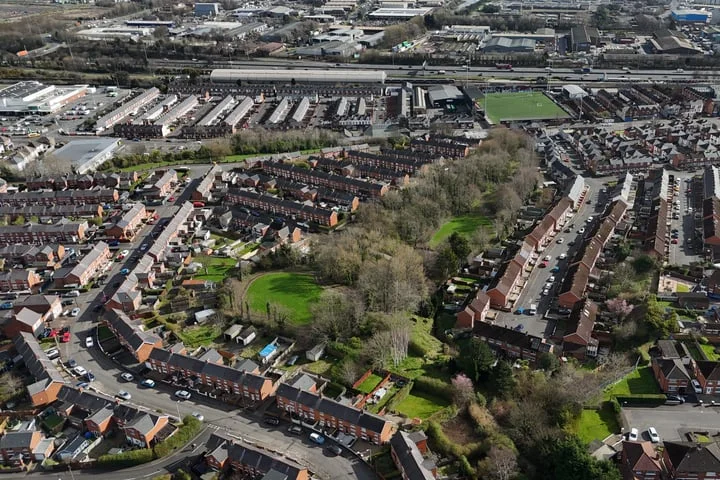
The storm drain tunnel led under the M2 motorway, train tracks and Seaview stadium to Belfast Lough.
Prof Roberts found Noah was likely to have walked while crouched in the tunnel, and with rising water levels and low light may have become disorientated.
“The layout is relatively complex and for an unfamiliar person moving in semi darkness, in my opinion, it would appear possible to become disorientated, this is the section from which Noah’s body was recovered,” her report went on.
Her report also found that high tide was likely to have happened between 11.30pm and midnight on June 21 2020.
“This is some five or six hours after his (Noah’s) last sighting which would allow ample time for him to have made his way several hundred metres along the culvert,” her report found.
Holywood ‘bursting with pride’ after Rory McIlroy’s historic Masters win
Burger King to open 30 new UK restaurants this year despite higher costs
Ministers defend response to fuel protests ahead of confidence vote
Art After Dark is back with an exciting calendar of cultural events
“At this point, water is likely to have risen almost completely to fill the culvert around and immediately above the point at which the boy’s body was discovered, creating conditions for drowning.
“The quadrant would fill with water relatively quickly and in darkness with a complex network of pipes and cold conditions, the boy would be likely to have become confused in my opinion.
“It is possible that the boy survived in the culvert for several tidal cycles prior to succumbing, however the ground and air temperatures would not be conducive to this with a naked body in my opinion.”
The report went on: “Noah Donohoe is likely to have entered the Premier Drive stream culvert behind Northwood Road in the late afternoon of June 21, 2020, by climbing through the metal grille at the entrance, and crawling or walking in a stooped manner along the culvert some 600 metres.
“This would have been in almost complete darkness… and would have required some persistence including climbing under hanging obstacles.
“I think it is very likely that the boy drowned at or about this time and location, it is possible but unlikely that the body was moved a short distance upstream or downstream from the point at which it was recovered by floating.”
Prof Roberts also found that it is probable that Noah drowned in sea water mixed with fresh water during the incoming tide while confused.
The inquest also heard expert evidence which was critical of public safety with regards to the culvert at Premier Drive.
In his report, which was read to the inquest, Dr Mark Cooper said a risk assessment carried out by the Department for Infrastructure, which owns the amenity, was “very rudimentary” and focused on risks to Rivers Agency staff, rather than members of the public, noting a children’s playground nearby.
“It is clear to me there was knowledge in the body corporate of the Rivers Agency that the grille was in an area that could attract members of the public and children,” his report observed.
“This does not look like it has had the full care and attention that it ought, I am critical in that the assessment does not consider who may be harmed.”
He also claimed that the department’s “position seems to me to be ‘head in the sand'”.
In total the inquest heard from four experts on Monday, including Jeremy Benn and engineer Brian Pope.
There was disagreement among the four, who had responded to 57 questions, including over whether there should have been a security screen and fencing at the culvert which was refurbished in 2017.
Mr Cooper said in his report that the decision not to have a security screen is “crucial to this case”, arguing the assessment was “inadequate”.
However, Mr Benn in his report said that screens “do not completely remove the risk of flooding or injury”, and pointed to examples where screen themselves had caused deaths through people falling or becoming trapped.
His report quotes data over ten years that indicates screens had been a contributory cause of more deaths of members of the public than culverts.
He said the culvert is “typical of many hundreds of similar assets in Northern Ireland , and thousands in the rest of Ireland and the UK”, and predates current policy which steer away from such long courses.
Mr Pope said he disagreed with Mr Benn’s assessment.
In his report, he said if the department had carried out an assessment based on 2009 Environment Agency (EA) guidance during the 2017 refurb, it would have found that a security screen should have been fitted.
He assessed the hazards as “just above” the threshold for a security screen, and suggested Mr Benn had “underestimated” conditions in the culvert such as steepness.
The inquest will continue on Tuesday morning.
Related Stories
Source: This article was originally published by Evening Standard
Read Full Original Article →
Comments (0)
No comments yet. Be the first to comment!
Leave a Comment