
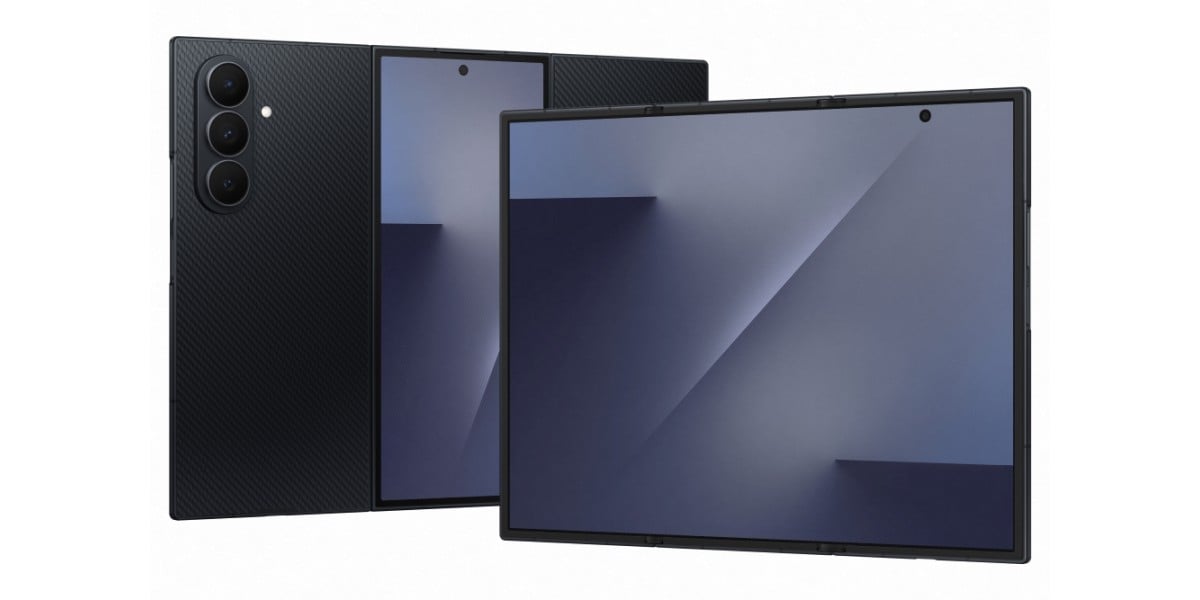
Analysts say three-screen smartphone successful as a proof of concept, memory crunch potentially made it unsustainable
Samsung is killing the Galaxy Z TriFold smartphone after just three months on the market.
According to Bloomberg , Samsung will discontinue the device once existing stock runs out.
The Register has asked the company to comment.
It could also function as a slightly chunky 159.2 x 75.0 x 12.9 mm phone if kept folded.
While an example of Samsung's technical prowess, the phone's high price and lack of carrier subsidies ensured it would remain a niche model, and now Samsung has abandoned the concept, with nothing similar waiting in the wings to replace it.
The reaction from the analyst community is mixed, with several viewing the device as a successful marketing exercise and proof of concept.
Others wonder whether users really want a foldable device like the Galaxy Z TriFold.
Gartner analyst Ranjit Atwal told The Register : "With foldables projected to capture less than 10 percent of the premium segment by 2030, the market remains smaller than expected.
The TriFold was trying to add utility of a third screen, that was never required.
Users want less screen time, not more."
Francisco Jeronimo, a Vice President at analysts IDC, told The Register the discontinuation should not be interpreted as a failure or strategic withdrawal.
"On the contrary, the level of attention and engagement the device generated indicates meaningful interest in this category."
"The TriFold was never intended to be a high-volume, mass-market device.
It was conceived as a limited-production initiative, designed to test both technological feasibility and market reception.
Samsung positioned it as an exploratory project, a forward-looking concept aimed at evaluating consumer interest, usage patterns, and design viability for next-generation form factors."
Senior Omdia analyst Runar Bjorhovde agreed, telling The Register that it was likely "job done" as far as Samsung was concerned.
The device showed off the manufacturer's capabilities and "captured plenty of attention."
Bjorhovde added: "Although Samsung could have attempted to scale the product further, it would have come with too great of a risk.
R&D and production costs are very high, alongside a price tag that makes it unattainable to the majority of consumers."
As well as the cost to consumers, the analyst also noted that Samsung was likely concerned about margin pressures due to surging storage and memory costs.
Bjorhovde noted Samsung wasn't alone in launching a foldable smartphone that was more about the halo effect rather than raw sales numbers, "but for Samsung – which has successfully scaled its foldable shipments into the millions of units sold annually – the commercial prospect needs to be included is its near-term roadmap."
"Currently, it's not there, but it doesn't mean that it won't return in the future or that the initial Trifold hasn't been a success." ®
Related Stories


Source: This article was originally published by The Register
Read Full Original Article →
Comments (0)
No comments yet. Be the first to comment!
Leave a Comment