
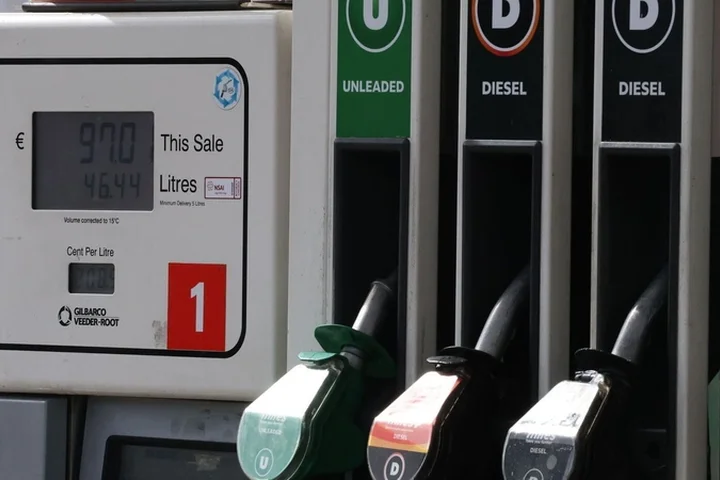
With ports and motorways blocked, the political reality was that the Coalition had little choice but to agree to a package of measures to mitigate rising energy prices.
No doubt the blockades had negative economic effects for retailers who were cut off from customers on a week when many people had time off.
But where did the roughly €750m of tax cuts which the Government has introduced come from?
The answer is simple: the multinationals.
Ireland is expected to run a budget surplus of €5 billion this year.
That additional "windfall" money in the Government coffers has been funded by corporation tax paid by foreign-owned companies on activities which happen outside Ireland.
That source of funds is considered particularly volatile and could easily shift to another country or vanish entirely.
If the money is stripped out of Ireland's budget there would be a deficit of €13 billion this year instead of a surplus.
That is why the Irish Fiscal Advisory Council has warned the Coalition about the dangers of Government's spending rising faster than other EU states.
The two announcements of measures to help consumers and businesses with rising energy prices are not risk-free for the Government.
The big surprise was the decision by the Coalition to postpone the planned increase in Carbon Tax from next month until October.
The advantage of introducing that tax increase in May was that it was at a time when fossil fuel consumption traditionally falls as the weather (hopefully) improves.
Bringing in a Carbon Tax rise in October means it will be introduced just as consumption rises as temperatures drop.
The Government has also cut the excise on diesel by 10 cent, which means the combined impact of Sunday’s announcement and last month’s measures is a total of 32 cent, while excise on petrol falls by 10 cent bringing a combined reduction of 27 cent.
The measures which take effect from midnight tomorrow are due to expire on July 31.
The problem is the price of oil on international markets.
While the Government has cut the tax on fuel, the price of oil has risen again.
The collapse of Iran-US peace talks has sent the cost of a barrel above $100.
The price of crude oil is very unstable.
Although it's down from a high of $118 a barrel last month it was $60 at the beginning of the year and $70 before the outbreak of the war in Iran.
An incendiary social media post by US President Donald Trump could send it rocketing at any moment.
It makes it almost impossible to predict what the impact of the Government’s measures will be at the pumps.
And then there is the politics of the Coalition being railroaded into tax cuts on fuel which it had initially ruled out.
What happens if protesters block major motorways and ports again at the end of July when excise cuts are due to expire?
What happens when Carbon Tax is due to rise in October?
This crisis isn’t over, it's just taken a breather.
Related Stories



Source: This article was originally published by RTÉ News
Read Full Original Article →
Comments (0)
No comments yet. Be the first to comment!
Leave a Comment