
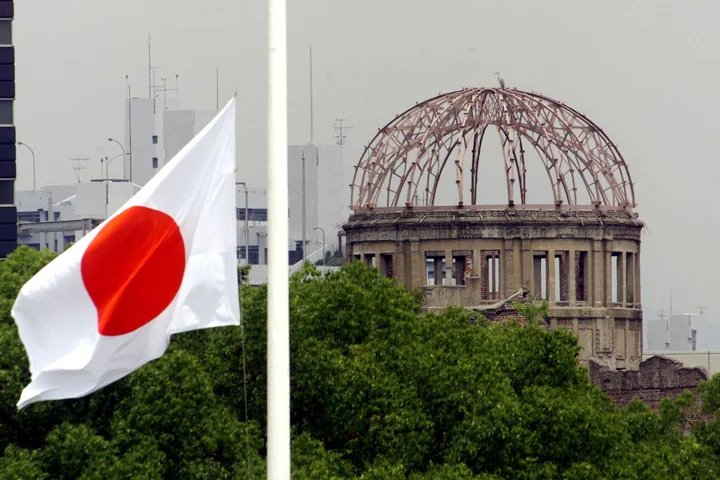
threats toward Iran reflect a strategic mindset shaped by the atomic bombings of Hiroshima and Nagasaki, where mass civilian destruction was normalized and later used to justify annihilation as a legitimate policy
By Hussein Banai
Contributing Writer
Threads
Email
Print
Bookmark story
Copy link
On the morning of April 7, as a fragile two-week ceasefire between the United States and Iran was taking shape through Pakistani intermediaries, Americans woke to the memory of what their president had said just hours earlier: that “a whole civilization will die tonight, never to be brought back again.”The threat was eventually called off, but U.S
President Donald Trump’s words remained, hanging over the negotiations in Islamabad like a weather system that has passed without fully breaking
It is worth sitting with those words for a moment, not to parse their strategic intent, but to notice what kind of imagination produced them and what history made that imagination possible.The answer runs through the Japanese cities of Hiroshima and Nagasaki and through the 80 years of moral sediment that have accumulated since their nuclear annihilation in August 1945.
In a time of both misinformation and too much information, quality journalism is more crucial than ever.By subscribing, you can help us get the story right.
SUBSCRIBE NOW
With your current subscription plan you can comment on stories
However, before writing your first comment, please create a display name
in the Profile section of your subscriber account page.
Your subscription plan doesn't allow commenting
Jehovah's Witnesses followers sue Japanese government
Debt-laden Japan should review spending on gender equality, survey finds
Japanese researchers look at 800-year-old books and trees for signs of extreme solar events
At Ueno Station, ‘Freedom’ restored
Shoes possibly worn by missing boy found in Kyoto mountains
Where Tokyo goes to sweat and soak
Tokyo’s sake calendar is filled to the brim
Japan’s tighter immigration controls yielding results
Beijing row highlights need for Japan to reduce cleantech dependence on China
Kabukicho: Tokyo’s ‘stadium of desire’
Japan’s temples and shrines are testing the limits.
Revitalizing rural Japan, one step at a time - Paul Christie
Sponsored contents planned and edited by JT Media Enterprise Division.
Japan and Pakistan agree to cooperate on Middle East issues
7 hours ago
Opposition calls for prior notification to parliament over arms exports
9 hours ago
BOJ's Ueda calls for vigilance against impact of Middle East war
10 hours ago
Futenma base site not yet returned to Japan, 30 years on
10 hours ago
Keidanren proposes setting up fiscal institution in parliament
10 hours ago
Related Stories



Source: This article was originally published by The Japan Times
Read Full Original Article →
Comments (0)
No comments yet. Be the first to comment!
Leave a Comment