
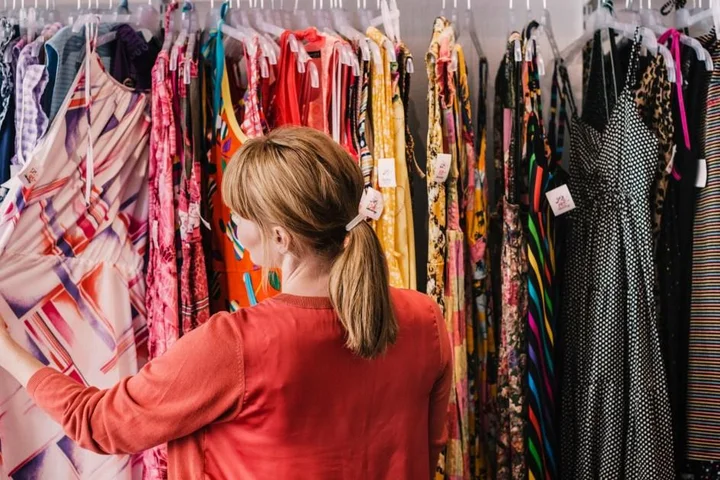
For years, charity shops have been a go-to for affordable fashion, household bits and unexpected gems.
But for some shoppers, the thrill of finding a bargain is starting to feel like a rarity.
According to a growing number of thrifting fans, many items now cost the same as — or even more than — they would new, and secondhand stores are ‘pricing themselves out of the market’.
In a recent series of videos posted by Charlotte Deering, who posts moneysaving tips on social media as The Money Ferret, she showed ‘ridiculous’ price tags on everything from half-empty cosmetics and rusty cookware to grubby Happy Meal toys and fast fashion that’s seen better days.
The creator claimed some retailers are ‘starting to get super greedy’, with an ‘absolutely bizarre’ pricing system that makes sustainable consumption less accessible for the average person.
POLL
Do you think charity shops are becoming too expensive?
-
Yes, they are losing their purpose.
-
No, the prices reflect inflation and running costs.
-
I'm not sure.
Hundreds of commenters felt the same, including katlson, who wrote: ‘It’s sad isn’t it, I love a charity shop and see this all the time.
No one’s going into a charity shop to pay a tenner for a polyester dress.’
‘Agree,’ added beth_lav92.
‘Popped into one earlier and they had three bottles of Asda’s own baby shampoo and baby wash and moisturiser for £1.50 each.
They’re about 90p brand new in the shop!’
Charlotte tells Metro that while she’s noticed prices ‘creeping up over the past few years’, it ‘definitely feels more noticeable recently’, and she’s become ‘more selective’ as a result.
‘I’ve always seen charity shops as a win-win — you can get something affordable, keep items out of landfill, and support a good cause,’ she explains.
‘But with the cost of living, a lot of people rely on them for genuinely lower prices, and I’m finding more and more that some items are priced higher than buying new, especially with fast fashion brands.’
In her view, this upward trend hurts charities just as much as it does consumers.
‘I completely understand that costs and overheads are going up, but in some cases it feels like prices are starting to put people off both buying and donating,’ says Charlotte.
‘I’ve seen situations where shops are so full they can’t take in donations, which then creates a bit of a cycle — if items aren’t selling because of pricing, stock builds up and fewer donations can be accepted.’
Although she calls charity shops an ‘important and positive’ part of the high street, the budgeting influencer warns that ‘things do need to change’ if they’re to survive, adding: ‘We are seeing more and more charity shops closing, and it comes back to the same issue of costs.’
How to bag a bargain at the charity shop
Charity prices may be higher nowadays, but consumer champion Helen Dewdney says shoppers can still find deals — you just need to be more strategic.
‘I advise shopping around as independent charity shops can be cheaper than chains and in some wealthier areas have different types of items,’ she tells Metro.
‘Go regularly because bargains don’t hang around long!’
Despite widespread frustration over these increases, BBC thrifting expert and ‘Charity Shop Girl’ Jen Graham argues they need to be understood in the wider context of inflation.
‘We have to remember that the cost of living has gone up quite significantly,’ Jen tells Metro.
‘Those same conditions also affect charities.’
‘Sometimes I feel like people assume charities don’t pay bills, but they do.
So as a result, they have to make more money to cover those costs.’
Jen says while some shops may get pricing wrong, they’re trying to strike a difficult balance between affordability and raising vital funds without much research or resource — and it’s ‘unfair’ to accuse them of greed.
She adds: ‘Charities provide services and support to our communities, often for free, so every penny made, particularly in the charity shops, goes towards providing those services.
‘A pair of jeans might be £10 in a charity shop and feel expensive, but they’re probably £45 new on the high street, so it is still a massive saving and you’re supporting such an important cause at the same time.’
Jen continues: ‘I think people tend to notice price increases more in charity shops because of their expectations, and because they know a lot of the items have been donated rather than purchased.
‘But if we were really honest, they wouldn’t make the same comments if they went into a supermarket and something had gone up by a couple of pounds.’
Maria Chenoweth, chief executive of London charity retail chain Traid, echoed this in a statement, saying: ‘If, as is being asked of us, we reduced all our prices, this wouldn’t showcase a more accurate price for that item, it would simply mean we would generate less funds for the causes we support, which we don’t believe is the solution.’
She urges people to call out the corporations responsible for rising costs instead of the charities themselves.
But as household budgets remain tight, people are likely to vote with their feet first.
‘In my area, the shops that are reasonably priced are always busy and turning stock over quickly, whereas the more expensive ones are much quieter,’ says Charlotte.
‘I feel that when items are priced fairly, people buy more, which ultimately benefits the charity.’
Get in touch by emailing MetroLifestyleTeam@Metro.co.uk.
Related Stories


Source: This article was originally published by Metro UK
Read Full Original Article →
Comments (0)
No comments yet. Be the first to comment!
Leave a Comment