
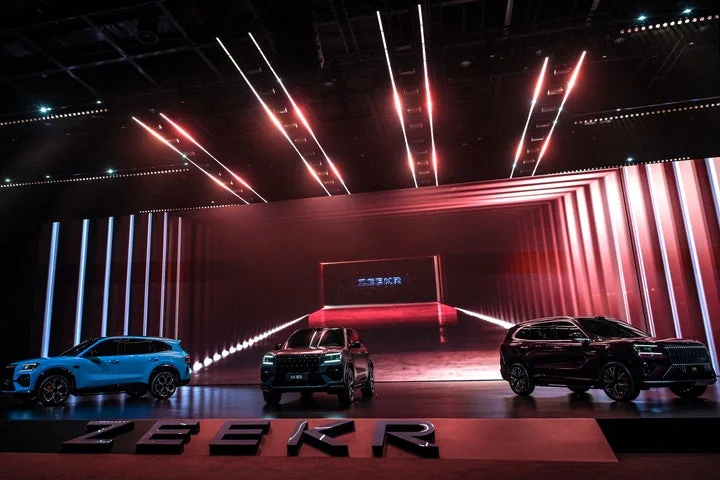
As he prepares to visit the China Auto motor show in Beijing, Steve Fowler looks at the explosion of new car brands like Zeekr, Denza and Xiaomi and what it could mean for the UK market
There was a time when a trip to a motor show meant catching up with familiar names, a few concept cars that would never see the light of day and perhaps the odd surprise from a challenger brand trying to break into Europe.
Not anymore.
Heading to this week’s China Auto motor show – held this year in Beijing (it alternates with Shanghai) – feels less like a diary date and more like stepping into a parallel automotive universe.
It’s one where the rules have changed, the pace is relentless and the number of new car brands seems to multiply by the month.
So the question I’m asking myself as I pack my bags is a simple one: how many new car brands will I bring back with me?
Make no mistake, China isn’t just producing cars at scale – it’s producing car companies.
And not in the way we’ve traditionally understood them either.
These aren’t slow-burn start-ups inching their way towards credibility.
Many arrive fully formed, with slick design, impressive technology, competitive pricing and, crucially, the backing of vast industrial ecosystems that can move far faster than most legacy manufacturers.
Walk the halls in Beijing as I did two years ago and you’ll see names you’ve never heard of sitting alongside ones that are starting to become more familiar in the UK and Europe.
Brands like BYD, Xpeng, Geely and Leapmotor are already making waves, while Chery, Omoda and Jaecoo have started building a presence here.
But it’s the next wave that’s really going to test our ability to keep up.
Names like Zeekr, the Geely-owned premium EV brand, and Denza, the increasingly ambitious offshoot of BYD, are edging closer to Europe.
Then there’s Yangwang – another BYD sub-brand, but this time aimed squarely at the high-performance, high-luxury end of the market with technology that borders on the absurd.
One of the Chinese brands that has impressed me most, Nio, will eventually come here with its Firefly and Onvo offshoots.
And it doesn’t stop there.
Xiaomi – better known for smartphones – is now building cars and doing so at a scale and pace that should make the rest of the industry sit up and take notice.
Huawei-backed brands such as Aito are blending consumer electronics with automotive in ways that feel genuinely different, while Chery’s expanding empire includes sub-brands like Freelander, Exeed and Jetour, each targeting slightly different slices of the market.
Even names like IM, backed by SAIC and currently sold as upmarket MG models, are lining up for a bigger European push, taking aim at the kind of territory currently occupied by Tesla and the German premium establishment.
What’s striking isn’t just the number of brands, but how they’re positioning themselves.
Some are going premium, taking on the likes of BMW and Mercedes with interiors and tech that feel anything but second rate.
Others are laser-focused on value, undercutting established players while still offering decent range and equipment.
And then there are those that seem to exist purely to explore niches we didn’t even know needed filling.
It’s a very different landscape to the one European manufacturers are used to.
Traditionally, brand equity has been built over decades, even centuries.
In China, it can feel like it’s being built in real time, accelerated by digital ecosystems, direct-to-consumer sales models and a customer base that’s far more open to new names than buyers in more established markets.
On the other hand, it does prompt some obvious questions.
How do you judge a brand you’ve never heard of?
What does residual value look like?
How robust is the dealer and service network?
And perhaps most importantly, will that brand still be around in five or ten years’ time?
These are not trivial concerns, and they’re ones that I suspect will become more prominent as more Chinese brands arrive on UK shores.
Trust, after all, is hard won and easily lost.
Established manufacturers may be under pressure, but they still have the advantage of history, reputation and a proven track record.
Yet it would be a mistake to underestimate the newcomers.
Many of them are learning fast, partnering with established players and investing heavily in customer experience.
Some are even turning perceived weaknesses into strengths, offering things like over-the-air updates, flexible ownership models and digital-first interactions that feel more in tune with modern expectations.
From an industry perspective, Beijing has become a barometer of where things are heading.
It’s not just about the cars on display, but the speed of development, the integration of software and hardware and the sheer confidence of the brands showing up.
There’s a sense that this is where the future is being written, not just imagined.
For someone like me, who has spent more than three decades watching this industry evolve, it’s both fascinating and slightly bewildering.
The idea that I could walk into a motor show and struggle to keep up with the number of new names would have seemed far-fetched not that long ago.
Now, it’s the reality.
So how many new car brands will I bring back with me?
The honest answer is that I don’t know.
But I’d expect Zeekr, Denza, Yangwang, Xiaomi and a handful of names I’ve probably never even heard of yet to be on the list.
And next week I'll be able to tell you.
Would you buy any of these new Chinese models, or have you already done so?
Only today, a friend was asking me about the Chery Tiggo 8 and whether they should consider one.
Drop me a line by hitting the button below to let me know what you think.
To get the latest motoring insights from EV editor Steve Fowler delivered straight to your inbox, simply enter your email address in the box at the top of this page.
Each edition of DriveSmart offers clear, expert guidance on the fast-moving world of electric vehicles and modern motoring, from trusted reviews and practical tips to the biggest industry news of the week.
Join thought-provoking conversations, follow other Independent readers and see their replies
Related Stories



Source: This article was originally published by The Independent
Read Full Original Article →
Comments (0)
No comments yet. Be the first to comment!
Leave a Comment