
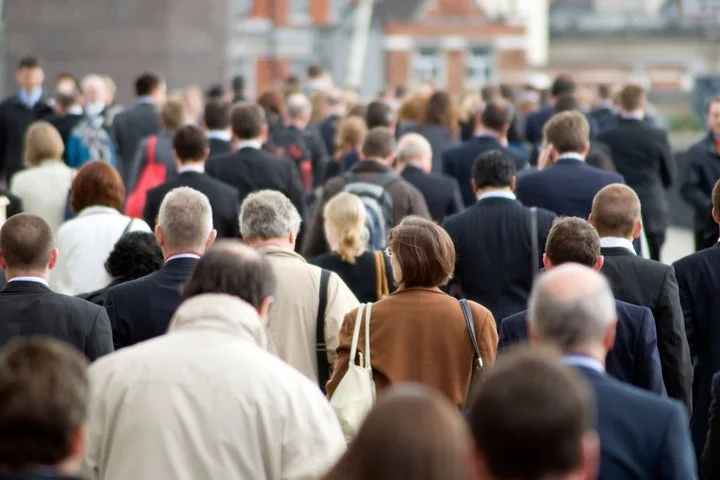
The rate of UK joblessness dropped sharply from 5.2% in the three months to February
Unemployment levels in the UK have unexpectedly fallen to the lowest level since last summer as inactivity in the jobs market increases and vacancies tumble.
Joblessness has been on the rise over the past 15 months, but after hitting 5.2 per cent for the three months to December 2025, it hovered at that level for January before now falling to 4.9 per cent in the three months to February 2026, figures from the Office for National Statistics ( ONS ) show.
Most economists had expected the jobless rate to remain unchanged, and there is still an expectation of a future rise towards 5.5 per cent later in the year, in part because firms expect to battle with uncertainty over rising costs caused by the Iran war .
With fewer people unemployed but fewer jobs also available, it means the rate of available people per vacancy has largely remained unchanged, while average earnings also rose 0.4 per cent faster than Consumer Prices Index (CPI) inflation – but that was slightly below estimates, lower than the last reading and is now the slowest wage growth rate for more than two and a half years.
There were 711,000 vacancies in the three months to February, the lowest level since April 2021.
Liz McKeown, ONS director of economic statistics, said: “The number of workers on payroll remained broadly flat in recent periods, reflecting ongoing weak hiring.
“Vacancies fell to their lowest level in almost five years, but with unemployment also falling the number of vacancies per unemployed person remains broadly unchanged.
“Alongside falling unemployment, the number of people not actively seeking work increased, with data suggesting fewer students seeking work alongside their studies.
“Regular wage growth has slowed further with growth at its lowest rate in over five years.”
Analysts have cautioned that, like much recent economic data, these figures do not take on board the impact of the Iran war and expect businesses to further freeze hiring.
“Unemployment has surprised slightly, coming in at a slightly more palatable 4.9 per cent and annual wage growth came in slightly lower but remains above inflation at 3.6 per cent for regular earnings excluding bonuses,” said Quilter Cheviot’s Jonathan Raymond.
“The initial estimates for March are also downtrodden, with employee numbers expected to drop by a further 65,000 on the year, with a high likelihood of further revisions.
“Given today’s data does not capture the initial impact of the conflict in the Middle East, we can expect the labour market to soften even more from here on out.
Businesses have had hiring plans largely on hold since before the budget, and many will have swiftly put the brakes on again at the outbreak of the war.
When combined with other factors, including ongoing wage pressures, National Insurance increases and changes to business rates, it is difficult to see the labour market making a swift recovery any time soon.”
The ONS said the fall in unemployment was driven by a rise in inactivity, especially among students, which rose by 70,000 in the quarter.
Vacancies also plunged by 29,000 in the three months to 711,000, the lowest level since April 2021.
While the jobless rate fell, the ONS warned the figures should be treated with caution.
More timely data estimated the number of workers on UK payrolls dropped 11,000 month-on-month in March to 30.3 million, though this is subject to revision, and follows a 6,000 drop during February.
The ONS had previously estimated a 20,000 rise in February.
Join thought-provoking conversations, follow other Independent readers and see their replies
Related Stories


Source: This article was originally published by The Independent
Read Full Original Article →
Comments (0)
No comments yet. Be the first to comment!
Leave a Comment